Farm Truck Insurance: When You Need Commercial Coverage
Get Your Free Insurance Quote
Compare quotes from top carriers in minutes
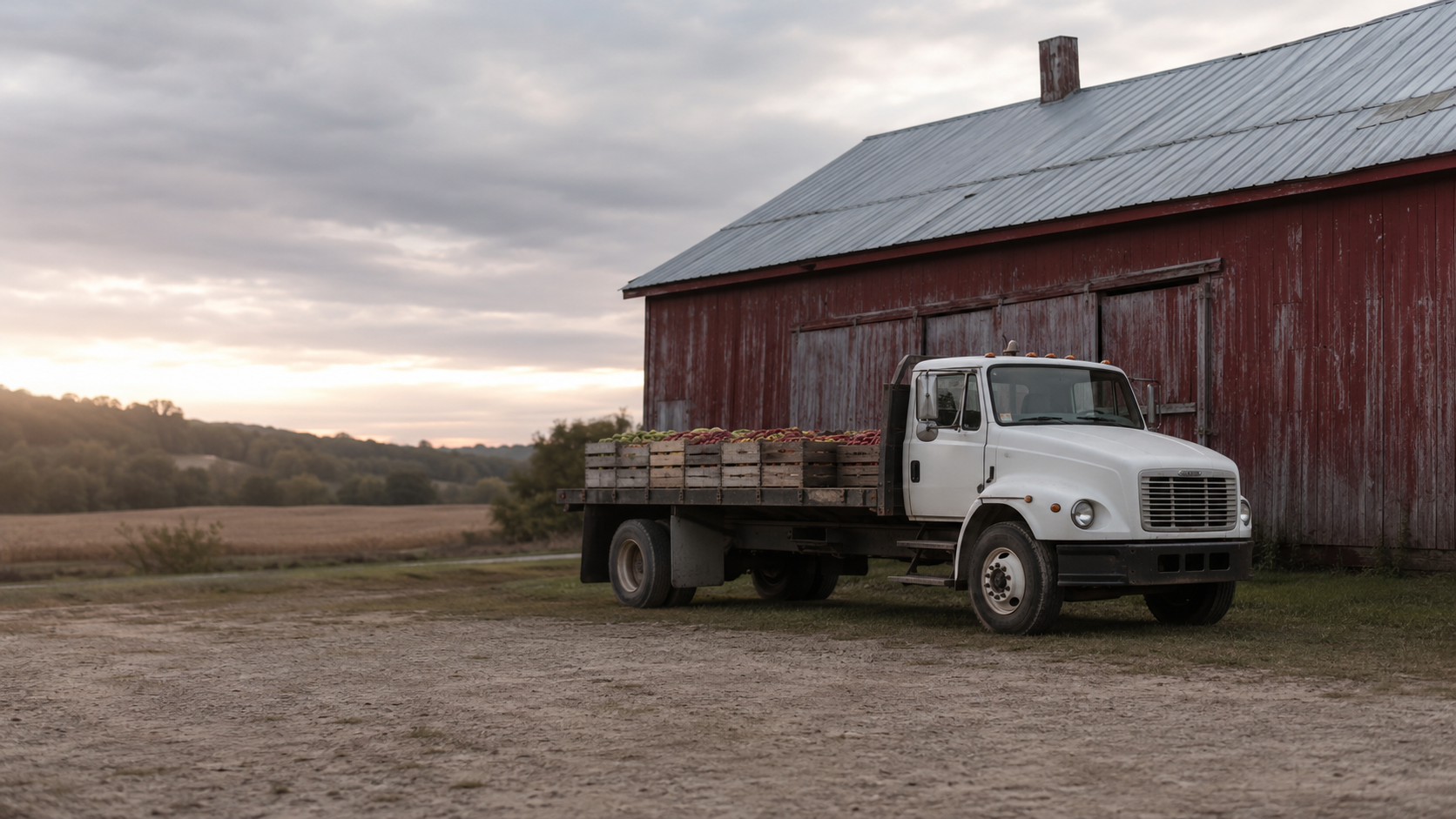
Farm truck insurance is usually cheaper than full commercial trucking coverage, and legitimately so: insurers price farm trucks lower because they typically run fewer miles, stay in a limited radius, sit idle for stretches of the season, and stay off congested urban routes. But the discount comes with boundaries. The moment a farm truck hauls for pay, runs beyond its exempt radius, or works outside the scope of the farm operation, it can cross into commercial territory where farm-rated coverage may not respond to a claim.
That gap, between what the truck is rated for and what it is actually doing, is where farm operations get hurt. Here is how the exemptions actually work as of July 2026, what they do and do not cover, and when a farm truck needs real commercial coverage.
Why is farm truck insurance cheaper?
Insurance pricing follows exposure. A grain truck that runs six weeks a year within 50 miles of the farm presents a fraction of the accident exposure of an over-the-road tractor logging 120,000 miles. Farm-rated policies reflect that with lower premiums, and some states offer farm plates with reduced registration costs on top.
None of that is a loophole. It is accurate pricing for a low-exposure vehicle, and if your truck genuinely works only for your farm, it is the right way to buy coverage. The problems start when the truck's real usage outgrows the rating.
What is the covered farm vehicle exemption?
Federal rules give qualifying farm vehicles significant relief from motor carrier safety regulations. A covered farm vehicle, meaning one operated by a farm or ranch owner, family member, or employee, transporting the farm's own commodities, machinery, or supplies, is exempt from hours of service rules, CDL requirements, and certain other FMCSA safety requirements. For trucks at 26,000 pounds or less, that exemption applies anywhere in the country. Heavier covered farm vehicles keep it anywhere within their state of registration, or within 150 air miles of the farm (about 172 road miles) when crossing state lines. Separately, during state-designated planting and harvest seasons, agricultural haulers get hours of service relief within 150 air miles of the commodity's source.
Two critical limits. First, these are safety-regulation exemptions, not insurance exemptions: they relieve you of hours of service logs and similar rules, but they do not eliminate liability requirements or make coverage optional. Second, the exemption covers your own farm's transportation. It does not follow the truck; it follows the work.
When does a farm truck need commercial insurance?
When you haul for pay. The most common trap. Hauling a neighbor's grain for money is for-hire transportation, even in a farm-plated truck, and it falls outside the farm exemption on those trips. For-hire hauling across state lines in a vehicle over 10,001 pounds triggers federal operating authority and the $750,000 minimum liability that comes with it. A farm-rated policy that excludes for-hire use can deny the claim that matters most.
When you run beyond the exemption's boundaries. For farm trucks over 26,000 pounds, that means leaving the state of registration and going past 150 air miles from the farm. For seasonal agricultural hauls, the hours of service relief ends 150 air miles from the commodity's source. Beyond those lines, you are expected to operate in full compliance for those trips.
When the work stops being farm work. Custom hauling, contract cartage, hauling for a co-op beyond your own commodities: insurers and regulators both look at what the truck was doing at the time of the loss, not what the plate says.
When the truck serves a farm business that has outgrown the exemption's shape. Larger operations running multiple trucks year-round, crossing state lines with commodities for sale, sit closer to commercial trucking than to the exemption's original intent, and their coverage should match.
What should a farm operation actually buy?
Match the policy to the truck's honest usage. If the truck works only for your farm within your radius, a farm auto policy is appropriate and economical. If it sometimes hauls for hire, tell your agent exactly that, because the fix, a commercial policy or a properly endorsed one, costs far less than a denied six-figure liability claim. And if the for-hire side is becoming a real revenue line, price it as its own operation: many of our customers started exactly this way, moving from farm hauling into for-hire work with a dump truck or grain hauler and building from there.
We arrange commercial coverage for farm-adjacent and for-hire operations across the states we serve, including major agricultural states like Iowa, Indiana, and Wisconsin.
Frequently Asked Questions
References
- FMCSA: What is a "covered farm vehicle" (CFV)?
- eCFR: 49 CFR 390.39, Exemptions for "covered farm vehicles"
- FMCSA: ELD hours of service (HOS) and agriculture exemptions
If your farm truck has started earning money on the side, the honest move is to price coverage for what it actually does. See what for-hire coverage costs for your operation with quotes from multiple carriers, so the decision is based on real numbers instead of guesswork.
Continue reading
- Commercial truck insurance
- Compare truck insurance quotes
- Flatbed Truck Insurance Massachusetts: What It Costs
- Autonomous Truck Insurance Costs After the Beacon Rule: A Cost Drivers Guide
- Autonomous Truck Warning Beacon Insurance Liability
- Coverages we offer for owner-operators & fleets
- Common questions about trucking insurance
Ready to compare rates? Get a free trucking insurance quote from carriers built for insurance tips.
Ready to Get Started?
Get personalized insurance quotes tailored to your business