Hot Shot Insurance: Coverage, Cost & FMCSA Rules
Get Your Free Insurance Quote
Compare quotes from top carriers in minutes
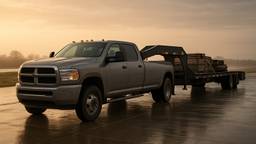
Hot shot truck insurance is specialized commercial insurance designed for hot shot trucking operations. This means you are typically hauling smaller, often time-sensitive loads using a medium-duty truck, like a Ford F-250 or Ram 3500, pulling a gooseneck or fifth-wheel trailer. Common hot shot loads include farm equipment, construction machinery, pipe and steel, oilfield equipment, and pallets that need to move quickly but do not fill a full trailer. Because you are operating for hire and crossing state lines, you need specific commercial policies that go beyond standard personal auto insurance.
What kind of insurance do hot shots need?
Hot shot drivers need several types of commercial trucking insurance to comply with federal regulations and protect their business. The core coverages are primary liability, motor truck cargo, and physical damage. Many hot shot operations also need non-trucking liability and general liability insurance.
Here is a breakdown of the key coverages:
- Primary Liability: This is mandatory federal coverage. It pays for damage or injuries you cause to others while operating your truck. The federal minimum is $750,000 for general freight, but most brokers and shippers require $1,000,000. For certain hazardous materials, the minimum can be $1,000,000 or even $5,000,000. You can review these minimums directly at the FMCSA insurance filing page and in 49 CFR Part 387 on eCFR.
- Motor Truck Cargo: This covers the freight you are hauling for damage or loss due to perils like collision, theft, or fire. The coverage amount should match the value of the loads you typically carry. For hot shot loads specifically, brokers and shippers commonly ask for cargo limits somewhere between $100,000 and $250,000, and heavier or higher-value freight like oilfield equipment or machinery can push that request to $250,000 or more.
- Physical Damage: This protects your hot shot truck and trailer from damage due to accidents, theft, vandalism, or other covered perils. It includes both collision and comprehensive coverage. Deductibles on physical damage typically range from $500 to $2,500 depending on the truck's value and how much premium you want to save by taking on more risk yourself.
- Non-Trucking Liability: If you use your hot shot truck for personal use when not dispatched, this covers liability. This is often needed if you are leased onto a motor carrier.
- General Liability: This covers risks not directly related to operating your truck, such as slip-and-fall injuries at a loading dock or property damage caused by your off-truck business operations.
Leased-on vs owner-operator authority
If you run under someone else's operating authority, meaning you are leased onto a motor carrier, that carrier's primary liability policy generally covers you while you're dispatched, and you'll mainly need non-trucking liability and possibly your own physical damage coverage. If you hold your own authority as an owner-operator, you are responsible for carrying your own primary liability, cargo, and any other required coverage, since there is no carrier policy behind you. This difference matters a lot for cost, since running under your own authority usually means higher premiums because you're the one on the hook for the full insurance package.
Coverage, federal minimums, and cost at a glance
Here is a quick summary table to help you compare the main coverages hot shot operators carry, the federal minimums where they apply, and general cost patterns. The cost figures below are wide, illustrative ballparks rather than actual quote data, and they change with market conditions, driving record, and equipment, so treat them as a starting point rather than a quote.
| Coverage | Federal minimum (if any) | General cost pattern* |
|---|---|---|
| Primary Liability | $750,000 (general freight); $1,000,000 (oil/some hazmat); $5,000,000 (explosives, poison gas, bulk hazmat) | Largest share of total premium; varies by limit chosen |
| Motor Truck Cargo | No federal minimum; often required by shippers/brokers | Shippers/brokers commonly request $100,000 to $250,000, higher for heavy or high-value freight |
| Physical Damage | Not federally required; often required if truck is financed | Depends on truck value and deductible chosen ($500 to $2,500 deductibles are typical) |
| Non-Trucking Liability | Not federally required; often required by the carrier you lease onto | Generally a smaller add-on cost |
| General Liability | Not federally required | Generally a smaller add-on cost |
*These are general, illustrative patterns, not a quote and not derived from actual quote data. Always confirm current requirements with the FMCSA or your state's Department of Insurance.
How much does hot shot insurance cost?
The cost of hot shot insurance varies widely by carrier, driving record, cargo type, and state, and we don't have our own quote data to point to a single average. As a much wider, clearly labeled ballpark rather than a precise figure, some industry conversations put annual premiums for a new authority with one truck somewhere in the range of $5,000 to $15,000, though your actual cost could fall outside that range depending on your specific situation. Several factors influence this cost, including your driving record, the type of cargo you haul, your operating radius, and the coverages and limits you choose. Drivers who run short, local radiuses often see lower premiums than those running long-haul lanes across many states, since more time on the road generally means more exposure to risk. Experienced drivers with clean records and established businesses often pay less.
Because this range is a rough ballpark and not tied to actual quote data, the best way to know your real cost is to get a quote based on your driving record, equipment, and operations.
Learn more about keeping your costs down by visiting our cheap truck insurance page.
Does trailer type or operating radius change your coverage needs?
Not all hot shot setups look the same, and the equipment you run can affect both the coverage you need and what you pay. A gooseneck trailer typically connects in the bed of the truck and tends to handle heavier, more concentrated loads with better stability, while a bumper-pull trailer hitches at the rear and is often used for lighter loads. Insurers will want to know which type you run, along with its value, since that factors into your cargo and physical damage coverage.
Operating radius matters too. A hot shot operation that stays within a 100 or 150 mile radius of home base generally faces less road exposure than one running long lanes across several states, and that can be reflected in your premium. If you mostly haul locally or intrastate, you may also fall under your state's own trucking insurance rules rather than the federal interstate minimums, so it's worth checking both.
What are the FMCSA requirements for hot shot trucks?
For interstate hot shot operations, the Federal Motor Carrier Safety Administration (FMCSA) mandates minimum liability insurance under 49 CFR Part 387. If your vehicle has a gross vehicle weight rating (GVWR) of 10,001 pounds or more and you operate for hire across state lines, you need to meet these federal requirements.
- General Non-Hazardous Freight: A minimum of $750,000 in public liability coverage. However, nearly all brokers and shippers will require $1,000,000.
- Oil and Certain Hazardous Materials: A minimum of $1,000,000 in public liability coverage.
- Explosives, Poison Gas, or Hazardous Substances in Bulk: A minimum of $5,000,000 in public liability coverage.
These are federal minimums and apply the same way in every state for interstate operations. Some states also set their own additional rules for intrastate operations, meaning hauls that start and end within the same state, so it's worth confirming current requirements directly on FMCSA.gov or with your state's Department of Insurance since regulations can be updated over time. Along with these insurance minimums, you'll also need to have your operating authority, USDOT number, and an active insurance filing with the FMCSA, such as a BMC-91 for liability.
Can I get hot shot insurance in my state?
Trucker Path Insurance is not a nationwide carrier. We work with hot shot operators in a number of states, and coverage needs can shift depending on whether you're running interstate or staying within your own state's intrastate rules. The states we can help in can change, so check our trucking insurance by state page to see current availability for your area.
Frequently Asked Questions
Continue reading
- Thinking of becoming an Owner-Operator?
- How Much Does $100K Cargo Insurance Cost in 2026?
- Farm Truck Insurance: When You Need Commercial Coverage
- Common questions about trucking insurance
- Coverages we offer for owner-operators & fleets
- Trucking insurance requirements by state
Ready to compare rates? Get a free trucking insurance quote from carriers built for insurance tips.
Ready to Get Started?
Get personalized insurance quotes tailored to your business