Car Hauler Insurance Requirements: What You Need
Get Your Free Insurance Quote
Compare quotes from top carriers in minutes
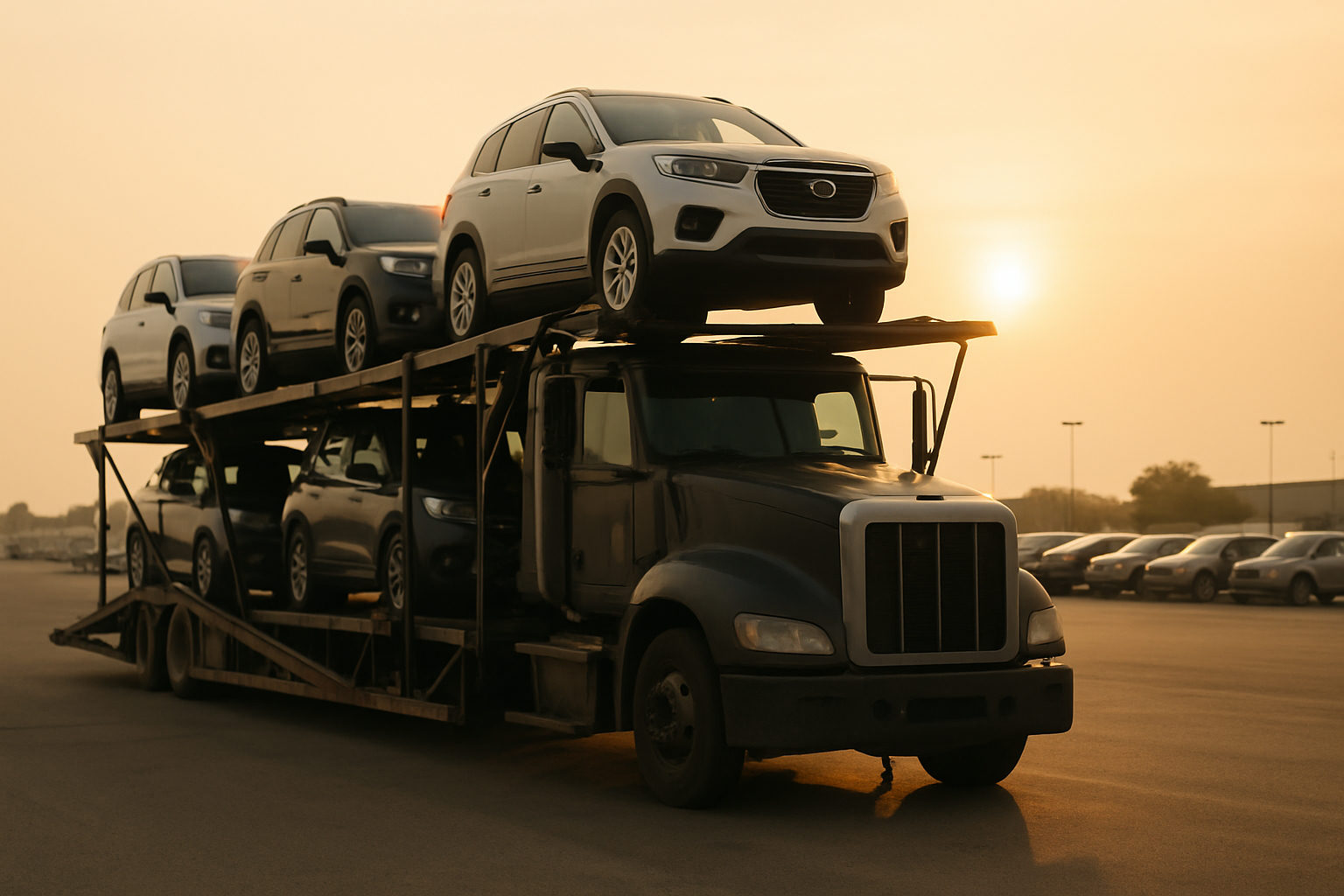
Car hauler insurance requirements go well beyond the standard trucking minimums, because you're not hauling freight in a trailer, you're hauling other people's vehicles as cargo. The federal minimum public liability is the same $750,000 that applies to general freight, but in practice, most dealers, auctions, and brokers in the car-hauling industry will require $1,000,000 in liability coverage before they'll load you, even though FMCSA's federal minimum is only $750,000 (Super Dispatch, current as of April 2026). On top of that, you need motor truck cargo coverage sized to the actual value of the vehicles on your rig, not a generic cargo limit. Average new vehicle transaction prices have been running close to $48,000 to $50,000 according to Cox Automotive market insights, so a single load of three or four cars can easily exceed $150,000 in total cargo value, a key reason auto haulers carry among the highest cargo insurance limits in trucking. That's the part most owner-operators underestimate until they've already signed a cargo policy that's too small.
This isn't a rehash of general trucking requirements. If you want the full breakdown of standard interstate motor carrier insurance minimums, our trucking company insurance requirements guide covers that ground. Here we're answering the question car haulers actually ask: what limits do you need for the cars themselves, and what trips you up that a dry van driver never has to think about.
What insurance do you need to legally haul cars?
You need primary auto liability, motor truck cargo insurance, and in most cases physical damage on your rig, plus non-trucking liability if you also drive for personal use. The federal floor for public liability on interstate non-hazardous freight is $750,000 under 49 CFR Part 387, but car haulers routinely carry $1,000,000 because that's what dealers, manufacturers, and auction houses require in their carrier agreements. You can confirm the federal minimums directly at fmcsa.dot.gov, and it's worth double checking with FMCSA or your state department of insurance before you sign anything, since these figures are federal floors, not what a shipper will actually accept.
Cargo insurance is where car hauling really diverges from other trailer types. A flatbed hauling steel coils has a cargo value tied to weight and commodity price. A car hauler's cargo value is tied to the sticker price of each vehicle on the trailer, and that adds up fast on a multi-car rig. Standard cargo policies written for general freight often cap out well below what a loaded car hauler is actually carrying, so ask your broker to confirm the per-occurrence limit matches your typical load value, not just a round number that sounded fine on the phone.
How much does car hauler insurance cost?
Car hauler premiums are generally higher than dry van or box truck rates because of the cargo exposure and the loading and unloading risk, though exact pricing depends on your driving record, radius, and the carrier underwriting your policy. There's no single published rate for the industry, and any number quoted to you before underwriting is an estimate, not a guarantee, so treat quotes as a starting point rather than a final price.
To make that concrete, based on quotes Trucker Path Insurance has actually written for car haulers, a driver running a 3-car wedge trailer with a clean MVR and a few years of car-hauling experience typically sees annual premiums somewhere in the range of $9,000 to $15,000. A heavier 8-to-10-car trailer, or a driver newer to the segment with a thinner safety record, can push that well past $20,000 a year. The factors that move the number most are your MVR and years of car-hauling-specific experience, the average value of the vehicles you typically haul (a load of luxury SUVs prices very differently than a load of economy sedans), how many states you run through, and whether you're new to your own authority, which almost always adds a new-entrant surcharge. These figures reflect the range we typically see quoted as of mid-2026 and will vary by carrier and underwriting, so treat them as a budgeting starting point, not a quote.
What we can tell you, because we track it directly, is that cancellations are common in this space. Trucker Path Insurance tracked 47,234 FMCSA insurance cancellation filings nationwide between April 6, 2026 and May 25, 2026. A lapse or cancellation on your record makes every future car hauler quote worse, because underwriters read a cancellation as a red flag even when the real story is a broker who didn't shop around or a carrier that exited the segment. Keeping continuous coverage matters more in car hauling than in most other trucking niches, precisely because the cargo values make underwriters more sensitive to any gap.
Do you need cargo insurance for a car hauler trailer?
Yes, and it needs to be sized to the vehicles you actually carry, not a flat industry-standard limit. Most general motor truck cargo policies are written with limits like $100,000 or $250,000 per occurrence, which sounds like plenty until you're hauling four SUVs worth $40,000 to $60,000 apiece. If your typical load value exceeds your cargo limit, you're underinsured on every run, and that gap only shows up the day you actually need the coverage.
Ask specifically about these things when you're quoting cargo coverage for a car hauler:
- Per-occurrence limit versus per-vehicle sublimit, since some policies cap payout per unit rather than per load
- Loading and unloading coverage, since damage often happens on the ramps, not in transit
- Whether damage from chain, strap, or wheel-lift tie-down failure is excluded
- Whether the policy covers inoperable or wrecked vehicles you're hauling to a salvage buyer, since some cargo policies exclude non-running vehicles entirely
How does car hauler insurance compare to other equipment types?
Car haulers carry higher cargo exposure per load than most flatbed or dry van work, but lower liability exposure than tanker or hazmat hauling. The table below gives a rough sense of how the pieces stack up, though your actual premium depends on your record, radius, and the carrier writing the policy.
| Equipment type | Typical liability need | Cargo consideration |
|---|---|---|
| Car hauler | $1,000,000 (dealer/broker standard) | Sized to full load value, often $100,000 to $250,000+ per occurrence |
| Dry van | $1,000,000 | Sized to freight commodity value |
| Flatbed | $1,000,000 | Often lower per-load value than multi-car loads |
| Tanker/hazmat | $1,000,000 to $5,000,000 depending on commodity | Regulated by hazmat class, separate rules apply |
For a closer look at how car hauling compares to hotshot work, which shares some of the same trailer and loading exposure, see our hotshot insurance requirements guide. If you're hauling cars specifically in Pennsylvania, we've also put together a cost breakdown at auto hauler insurance costs in Pennsylvania.
What happens if you're underinsured on a car hauler load?
If your cargo limit is lower than the value of the vehicles you're hauling, you're personally on the hook for the difference if there's a claim. That's the plain answer, and it's the reason cargo limits deserve more attention than liability limits in this business, since liability is fairly standardized across the industry while cargo needs vary load to load.
It also matters for your authority. New authority carriers are watched closely for a fixed 18-month period under FMCSA's New Entrant Safety Assurance Program, during which their roadside safety performance is closely monitored and a mandatory safety audit is conducted (eCFR, 49 CFR Part 385 Subpart D, current as of May 2024). A cargo claim that exceeds your policy limit during this window can trigger scrutiny beyond just the financial loss. If you're new to running under your own authority, our trucking insurance tips page covers some of the early mistakes that lead to coverage gaps.
Frequently Asked Questions
Continue reading
- Commercial truck insurance
- Compare truck insurance quotes
- Truck Insurance Quote in Savannah GA: Cost & Coverage
- DOT Pre Trip Inspection Checklist: What to Check Each Day
- Straight Truck Insurance Cost: What You'll Pay in 2026
- Coverages we offer for owner-operators & fleets
- Common questions about trucking insurance
Ready to compare rates? Get a free trucking insurance quote from carriers built for insurance tips.
Ready to Get Started?
Get personalized insurance quotes tailored to your business