Commercial Truck Insurance Requirements in Michigan (2026)
Get Your Free Insurance Quote
Compare quotes from top carriers in minutes
If you run trucks in Michigan, you need to meet two layers of insurance rules: the federal minimums from FMCSA that apply everywhere, and Michigan's own auto no-fault system, which works differently than most states. For interstate freight over 10,001 lbs GVWR, the federal floor is $750,000 in public liability, but in practice shippers and brokers almost always require $1,000,000, so that's the number to plan around. Hazmat and oil haulers need $1,000,000, and bulk explosives or poison gas haulers need $5,000,000. These figures come straight from FMCSA under 49 CFR Part 387, and they're federal, so Michigan can't lower them. Confirm current thresholds with FMCSA or the Michigan Department of Insurance and Financial Services before you bind a policy.
What makes Michigan different is the no-fault layer stacked on top. Michigan reformed its no-fault auto insurance law in 2019, moving away from the old unlimited personal injury protection model to tiered PIP coverage levels that policyholders can choose. Commercial trucking policies interact with this system differently than personal auto, so if you're setting up authority in Michigan for the first time, don't assume your out-of-state agent understands the state-specific PIP options. Get a Michigan-licensed producer or a broker who quotes Michigan regularly. For a broader look at what Michigan carriers typically need, see our guide to Michigan commercial trucking insurance requirements.
What insurance does a Michigan trucking company need?
At minimum, you need primary liability meeting the federal thresholds above, plus whatever your state DOI requires for intrastate operations if you're not crossing state lines. Most Michigan-based owner-operators run interstate anyway, hauling into Ohio, Indiana, or Wisconsin, so the federal $1,000,000 liability standard is the realistic target. Beyond liability, lenders and shippers typically require:
- Motor truck cargo insurance, often $100,000 minimum, sometimes higher depending on freight value
- Physical damage coverage if you have a loan or lease on the truck
- Non-trucking liability for when the truck is used off-dispatch
- General liability if you're leased to a carrier that requires it
New authority carriers face extra scrutiny right now. Trucker Path Insurance tracked 47,234 FMCSA insurance cancellation filings nationwide between April 6, 2026 and May 25, 2026, based on our own analysis of FMCSA filing data. That volume tells you carriers are dropping policies or switching insurers at a fast clip, often because of nonpayment, DOT audits, or coverage gaps discovered too late. If you're new to authority, treat your insurance filing (BMC-91 or BMC-91X) as something to double-check every renewal, not set once and forget.
Does Michigan's no-fault law affect commercial trucks?
Yes, but the effect is narrower for commercial vehicles than for personal auto. Michigan's no-fault system primarily governs bodily injury claims from Michigan-registered vehicles in Michigan crashes. For commercial trucks, the federal liability minimums for interstate carriers generally sit above what Michigan no-fault PIP tiers would otherwise require, so most trucking operations end up carrying coverage well beyond the state PIP floor anyway. Where it matters most is for intrastate haulers, local delivery, dump truck operators working only within Michigan, farm-to-market runs, who may fall under state rules rather than federal ones. If your trucks never cross state lines, ask your agent specifically whether you're regulated as intrastate under Michigan rules or interstate under FMCSA, because the answer changes your minimums.
What are Michigan's intrastate minimums?
Michigan's intrastate liability minimums for trucking are set by the state rather than by FMCSA, and they can differ from the federal interstate figures above depending on vehicle weight and cargo type. Unlike the federal thresholds, Michigan does not publish a single standardized intrastate minimum that applies uniformly across all vehicle classes and commodities, which means you cannot assume the $750,000 or $1,000,000 federal figures carry over automatically. The most reliable source is the Michigan Department of Insurance and Financial Services (MDIFS), which maintains current requirements for intrastate motor carriers and should be your first call before binding a policy. If you only haul within Michigan, confirm the exact minimum for your vehicle class and cargo type directly with MDIFS or a Michigan-licensed producer, since these figures are reviewed and can change independent of federal rulemaking.
How much does Michigan commercial truck insurance cost?
Cost varies by equipment type, driving record, radius of operation, and how long you've held authority, so there's no single number that fits every truck. As a rough, dated estimate as of September 2026, semi-truck liability-plus-cargo packages for a clean-record owner-operator in the Midwest often land somewhere in the low-to-mid four figures monthly, with wide swings for new authority, hazmat, or high-value cargo. Treat that as a ballpark, not a quote, and confirm actual numbers with a broker who can run your MVR and authority history.
| Factor | Why it moves your rate |
|---|---|
| Authority age | New authority (under 2 years) usually pays more until a claims history builds |
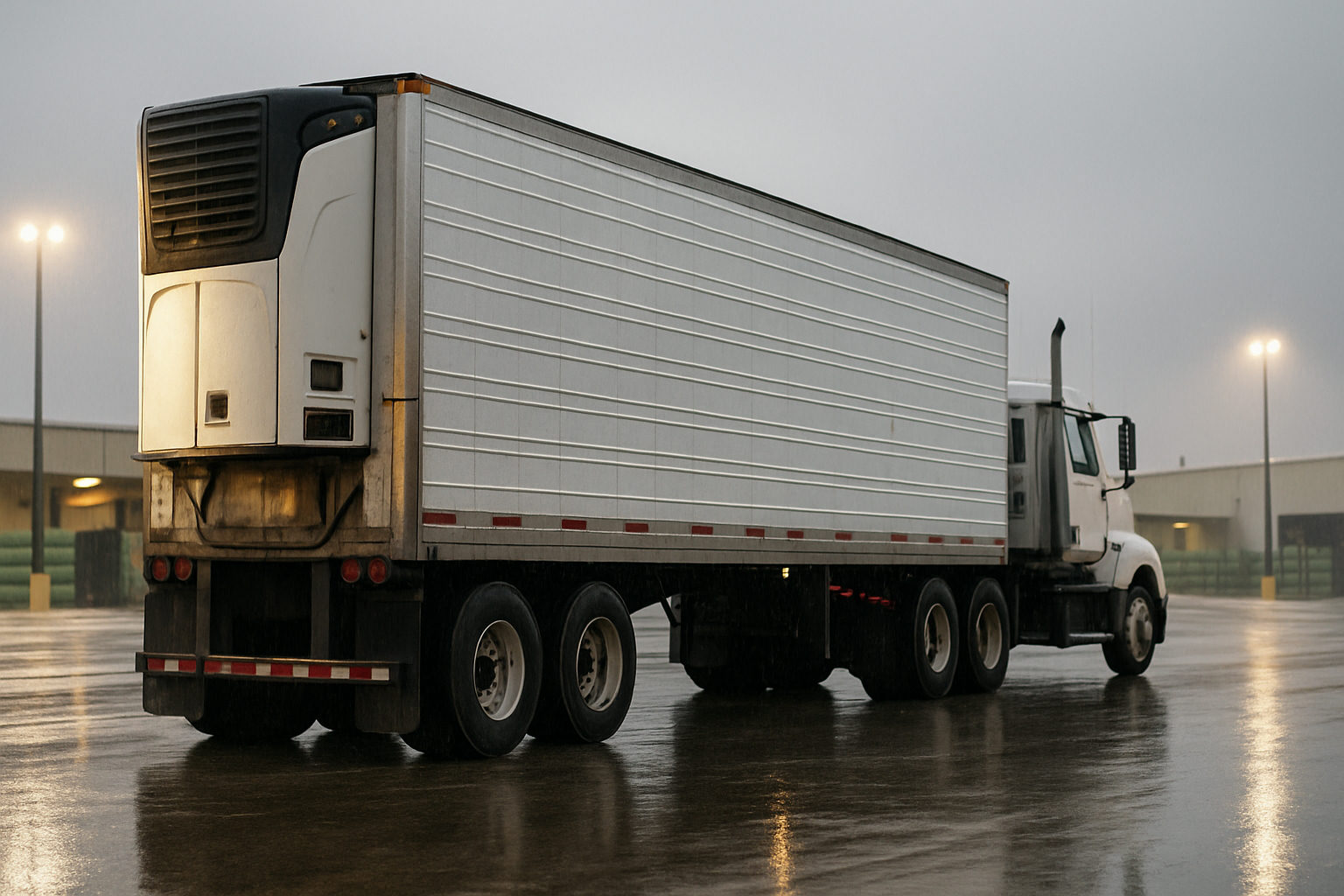
| Equipment type | Reefer and tanker/hazmat generally cost more than dry van due to cargo risk |
| Radius of operation | Local/intrastate runs can price differently than long-haul interstate |
| Driving record | Recent accidents or violations raise premiums noticeably |
| Cargo value | Higher-value freight pushes up motor truck cargo limits and premium |
If you haul flatbed, reefer, or dry van freight in and out of Michigan, the equipment type matters more than the state line. Compare flatbed truck insurance for Michigan-based carriers and reefer truck insurance for Michigan cold-chain haulers before you assume your quote should look the same as a dry van operator's.
What filings does Michigan require for new authority?
New authority carriers, whether based in Michigan or just running loads there, need to keep their federal filings current, including the BMC-91 or BMC-91X form your insurer submits to FMCSA on your behalf. As a broker, Trucker Path Insurance handles these filings directly with carriers rather than leaving you to chase paperwork. Missing a filing, or having a carrier cancel without you knowing, is one of the fastest ways to get your authority flagged or suspended. Given the cancellation volume we're seeing nationally this year, it's worth asking your current agent point blank whether your filing is active and who's monitoring it.
Frequently Asked Questions
Continue reading
- Michigan trucking insurance requirements
- Compare truck insurance quotes
- CDL Hours of Service Rules Explained (Plus What Violations Cost)
- Trucking Insurance Denver: What Colorado Truckers Pay in 2026
- Captive Insurance for Trucking: Costs and Real Alternatives
- Coverages we offer for owner-operators & fleets
- Common questions about trucking insurance
Ready to compare rates? Get a free trucking insurance quote from carriers built for trucking regulations.
Ready to Get Started?
Get personalized insurance quotes tailored to your business