Trucking Insurance Denver: What Colorado Truckers Pay in 2026
Get Your Free Insurance Quote
Compare quotes from top carriers in minutes
Trucking insurance in Denver costs more than a flatlands operation for two reasons that have nothing to do with your driving record: mountain pass exposure and Denver's status as a cargo theft target along the I-25 and I-70 corridors. Most owner-operators running out of the Denver metro area land in a wide range depending on equipment and authority age, and mountain routes push physical damage premiums higher than a similar truck running only I-80 through Nebraska. If you are trying to pin down Denver trucking insurance cost specifically, the honest answer is that it depends heavily on your lanes, your cargo, and how long you have held authority.

If you want the general cost breakdown for owner-operators nationwide, we already covered that in detail in our 2026 owner-operator cost guide. This post is about what changes when your home base is Denver specifically.
Why does Denver trucking insurance cost more than other Colorado cities
Denver rates run higher mainly because of two things underwriters price separately: mountain driving exposure and cargo theft frequency in the metro area.
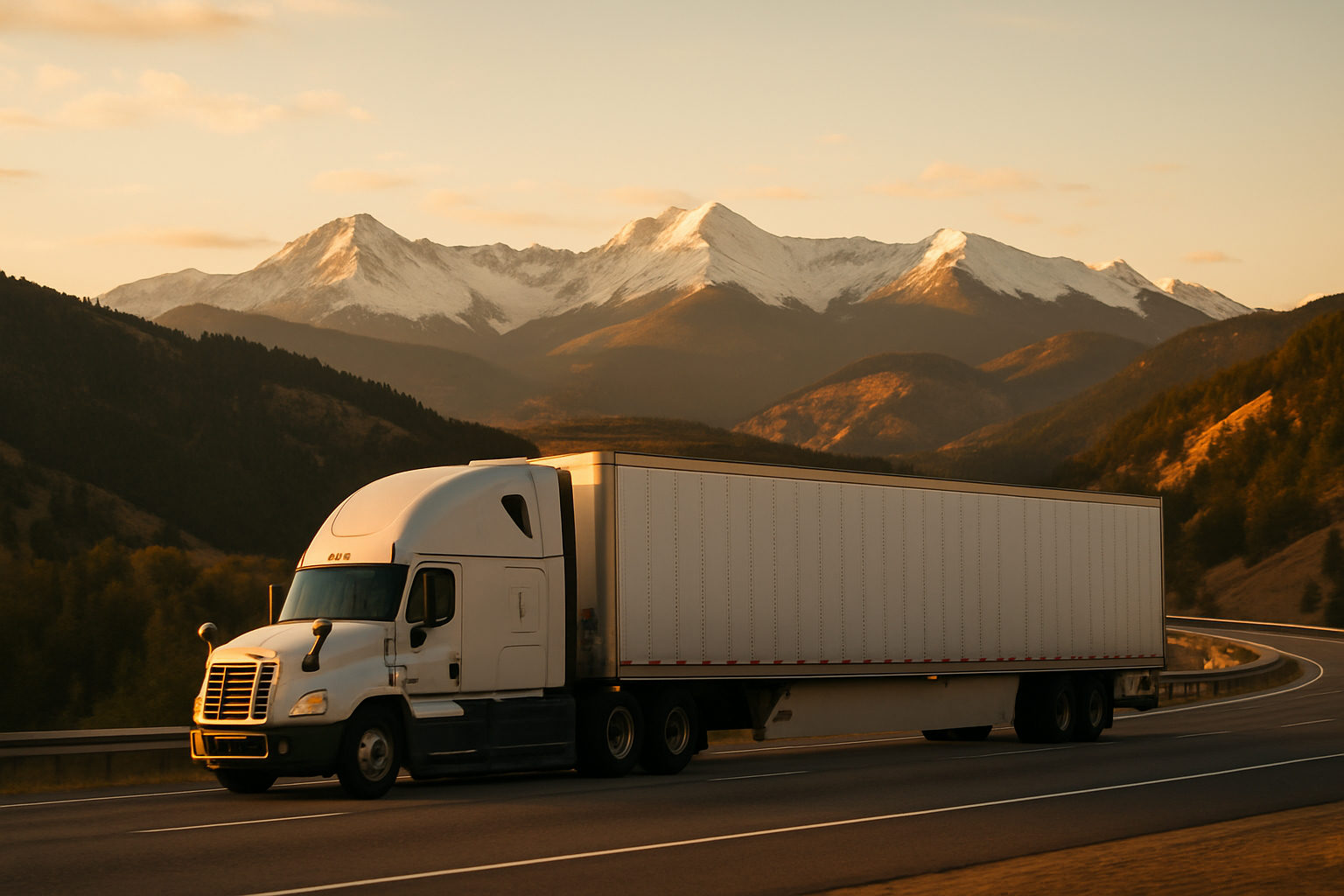
Any carrier running west out of Denver on I-70 through the Eisenhower Tunnel, Vail Pass, or Loveland Pass is driving grades and switchbacks that generate more physical damage claims than flat interstate miles. Underwriters know this and ask about your typical lanes on the application. If you run mountain freight regularly, expect your physical damage and cargo quotes to reflect it, even if you have never had a claim.
Denver is also a major intermodal and distribution hub, with rail yards, warehouses, and a lot of trailers sitting in drop lots overnight. That kind of exposure raises cargo theft risk, which shows up in motor truck cargo pricing, especially if you haul electronics, appliances, or other high-value freight.
What does trucking insurance actually cost for a Denver owner-operator
Costs vary by equipment, years of authority, and driving record, and there is no single published Denver-specific rate table, since most insurers price physical damage and cargo coverage nationally rather than by metro area. Treat the ranges below as planning estimates, not quotes, since your actual premium depends on your MC age, radius of operation, and loss history. Because the tables below are built on national averages, expect Denver's mountain grades and metro cargo theft exposure to nudge your actual physical damage and cargo quotes toward the higher end of each range, even before any state-specific rate table exists.
| Coverage type | Typical annual range (estimate) | Notes |
|---|---|---|
| Full commercial truck package (liability, cargo, physical damage combined) | $9,000 to $16,000 per truck | New authority and mountain lanes push toward the high end |
| Primary liability alone ($1M) | $5,000 to $8,000 (national estimate) | Before cargo, physical damage, and other coverages are added |
| Motor truck cargo ($100,000 limit) | $500 to $2,000 | Climbs toward $2,500 to $3,000+ for higher-risk freight, larger limits, or new-authority carriers |
| Physical damage (semi-tractor, roughly $120,000 value) | $3,600 to $7,200 | General national estimate; insurers do not publish Denver-specific physical damage rates |
| Non-trucking liability | $350 to $700 | For Colorado owner-operators leased to a carrier |
| General liability | $600 to $1,200 | Denver businesses average about $54 a month ($648 a year); national trucking average is closer to $606 a year |
These ranges come from a handful of published industry sources rather than a single Denver study, since no insurer breaks out cargo or physical damage pricing by metro area. The full-package and primary liability figures are from Logrock (current as of December 2025). The motor truck cargo figures are from Insurance.com (current as of July 2025). The physical damage figures are from FreightWaves Checkpoint (current as of 2026). The non-trucking liability figures are from FreightWaves Checkpoint (current as of 2026). The general liability figures, including the Denver-specific average, are from Insureon (current as of February 2026).
What actually moves your number up or down
A few practical levers matter more than most owner-operators expect. First, authority age: carriers under two years of authority get treated as higher risk industry-wide, and that gets layered on top of Denver's mountain and theft exposure. Second, your typical lanes: a truck that runs mountain freight several times a week is rated differently than one that occasionally crosses the passes. Third, freight type: electronics, appliances, and other high-resale-value cargo raise your motor truck cargo premium regardless of where you are based, but that effect is more pronounced in a metro area with active drop lots like Denver. Finally, loss history matters more than almost anything else. A clean three-year claims history can offset a lot of the geographic and authority-age penalties described above.
Does new authority matter more in Colorado than elsewhere
Yes, new authority status matters everywhere, but it hits harder in a state where mountain driving is already a rated factor. Carriers under 2 years of authority get treated as higher risk across the board, and stacking that with mountain exposure and Denver cargo theft rates can push quotes toward the top of the range shown above. This is not unique to Colorado, but it compounds here more than in a flat, low-theft state.
One data point worth knowing if you are shopping quotes right now: Trucker Path Insurance's own review of FMCSA filing records found 47,234 insurance cancellation filings nationwide between April 6, 2026 and May 25, 2026. That volume tells you a lot of carriers are getting dropped or switching mid-term, often because their broker never shopped multiple carriers for them in the first place. If you are new to authority, a lapse or cancellation on your record is exactly the kind of thing that spikes your Denver quote later, so it pays to get the coverage right the first time. You can verify any FMCSA filing question directly at fmcsa.dot.gov.
What coverage does federal law actually require for Denver based trucks
Federal minimums under 49 CFR Part 387 apply the same in Colorado as anywhere else. For interstate general freight at 10,001 lbs GVWR or more, the federal floor is $750,000 in public liability, though in practice most shippers and brokers now require $1,000,000, so plan on that as your working number. Hazmat and oil haulers need $1,000,000, and bulk explosives or poison gas haulers need $5,000,000. These figures come straight from federal regulation and do not change based on which state you operate from, though Colorado may layer its own intrastate rules on top for trucks that never cross state lines. Confirm the current requirement for your specific operation with FMCSA or the Colorado Department of Regulatory Agencies before you bind a policy. You can review the federal rule text directly at the FMCSA site as well.
Should you buy from a local Denver agent or a broker that shops multiple carriers
A broker that compares multiple carriers usually gets you a better fit than a single local agent tied to one company, especially for mountain and hazmat exposure where not every carrier wants the risk. A single-carrier agent can only offer what that one company is willing to write, and if that company is nervous about mountain grades or cargo theft in your zip code, you may not see their best possible rate. Working with a broker that pulls quotes across several carriers, and that also handles your FMCSA filings like the BMC-91, saves you from chasing paperwork across multiple companies yourself.
If you run dry van, reefer, flatbed, or hotshot loads through the Denver metro and mountain corridors, it is worth comparing coverage side by side before you renew. For general background on how coverage differs by state, see our state by state trucking insurance guide, and if you operate in Colorado specifically, start with our Colorado trucking insurance page.
Frequently Asked Questions
Continue reading
- Colorado trucking insurance requirements
- Compare truck insurance quotes
- Captive Insurance for Trucking: Costs and Real Alternatives
- Florida Motor Truck Cargo Insurance: What to Do First
- USDOT Deactivation Pause: What It Costs You in Insurance
- Coverages we offer for owner-operators & fleets
- Common questions about trucking insurance
Ready to compare rates? Get a free trucking insurance quote from carriers built for insurance tips.
Ready to Get Started?
Get personalized insurance quotes tailored to your business