Best Insurance for a One Ton Truck in Florida (2026)
Get Your Free Insurance Quote
Compare quotes from top carriers in minutes
There is no single “best” insurance company for a one ton truck in Florida, because the right policy depends on what the truck does, not what it looks like in the driveway. A Ford F-350 used strictly for personal errands can often stay on a personal auto policy. The same truck pulling a gooseneck trailer for hire, hauling freight, or working under its own FMCSA authority needs a commercial policy with liability limits that match federal rules. The fastest way to know which bucket you're in is to ask one question: does this truck ever move goods or do work for someone else's money?
If the answer is yes, you're shopping for commercial auto liability, physical damage, and possibly motor truck cargo, not a beefed up personal policy. If the answer is no, a personal policy with a commercial use endorsement may be enough, but most insurers will cancel or deny a claim the moment they find out the truck was working when it crashed.
Does a one ton truck in Florida need commercial insurance?
Yes, if it's used to haul for compensation, tow a trailer loaded with goods you're being paid to move, or operate under a USDOT number. Florida doesn't carve out an exception for one ton pickups just because they look like personal trucks. What matters to an insurer and to the FMCSA is gross vehicle weight rating (GVWR) and how the truck is used, not the body style.
Most one ton duallies (F-350, Silverado 3500, Ram 3500) carry a GVWR between 11,000 and 14,000 pounds. Once you add a loaded trailer, combined weight easily clears the 10,001 pound threshold where federal interstate commercial rules apply. Under 49 CFR Part 387, interstate carriers hauling general freight need a minimum of $750,000 in public liability coverage, though in practice most brokers and shippers won't book a load with less than $1,000,000. You can read the actual rule at ecfr.gov's Part 387 text or confirm current thresholds directly with FMCSA or your state department of insurance before you bind anything.
What Florida-specific filings does a one ton truck need beyond federal minimums?
Carrying the right insurance limits is only part of staying compliant in Florida. If your one ton truck operates under its own interstate authority, you'll also need a BOC-3 filing, which designates process agents in every state you operate in so legal papers can be served if something goes wrong on the road. Most insurance brokers either file this for you or point you to a service that handles it alongside your policy setup.
You'll also need to register for the Unified Carrier Registration (UCR) program, which applies to any motor carrier, broker, or freight forwarder operating in interstate commerce, including one ton trucks pulling trailers over the weight threshold. UCR fees are based on fleet size, so a single truck owner-operator pays the lowest tier, but skipping it can mean fines during a roadside inspection even if your insurance is otherwise in order. Florida-based haulers who only move freight within the state (true intrastate operations) may have lighter filing requirements, but the moment a load crosses state lines, both BOC-3 and UCR typically apply. Our Florida trucking insurance page walks through these filings in more detail alongside the state's insurance expectations.
What does it cost to insure a one ton truck in Florida?
Premiums for a one ton truck running commercially in Florida vary widely based on your MVR, years of CDL or commercial driving experience, radius of operation, and the trailer you pull, with hotshot operators often paying more because of trailer exposure and higher mileage. A clean three year driving history and an established authority (rather than brand new authority) both tend to pull the number down. Rather than quote a single figure that may not match your situation, the most reliable way to know your actual cost is to compare quotes from multiple carriers once your use case, equipment, and driving history are known.
Florida adds its own wrinkle: it's one of the states where we've seen a disproportionate share of FMCSA insurance cancellation filings. Trucker Path Insurance tracked 47,234 FMCSA insurance cancellation filings nationwide between April 6, 2026 and May 25, 2026, and Florida was one of the top four states by volume, behind only California, Illinois, and Texas. A cancellation filing usually means a carrier dropped coverage, often from nonpayment or a carrier exiting a risk class, which forces the trucking company to scramble for new coverage fast or go out of service. If you're insuring a one ton truck for commercial use in Florida, that's a real signal: shop with a broker who can move you between carriers quickly if your current one pulls out, rather than locking into a single insurer with no backup option.
| Use case | Insurance type needed | Typical FMCSA liability requirement |
|---|---|---|
| Personal use only, no towing for pay | Personal auto, possibly with commercial use rider | None, not a regulated carrier |
| Hotshot hauling general freight, interstate | Commercial auto liability, cargo, physical damage | $750,000 minimum, $1,000,000 common in practice |
| Hauling oil or many hazmat classes | Commercial auto liability, cargo, hazmat endorsement | $1,000,000 |
| Towing a personal trailer, not for hire | Personal auto, trailer coverage | None |
What coverage do one ton hotshot trucks actually need?
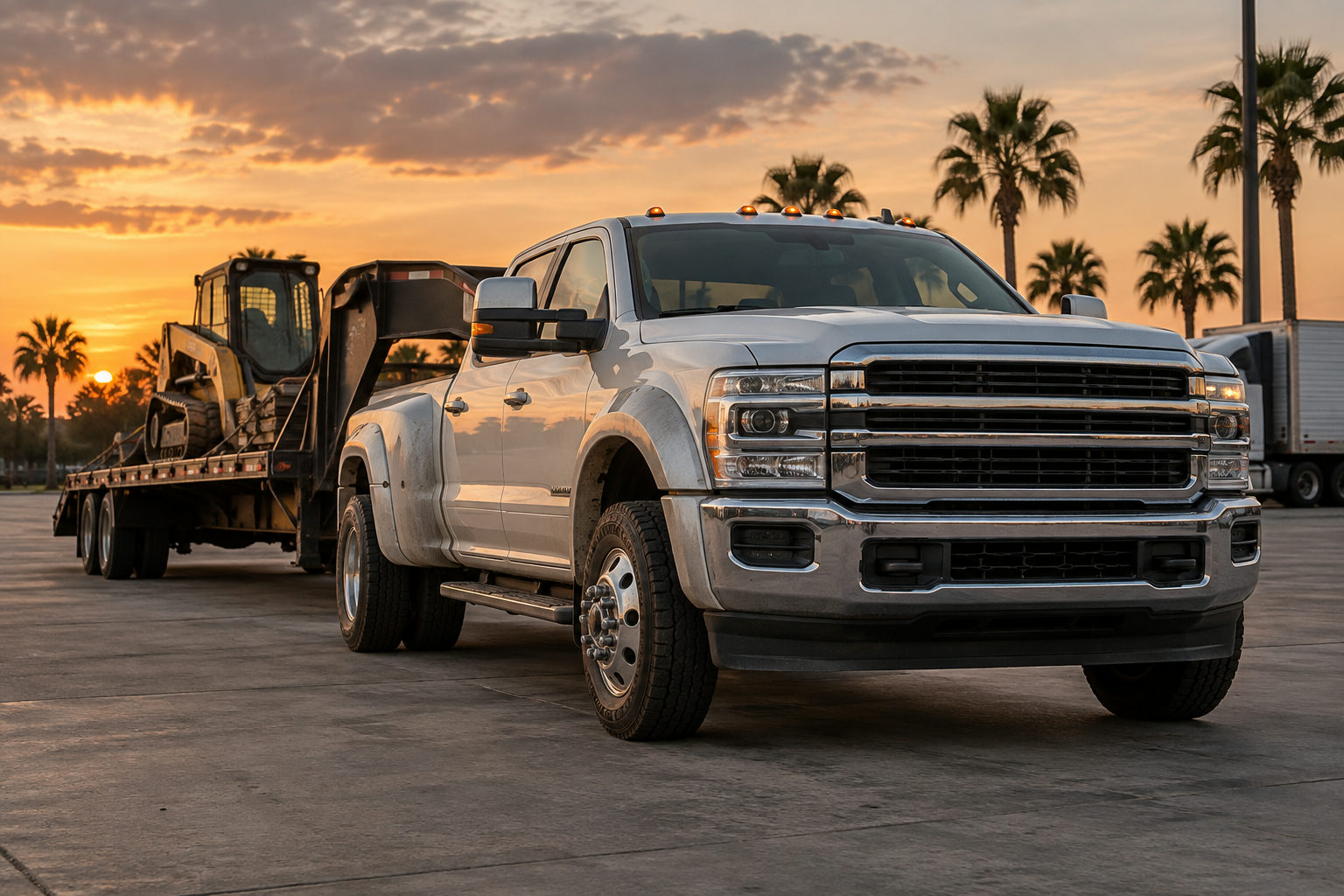
A one ton truck pulling a gooseneck or flatbed trailer for hotshot work needs more than a basic liability policy. At minimum you're looking at primary liability, motor truck cargo to cover the freight you're hauling, and non-trucking liability for the miles you drive the truck without a load under someone else's dispatch. If you lease the trailer, trailer interchange coverage matters too. Our breakdown of hotshot insurance requirements walks through exactly which coverages apply to new versus established hotshot operators, and the hotshot insurance cost guide lays out what drives the premium up or down for this exact truck class.
If you're newly authorized and still building a safety record, your options narrow. New-authority carriers often charge more for the first 12 to 24 months regardless of equipment, simply because there's no track record to underwrite against. That's not specific to one ton trucks, but it hits hotshot owner-operators especially hard since many enter the business with a brand new MC number and a truck they just bought.
Personal use versus commercial: where's the line for a one ton pickup?
A lot of one ton owners sit in a gray zone: they use the truck for personal towing most of the time but take the occasional paid hauling job. That gray zone is exactly where claims get denied. If you're weighing whether your situation calls for a personal policy, a commercial policy, or a hybrid, our guides on pickup truck insurance for personal versus commercial use and getting an online pickup truck insurance quote go through the specific triggers (towing for pay, operating under a USDOT number, hauling freight) that push a truck out of personal coverage and into commercial territory.
What is the best insurance for a one ton truck in Florida?
The right approach is to compare quotes across multiple carriers rather than calling one company and accepting whatever they quote. A broker who works with several carriers licensed in Florida can show you real options side by side, including which carriers specialize in one ton and hotshot risk versus which ones are better suited to full size semis. Trucker Path Insurance is licensed across all 48 contiguous states, not Alaska or Hawaii, and quotes liability, cargo, physical damage, non-trucking liability, trailer interchange, general liability, occupational accident, and new-authority programs for equipment ranging from hotshot rigs to dry van and reefer trailers.
If you're deciding between staying an owner-operator or scaling to a small fleet, it's also worth reading our guide on best truck insurance for owner operators, which covers how coverage needs change as you grow. And if your freight runs through Florida regularly, our Florida trucking insurance page breaks down state-specific filing requirements beyond the federal minimums.
Frequently Asked Questions
Continue reading
- Florida trucking insurance requirements
- Compare truck insurance quotes
- Trucking Insurance in Logan County, KY: Quick Checklist
- Insurance for Truckers LLC: What to Do First and in What Order
- Commercial Trucking Insurance in Oklahoma City: Cost Guide
- Coverages we offer for owner-operators & fleets
- Common questions about trucking insurance
Ready to compare rates? Get a free trucking insurance quote from carriers built for insurance tips.
Ready to Get Started?
Get personalized insurance quotes tailored to your business