Pickup Truck Insurance: Personal vs Commercial Coverage Guide
Get Your Free Insurance Quote
Compare quotes from top carriers in minutes
A pickup truck needs personal auto insurance if you drive it for errands, commuting, or towing your own equipment. It needs commercial truck insurance the moment you haul freight, equipment, or cargo for someone else for payment, even occasionally. That single fact, whether money changes hands for the hauling, is what determines which policy you actually need and what it will cost.
Most people searching “pickup truck insurance” are in one of two situations: they want to know what a normal truck costs to insure, or they just started hotshot hauling and realized their personal policy will not pay a claim. Both questions have real, different answers below.
What does pickup truck insurance cost for personal use?
For a personal, non-commercial pickup truck, full coverage insurance averages about $188 a month ($2,256 a year) nationally, with typical model-level rates running from roughly $1,860 (for something like a Ford F-150) up to $2,900 depending on the truck, driver profile and state, according to Insurify (current as of October 2026). Liability-only coverage averages about $100 a month ($1,200 a year), with typical rates for individual models running from about $900 to $1,200 a year. Those figures are national averages meant to set expectations, not a quote for your specific truck.
If you also drive for work on the side, whether that is rideshare, delivery, or occasional paid hauling, your personal policy likely will not cover a claim that happens during that activity. That gap is covered in detail in our post on car insurance for truck drivers, which explains what a personal auto policy actually excludes once you're working.
Do you need commercial insurance for a pickup truck?
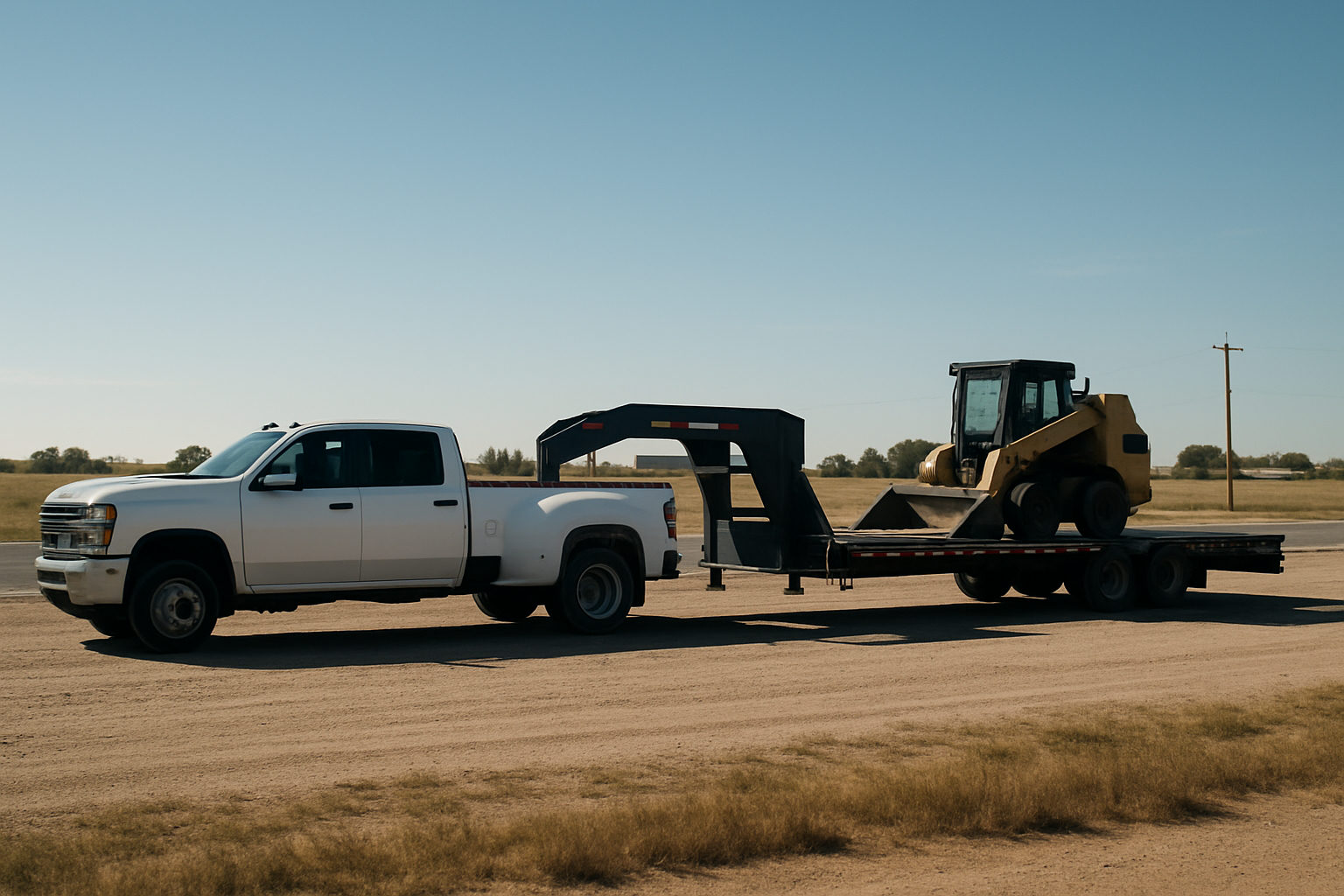
Yes, if you use the pickup to haul freight or equipment for compensation, even part time, you need commercial truck insurance, not a personal auto policy. This is the single most common coverage gap we see among new hotshot operators. A lot of guys start hauling with a 1-ton dually and a gooseneck trailer, still carrying personal auto, and don't realize their policy has a business-use exclusion until a claim gets denied.
The federal trigger point matters here. Under 49 CFR Part 387, interstate carriers hauling non-hazardous freight with a gross vehicle weight rating of 10,001 lbs or more generally need at least $750,000 in public liability coverage, though most shippers and brokers now require $1,000,000 as the practical standard. Many hotshot combinations, a heavy-duty pickup plus a loaded trailer, cross that 10,001 lb threshold even though the truck alone doesn't look like a big rig. Confirm your exact GVWR and combined weight with FMCSA or your state department of insurance before you assume you're exempt.
What's the difference between personal and commercial pickup truck insurance?
The core difference is what the policy is built to pay for: personal auto covers you and your household driving for non-business reasons, while commercial coverage protects freight, other motorists, and your authority when you're hauling for pay. Commercial policies also carry pieces personal policies simply don't offer, like motor truck cargo coverage, non-trucking liability, and trailer interchange.
| Coverage type | Who it's for | What it typically includes |
|---|---|---|
| Personal auto | Daily driver, no paid hauling | Liability, collision, comprehensive, no cargo or business-use coverage |
| Non-trucking liability | Owner-operators between loads, bobtail trips | Liability when the truck is used personally but still under commercial authority |
| Hotshot commercial policy | Pickup hauling trailers for pay | Primary liability, motor truck cargo, physical damage, trailer interchange |
| Full commercial fleet policy | Small fleets with multiple units | All the above plus general liability and occupational accident options |
If hotshot hauling is your actual business model, the page on hotshot insurance breaks down what's bundled into that kind of policy, and hotshot insurance requirements walks through what new authority holders have to carry before they can legally haul a load.
Here's a simple way to see the dollar difference in practice. Picture a driver with a 1-ton dually pickup worth about $55,000, pulling a $35,000 flatbed trailer loaded with $40,000 of equipment. On a personal auto policy, none of that cargo value, trailer, or business-use exposure is covered at all. Moving to a hotshot commercial policy with $1,000,000 liability, cargo coverage sized to the load, and physical damage on both units means the insurer is now underwriting freight value and commercial liability risk, not just a truck used for errands, which is exactly why the premium jumps the way it does.
How much does it cost to insure a hotshot pickup truck?
Hotshot insurance for a pickup-and-trailer combination generally runs higher than personal auto because it carries commercial liability limits and cargo coverage, often landing in the $1,300 to $2,500 per month range for new authorities as of late 2026, according to FleetGuard USA, though the real number depends heavily on your driving record, radius of operation, and how long you've held authority. New authority with no operating history is the single biggest cost driver, since carriers have no claims data to price against. The page on hotshot insurance cost goes deeper into the specific factors that move your rate up or down.
New authorities also churn a lot in year one, and that shows up in cancellation data. Trucker Path Insurance tracked 47,234 FMCSA insurance cancellation filings nationwide between April 6, 2026 and May 25, 2026, a volume that underscores why insurers and brokers take lapses seriously: under FMCSA rules, an insurer's cancellation filing (Form BMC-91X) starts a roughly 30-day clock after which a carrier's operating authority can be revoked if replacement coverage isn't filed, according to TruckerNavi Insurance. A lot of those cancellations trace back to carriers shutting down or switching providers in their first year, which is exactly the period when a hotshot owner-operator's rate is least settled. If you're brand new to authority, expect your first renewal quote to look different than your opening rate once a few months of claims history exist.
What's the cost of adding general liability or fleet coverage?
If you're bundling general liability on top of your hotshot primary policy, which covers things like loading-dock injuries or property damage unrelated to driving, expect to add somewhere in the $1,200 to $2,800 a month range as of October 2026 for a small hotshot operation, depending on how much you're hauling and how many units are on the policy. That's a rough planning estimate, not a quote, since insurers price general liability based on payroll, revenue, and loss history as much as vehicle count.
What coverage limits should a pickup truck carry for commercial hauling?
At minimum, interstate hotshot operators hauling general freight should carry the $1,000,000 liability standard that most brokers and shippers require, plus motor truck cargo coverage sized to the value of what you typically haul. If you're hauling oil or certain hazardous materials, the federal floor jumps to $1,000,000, and bulk explosives, poison gas, or hazardous substances require $5,000,000. These are federal minimums under 49 CFR Part 387 and don't change by state, though your state may add its own intrastate rules on top, so confirm specifics with FMCSA or your state DOI before you bind a policy.
Cargo coverage is where a lot of hotshot operators get caught short. A pickup hauling a $40,000 piece of equipment needs cargo limits that actually match that value, not a generic $25,000 default that leaves a gap if something's damaged in transit.
Intrastate rules on top of the federal floor vary by state, so if you're running loads that stay inside one state's borders, check the specifics for where you operate. Our guides for Texas and Florida walk through state-specific requirements that can differ from the federal interstate standard.
Frequently Asked Questions
Continue reading
- Commercial truck insurance
- Compare truck insurance quotes
- Commercial Auto Fleet Insurance Illinois: What It Costs
- Out of Service Violations and Insurance Premiums
- English Proficiency Violation Insurance Rates
- Coverages we offer for owner-operators & fleets
- Common questions about trucking insurance
Ready to compare rates? Get a free trucking insurance quote from carriers built for insurance tips.
Ready to Get Started?
Get personalized insurance quotes tailored to your business