What Is a Reefer Truck? How Refrigerated Trucks Work
Get Your Free Insurance Quote
Compare quotes from top carriers in minutes
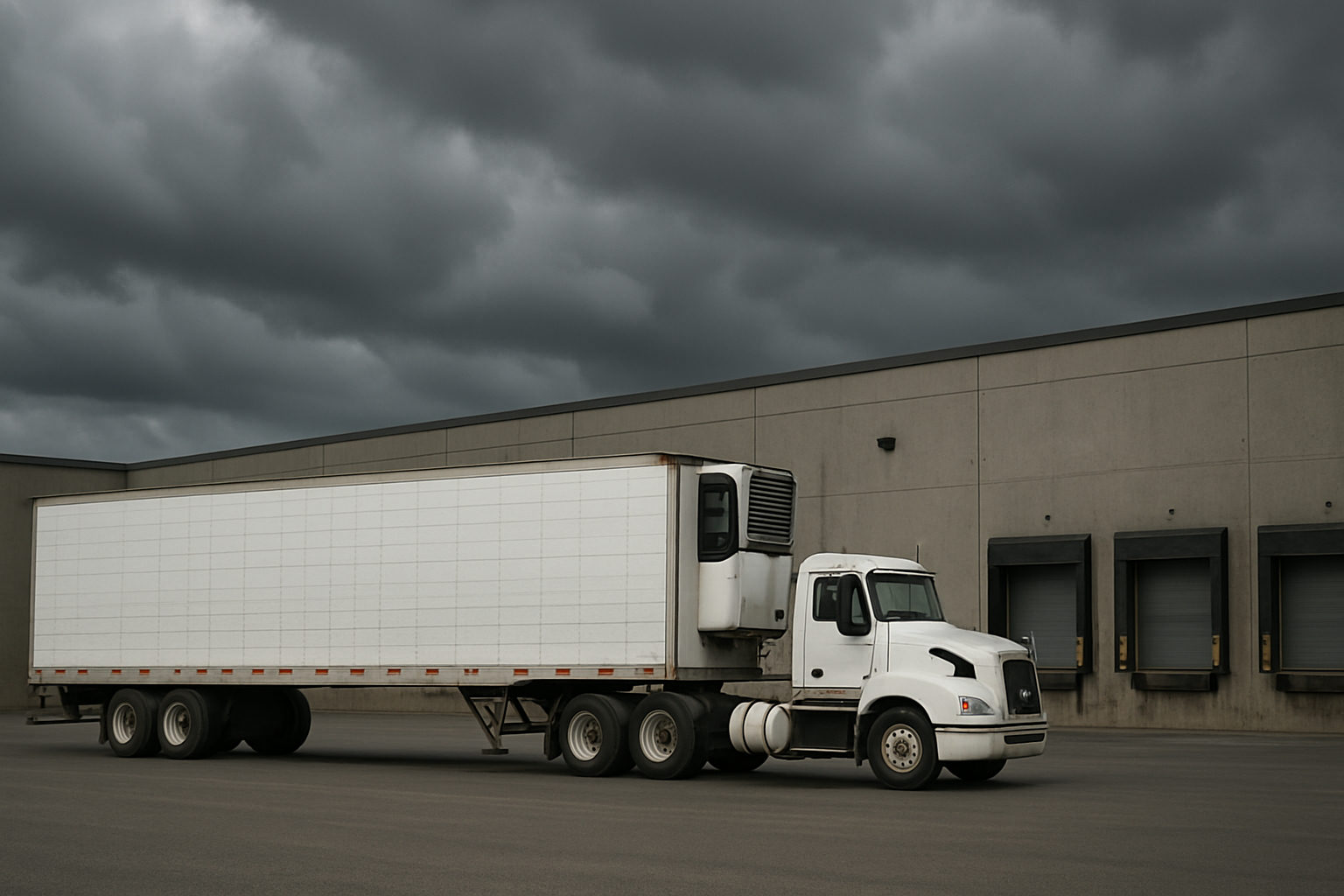
A refrigerated truck, usually called a reefer, is a truck or trailer with an insulated cargo box and its own refrigeration unit that holds freight at a set temperature for the whole trip. In trucking, "reefer" most often means a 53-foot refrigerated semi-trailer pulled by a tractor, though refrigerated box trucks and cargo vans work on the same idea at a smaller scale. The unit on the front of the box can cool or heat, so a reefer can keep ice cream frozen in July or keep produce from freezing on a January run through Iowa.
Reefers carry the food, medicine and other goods that spoil or lose value when they get too warm or too cold. They are among the most useful and most demanding equipment in freight. Below is how they work, the main types, what they haul, the rules that apply, and the coverage a reefer operation needs.
How does a reefer truck keep freight cold?
A reefer keeps freight cold with two things working together: an insulated box that slows heat getting in, and a transport refrigeration unit (TRU) that pulls heat out and pushes conditioned air through the load. On a standard reefer trailer the unit is mounted on the nose of the trailer, above the kingpin, and it runs on its own small diesel engine, completely separate from the tractor's engine.
It works like a kitchen refrigerator built for the road. A compressor moves refrigerant through a loop, the evaporator inside the box absorbs heat, and fans blow cold air along the ceiling toward the rear doors. The air then returns along the floor, which is why reefer trailers have grooved or ducted floors and why pallets are loaded with space around them. Block that airflow and the back of the load warms up even when the display at the front reads perfectly.
According to Hale Trailer's guide to reefer temperature ranges, most trailer units can hold a range of roughly minus 20 degrees Fahrenheit up to about 80 degrees, depending on the unit and the load. The two big names on the front of most North American trailers are Thermo King and Carrier Transicold.
A few operating details matter more than people expect:
- Setpoint. The temperature the shipper wants, written on the bill of lading. The driver sets the unit to match it.
- Continuous or start-stop mode. Continuous mode runs the fan the whole time for even air, which suits produce. Start-stop mode shuts the engine off once the box is at temperature and restarts as needed, which saves fuel and suits frozen loads that are less sensitive to small swings.
- Pre-cooling. The empty trailer is cooled to setpoint before loading. A reefer is built to hold temperature, not to chill warm product, so freight is expected to arrive at the dock already at the right temperature.
- Temperature records. Most units log the temperature through the trip. That download is often the first thing a receiver, a shipper or an insurer asks for when a load is questioned.
What are the main types of refrigerated trucks?
The main types of refrigerated trucks are reefer semi-trailers, refrigerated straight trucks, and refrigerated vans, and the right one depends on how far the freight goes and how much of it there is.
| Type | What it is | Typical work |
|---|---|---|
| Reefer semi-trailer | Insulated trailer, usually 53 feet, with a nose-mounted unit, pulled by a tractor | Long-haul and regional produce, meat, frozen and grocery freight |
| Multi-temp trailer | A reefer trailer split into zones by movable bulkheads, each held at its own temperature | Grocery and food-service runs that mix frozen, chilled and dry product |
| Refrigerated straight truck | A box truck with an insulated body and a unit mounted above the cab | Local delivery to restaurants, stores, florists and clinics |
| Refrigerated cargo van | A van with an insulated cargo area and a smaller, often engine-driven, cooling system | Last-mile food, catering and small pharmaceutical deliveries |
A straight truck or van is still a reefer to the people who run it, but the equipment, radius and insurance setup look quite different from a tractor pulling a 53-foot trailer. If you run the smaller equipment, our page on box truck insurance covers how that side is usually written.
What kind of freight do reefer trucks haul?
Reefer trucks haul anything that has to stay inside a temperature band to stay sellable or safe. The common categories are:
- Fresh produce, from lettuce and berries to apples and citrus
- Meat, poultry and seafood, fresh or frozen
- Dairy, eggs and cheese
- Frozen foods and ice cream
- Pharmaceuticals and vaccines that need a controlled range
- Flowers and plants
- Some non-food goods such as certain chemicals, cosmetics, candles and electronics that cannot take extreme heat or cold
Reefers can also haul ordinary dry freight with the unit switched off. Many reefer operators take a dry load on a backhaul so the trailer is not running empty, which is one reason a reefer is a flexible piece of equipment for a small operation.
How is running a reefer different from a dry van?
Running a reefer differs from a dry van mostly in the extra equipment you have to manage and the extra ways a load can go wrong. The freight often pays more, but the work has more moving parts.
- More equipment to maintain. The refrigeration unit has its own engine, fuel tank, belts, filters and refrigerant system, on top of the truck and trailer.
- More fuel. The unit burns its own diesel, so a reefer carrier pays to fuel two engines.
- Heavier trailer. Insulation and the unit add weight, which can leave a little less room for payload than a dry van of the same length.
- Tighter appointments. Perishable freight cannot sit, so pickup and delivery windows tend to be strict, and detention can hurt more when the product is aging on the trailer.
- Load rejections. A receiver can refuse a load that arrives out of temperature, damaged, or with a questionable temperature record.
- Washouts and sanitation. Food shippers often want a clean, odor-free trailer, and some require a documented washout between loads.
Operators who do well with reefers treat the unit, the paperwork and the pre-trip as seriously as the truck. If you are weighing whether to buy your own equipment at all, our piece on becoming an owner-operator walks through that decision.
What rules apply to refrigerated trucks?
Refrigerated trucks follow the same federal safety and insurance rules as any other truck, plus a food safety rule and, in California, an emissions rule that are specific to temperature-controlled freight.
The FDA sanitary transportation rule
Under the Food Safety Modernization Act, the FDA's Sanitary Transportation of Human and Animal Food rule (21 CFR Part 1, Subpart O) applies to shippers, loaders, carriers and receivers that move food by truck or rail. For carriers, it covers keeping vehicles suitable and clean for food, maintaining adequate temperature control, preventing cross-contamination, training personnel in sanitary transportation practices, and keeping records of procedures, agreements and training. The FDA exempts operations with less than $500,000 in average annual revenue, along with a few specific situations, so check the rule itself to see where your operation falls. Many shippers also write these duties into carrier agreements.
California's TRU rules
The California Air Resources Board regulates the emissions of transport refrigeration units. Its TRU regulation requires units that operate in California, including those based out of state, to be registered in CARB's ARBER system before they are dispatched into the state, along with operating fees and compliance labels. If you ever take a load into California, check the unit's status before you go.
Federal insurance minimums
A reefer carrier's liability minimum is set by the freight, not the trailer. Under 49 CFR Part 387, an interstate carrier hauling general non-hazardous freight in a vehicle of 10,001 pounds GVWR or more must carry at least $750,000 in public liability. In practice most brokers and shippers require $1,000,000, so that is the working standard for reefer freight too. These are federal figures and they are the same in every state.
What insurance does a reefer truck need?
A reefer truck needs the same core policies as any for-hire truck, plus one piece of coverage that matters more for reefers than for almost any other equipment: protection for spoilage when the refrigeration unit fails.
- Primary liability. Covers injury and damage you cause to others. This is the federally required coverage described above.
- Motor truck cargo. Covers the freight itself. Reefer loads are often worth more than typical dry freight, so reefer haulers commonly carry higher cargo limits than the standard $100,000. Our breakdown of what $100K cargo insurance costs shows how limits change the price.
- Reefer breakdown coverage. A standard cargo policy usually excludes spoilage caused by a mechanical or electrical failure of the refrigeration unit. Reefer breakdown coverage adds it back. Without it, a compressor failure on a loaded trailer can leave you paying for the whole load. We cover the pricing and conditions in our guide to reefer breakdown coverage for refrigerated trailers.
- Physical damage. Covers your tractor and trailer. A reefer trailer is worth more than a dry van because of the insulated body and the unit, so make sure the stated value reflects the unit too.
- Trailer interchange. Needed if you pull reefer trailers you do not own under an interchange agreement.
One thing to know before a claim ever happens: breakdown and spoilage claims usually turn on paperwork. Insurers that write reefer coverage commonly look for pre-trip inspection records, the unit's temperature download, and proof you ran the shipper's setpoint. Keeping those records clean is part of keeping the coverage useful.
Most of the people buying this coverage are small operators. Trucker Path Insurance analysis of FMCSA filing data found that across 118,410 carriers in the states we serve, 62% run a single power unit and another 28% run between two and five. For a one-truck reefer operation, a single denied spoilage claim can be the difference between a good year and a bad one, which is why the breakdown endorsement is worth pricing out on day one rather than after the first failure. You can see how we approach the full package on our reefer truck insurance page, and compare it with other equipment on our insurance by vehicle type page.
Frequently Asked Questions
Continue reading
- Reefer truck insurance
- Compare truck insurance quotes
- Truck Insurance Fleet Program: Cost & Pricing Factors
- Hot Shot Insurance in Abilene TX: Cost and Requirements
- New Kensington PA Commercial Truck Insurance Coverage
- Coverages we offer for owner-operators & fleets
- Common questions about trucking insurance
Ready to compare rates? Get a free trucking insurance quote from carriers built for insurance tips.
Ready to Get Started?
Get personalized insurance quotes tailored to your business