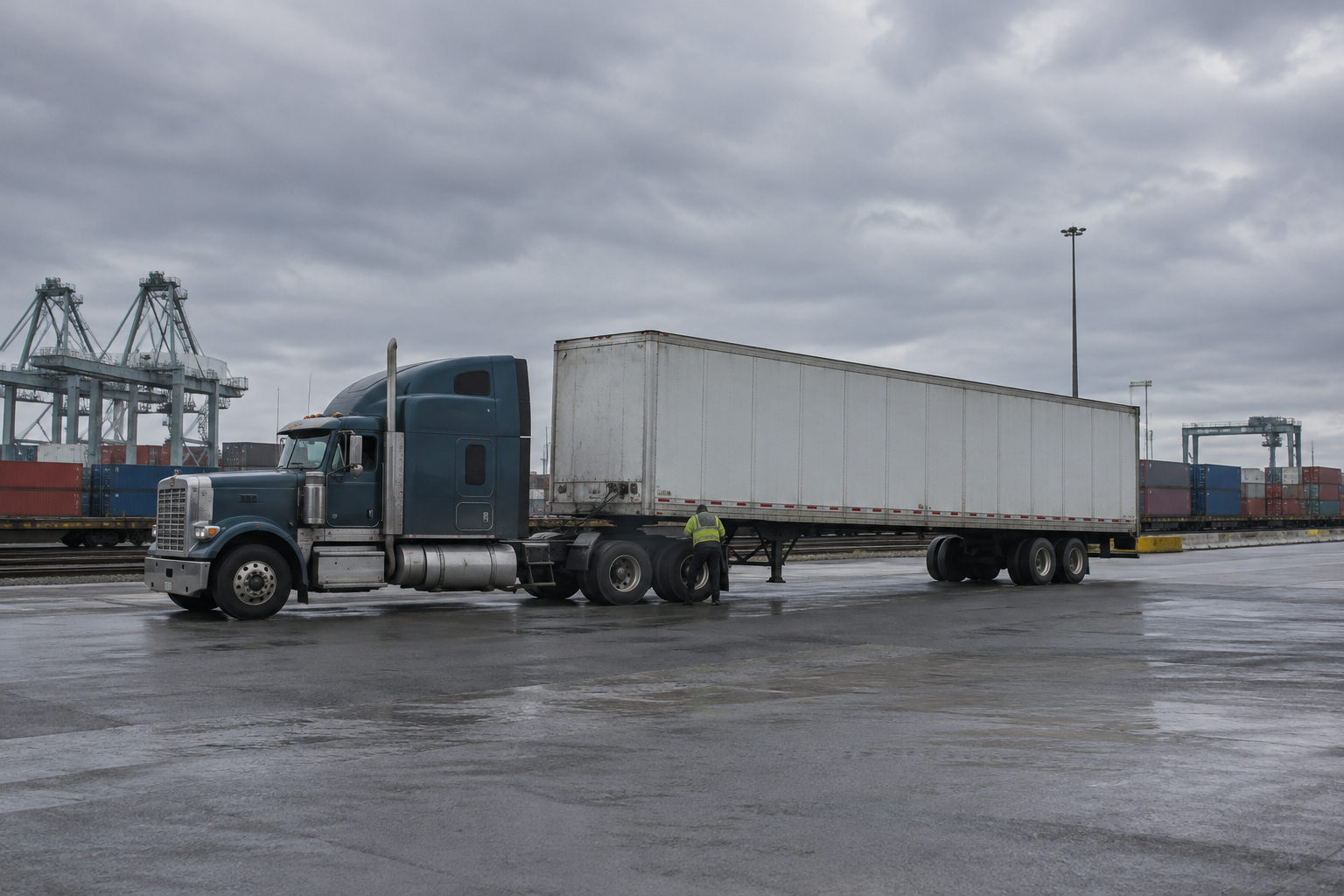
18 Wheeler Insurance Policy Limits: 2026 Guide
Get Your Free Insurance Quote
Compare quotes from top carriers in minutes
The federal minimum liability limit for an 18 wheeler hauling general freight interstate is $750,000, under 49 CFR Part 387. In practice, that number is rarely the one that gets a load assigned to you. Most shippers, brokers, and freight contracts ask for $1,000,000 in liability coverage as a condition of doing business, well above the federal floor for general non-hazardous freight. If you haul oil or many other hazardous materials, the federal floor jumps to $1,000,000, and bulk shipments of explosives, poison gas, or hazardous substances require $5,000,000. Those are federal minimums, not suggestions, and you should always confirm current figures directly with FMCSA or your state department of insurance before you bind a policy.
Policy limits are also more than one number. An 18 wheeler policy usually stacks several coverages together, each with its own limit, and understanding the difference between them is what actually determines whether you are protected or exposed after a bad accident.
What is the minimum liability limit required for an 18 wheeler?
The legal floor is $750,000 for interstate carriers hauling non-hazardous freight in a truck with a GVWR of 10,001 pounds or more, set out in 49 CFR Part 387. That figure has not moved in years and is identical in every state because it is a federal rule, though some states layer their own intrastate requirements on top for trucks that never cross state lines.
In the real world, $750,000 is a legal floor you technically could run with, not a workable business number. Most freight brokers, shippers, and factoring companies will not sign you on without $1,000,000 in combined liability coverage, which is why the following sections build around that figure as the practical target rather than the bare federal minimum.
Why do most shippers require $1 million instead of the federal minimum?
Shippers set their own contractual bar above the FMCSA floor because a serious crash involving an 18 wheeler can easily generate claims well past $750,000 in medical bills, lost cargo, and legal costs. A policy that gets exhausted on a single catastrophic claim leaves the shipper and the injured party chasing the carrier's personal assets, which is exactly what brokers try to avoid by setting a higher bar as a condition of working with you. This is general industry practice rather than a rule written anywhere, but it is consistent enough across brokers and shippers that it functions like one.
This is also why so many owner-operators who start with the bare federal minimum end up upgrading within their first year of authority. If you are still deciding what to carry, primary liability coverage is the piece of the policy that satisfies both the FMCSA requirement and most contract requirements, so it is worth getting that limit right before you quote anything else.
What limits apply to hazmat, tankers, and other specialized freight?
Hazmat and oil haulers face a $1,000,000 minimum liability limit under the same federal rule, and carriers moving bulk explosives, poison gas, or hazardous substances must carry $5,000,000. These thresholds are tied to the type of commodity, not the size of the truck, so a smaller hazmat-rated unit can still trigger the higher limit requirement.
Here is how the federal limits break down by freight type, alongside the practical minimum most contracts tend to ask for:
| Freight type | Federal minimum (49 CFR 387) | Typical contract requirement |
|---|---|---|
| General non-hazardous freight, interstate | $750,000 | $1,000,000 |
| Oil and many hazardous materials | $1,000,000 | $1,000,000 |
| Explosives, poison gas, hazardous substances (bulk) | $5,000,000 | $5,000,000 |
For the oil and hazmat tier, the federal floor and the typical contract requirement are usually the same number, since few brokers push past the regulatory minimum for this category unless the cargo itself is unusually high value. Higher limits, sometimes $2,000,000 or more, tend to show up for high-value cargo or the highest-risk hazmat classes rather than for general oil and hazmat freight across the board.
These numbers are federal and do not change by state, though intrastate-only carriers should check their own state's rules, since some states set different thresholds for trucks that never leave their borders. If you run specialized or hazmat freight, it is worth confirming your exact classification with FMCSA before you lock in a limit, since getting it wrong can mean a lapse in compliance even if your policy looks fine on paper. You can also check requirements for your own state at state truck insurance requirements.
How do cargo and physical damage limits differ from liability limits?
Liability limits cover damage and injury you cause to other people and property; they do not pay to replace your trailer, your load, or your own truck. Motor truck cargo coverage has its own separate limit, usually chosen based on the maximum value of freight you typically haul, and physical damage coverage has a limit tied to the value of your tractor and trailer.
This matters because a trucker who carries $1,000,000 in liability but only $10,000 in cargo coverage can still be badly exposed if they haul a $75,000 load. If you are not sure what combination makes sense for your operation, owner-operator insurance coverage options walks through how liability, cargo, and physical damage limits typically get stacked together for a single-truck authority.
How does excess liability stack over primary limits?
Once your primary liability policy is in place, an excess or umbrella liability policy sits on top of it and pays out only after the primary limit is used up. So a carrier with a $1,000,000 primary policy and a $1,000,000 excess policy effectively has $2,000,000 of total protection, but the excess layer does not activate for the first dollar of a claim, only for the amount above the primary limit.
This structure is why excess coverage is usually priced lower per dollar of limit than primary liability. The primary carrier is taking on the frequent, smaller claims, while the excess carrier is only on the hook for the rare catastrophic one, so you are effectively buying a thinner slice of risk at each additional layer.
Carriers who haul high-value freight, run in congested corridors, or simply want a cushion against a severe accident often add excess liability on top of their primary policy, sometimes in increments of $1,000,000 up to $5,000,000 depending on risk appetite and contract requirements. It is worth asking your broker how the layers are structured and which insurer handles each one, since a gap between the top of your primary policy and the bottom of your excess policy can leave you exposed even though both policies look fine individually.
What does a real claim scenario look like against these limits?
Picture an 18 wheeler accident that results in serious injuries to two people in another vehicle, plus the total loss of that vehicle. Medical bills, lost wages, pain and suffering, and vehicle replacement can add up past $750,000 quickly once a case goes to litigation, especially if either injured party has long-term care needs. A carrier running only the federal minimum could see that policy exhausted by this single claim, with the carrier personally on the hook for anything beyond it.
Now picture the same accident against a policy with the extra headroom most contracts require. That difference often decides whether a claim gets fully resolved by the insurer or spills over into the carrier's personal assets or business, which is the practical reason behind the higher standard and why some carriers layer excess liability on top for freight or routes they consider higher risk.
What happens if your limits are too low or your policy lapses?
Running limits below what FMCSA or your contracts require can get your authority flagged, your loads cancelled, or your business personally exposed if a claim exceeds your coverage. Trucker Path Insurance tracked 47,234 FMCSA insurance cancellation filings nationwide between April 6, 2026 and May 25, 2026, a reminder of how often policies lapse or get cancelled and leave a carrier running without the coverage FMCSA has on file for them.
A cancellation filing does not always mean a trucker chose to drop coverage. Missed payments, carrier non-renewals, and paperwork gaps all generate the same filing with FMCSA, and any gap can shut down your authority until it's fixed. If your limits or your filing status are in question, it is worth getting a fresh comparison across carriers rather than assuming your current policy is still doing what you think it is.
Frequently Asked Questions
Continue reading
- Semi truck insurance
- Compare truck insurance quotes
- Trailer Interchange Insurance Massachusetts: Cost Guide
- Semi Truck Insurance for New Drivers: Where to Start
- Arkansas Non Trucking Liability Insurance Cost (2026)
- Coverages we offer for owner-operators & fleets
- Common questions about trucking insurance
Ready to compare rates? Get a free trucking insurance quote from carriers built for insurance tips.
Ready to Get Started?
Get personalized insurance quotes tailored to your business