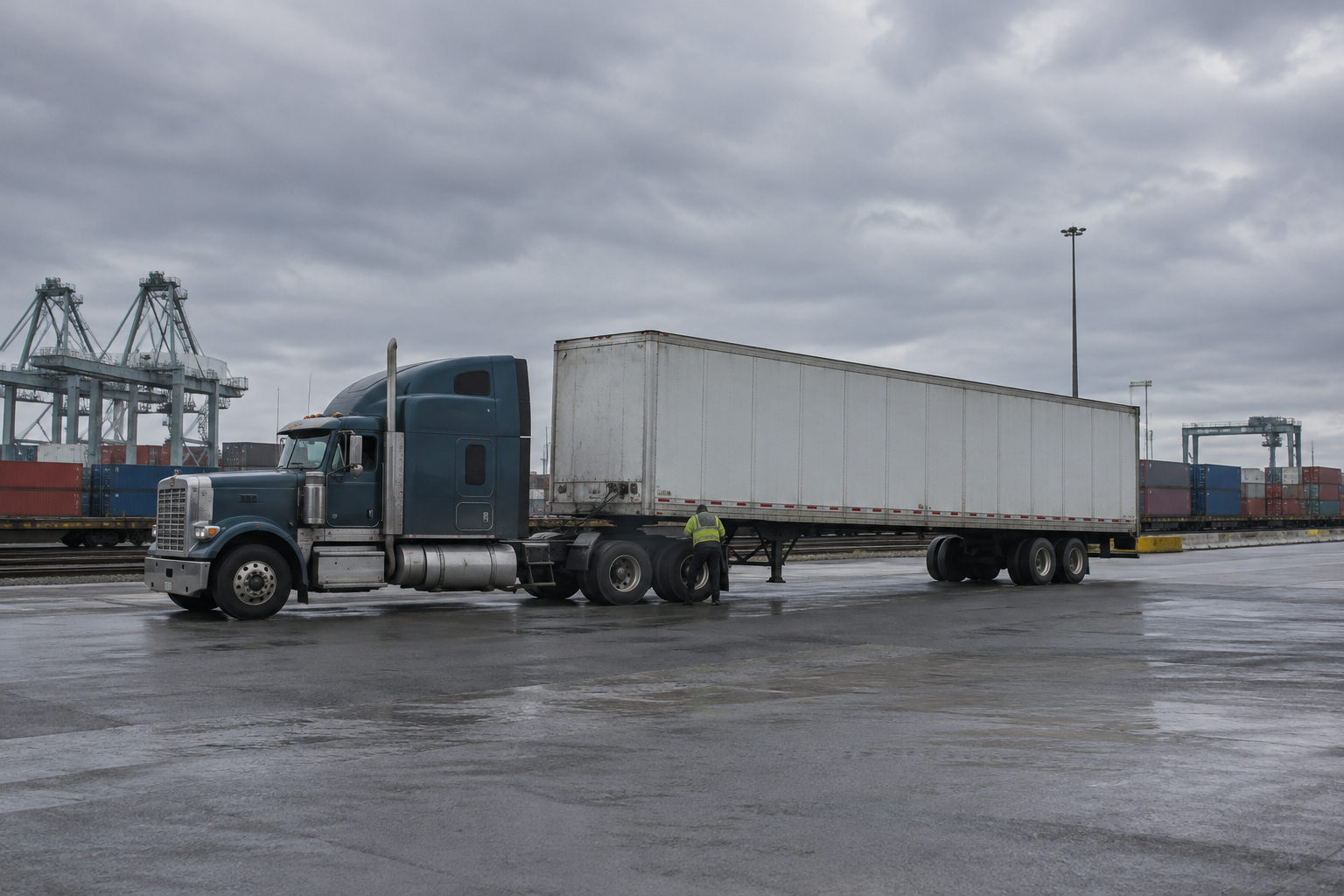
Arkansas Non Trucking Liability Insurance Cost (2026)
Get Your Free Insurance Quote
Compare quotes from top carriers in minutes
Non trucking liability insurance in Arkansas is one of the cheapest coverages an owner operator buys, and that is exactly why it is easy to overpay for or under-buy. Most leased owner operators in Arkansas pay somewhere in the range of 25 to 60 dollars a month for non trucking liability (NTL), depending on your truck's value, your driving record, and whether you run solo or team. That is a dated estimate as of November 2026, not a quote, and your actual number will come from the carrier underwriting your specific truck and history.
The reason the price swings that much even though the coverage sounds simple is that NTL is priced almost entirely on you and your equipment, not on freight or cargo risk. Below is the actual cost breakdown, what pushes it in either direction, and what you can control before your next renewal.
What does non trucking liability insurance cost in Arkansas?
For a single owner operator leased to a motor carrier, non trucking liability in Arkansas generally falls between 300 and 700 dollars a year, paid monthly, as a dated estimate for late 2026. That range covers most dry van and reefer owner operators with a clean MVR. Flatbed, tanker, and hazmat haulers sometimes see a small bump because the underlying truck values and driver pools carry more risk, even though NTL itself only covers you when you are off dispatch.
Three things move that number more than anything else:
- Driving record. A single at-fault accident or a couple of moving violations in the last three years can push your NTL premium noticeably higher, sometimes doubling it on a thin file.
- Truck value and age. Because NTL picks up liability (not physical damage) when you are driving your truck for personal use, insurers still look at what you are driving. Newer, higher horsepower trucks can carry a slightly higher rate than an older, paid off unit.
- Years of experience under your own authority or as a lease operator. A driver with three or more years leased on with a steady record usually prices better than someone in their first year.
Here is a worked example to make the math concrete. Picture a 34 year old owner operator leased to a dry van carrier, driving an older Freightliner worth around 25,000 dollars, with a clean three year MVR. That profile might see an NTL quote of roughly 35 dollars a month, or about 420 dollars a year, for a 1,000,000 dollar limit. Now add one at-fault accident from the last twelve months to the same truck and the same limit, and that quote could climb to somewhere between 55 and 65 dollars a month, a 50 to 85 percent jump driven entirely by the record, not the equipment. This is a hypothetical example to illustrate how the pricing levers interact, not a quote, so treat the dollar figures as illustrative rather than something to lock in.
If you want a real number instead of a range, the fastest way to get one is to run your numbers through a truck insurance quote comparison that checks several carriers at once, since NTL pricing varies more by carrier appetite than almost any other coverage we quote.
What drives the price up or down most?
The short answer is your driving record and how much time you actually spend bobtailing or running personal errands in the truck. Carriers price NTL assuming limited, occasional use, not daily commuting, so if you are logging a lot of non-dispatched miles your risk profile looks more like a personal auto policy and underwriters will price it that way.
A few specific levers worth knowing about:
- Choosing a 1,000,000 dollar NTL limit instead of the bare minimum some carriers offer usually adds only a small amount to the premium, because the base rate is already low. Many lease agreements we've reviewed require at least 750,000 to 1,000,000 in NTL limits as a condition of leasing, but this varies by carrier contract, so check your own lease agreement before you shop on price alone.
- Bundling NTL with your occupational accident or physical damage coverage through the same carrier sometimes gets you a small package discount, though this is not guaranteed and varies by underwriter.
- A gap in coverage history, even a short one, can make you look like a higher risk to a new carrier, which is where a lot of owner operators get surprised at renewal.
On that last point, our own filing data is worth flagging. Trucker Path Insurance's analysis of FMCSA filing data found 47,234 insurance cancellation filings nationwide between April 6, 2026 and May 25, 2026. Of those, 93% were primary liability cancellations (Form BMC-91X), with surety bonds (BMC-84) at 5.3% and cargo coverage (BMC-34) at 0.7%. NTL cancellations are not broken out in that count, but the pattern tells you something important: coverage lapses happen fast and often, and a lapse anywhere in your insurance stack, including NTL, can complicate your next renewal even if the lapse itself was brief or administrative.
How is non trucking liability different from primary liability and bobtail insurance?
Non trucking liability covers you when you are driving your leased truck for personal reasons and not under dispatch, while primary liability covers you whenever you are hauling a load under your carrier's authority. Bobtail insurance is a related but narrower term, usually describing liability coverage for driving the tractor without a trailer attached, and many NTL policies fold bobtail coverage in automatically.
Here is how the three stack up on cost and purpose for an Arkansas owner operator:
| Coverage | What it covers | Typical Arkansas cost (2026 estimate) | Who requires it |
|---|---|---|---|
| Non trucking liability (NTL) | Liability when driving your truck off dispatch, personal use | 300 to 700 dollars a year | Leasing carrier, almost always |
| Bobtail insurance | Liability driving the tractor without a trailer | Often bundled into NTL, modest add-on if separate | Leasing carrier, sometimes |
| Primary liability | Liability while under dispatch hauling freight | Varies far more by equipment and MVR, see our dedicated breakdown | FMCSA, federal minimum |
We go deep on primary liability pricing and what the federal minimums actually mean for your authority in our 2026 primary liability cost guide, so we will not repeat that math here. For NTL specifically, the point is that it is a small line item compared to primary liability, which is exactly why some owner operators let it slide and get caught without it during an off-dispatch accident.
What can you actually change to lower the cost?
You have more control over your NTL premium than most owner operators realize, mainly through your driving record, your limit choice, and your coverage continuity. Keeping a clean MVR for at least three years is the single biggest lever, followed by avoiding coverage gaps between lease changes or carrier switches.
Practical moves that actually move the number:
- Shop your NTL renewal alongside your other coverages rather than letting it auto-renew. Because pricing varies by carrier appetite more than by risk formula, a different underwriter may simply price your file better this year.
- Ask your current carrier whether multi-policy bundling (NTL plus occupational accident, for example) qualifies for any reduction before you assume you need to switch carriers entirely.
- If you are new to leasing, build a short track record before shopping aggressively. A driver with even six to twelve months of clean lease history on file often prices noticeably better than a brand new lease operator.
- Confirm your leasing carrier's actual minimum limit requirement in writing. Buying more NTL than your lease requires is sometimes worth the small extra cost for liability protection, but you should know the floor before you decide.
For broader Arkansas-specific coverage questions, including how NTL fits with your state's filing requirements, our Arkansas trucking insurance page breaks down what else leasing carriers and the state typically expect. If you run in multiple states or are weighing a move, our state by state trucking insurance guide is a faster way to compare requirements than digging through each state's rules one at a time.
Frequently Asked Questions
Continue reading
- Arkansas trucking insurance requirements
- Compare truck insurance quotes
- Trailer Interchange Insurance Massachusetts: Cost Guide
- Semi Truck Insurance for New Drivers: Where to Start
- 18 Wheeler Insurance Policy Limits: 2026 Guide
- Coverages we offer for owner-operators & fleets
- Common questions about trucking insurance
Ready to compare rates? Get a free trucking insurance quote from carriers built for insurance tips.
Ready to Get Started?
Get personalized insurance quotes tailored to your business