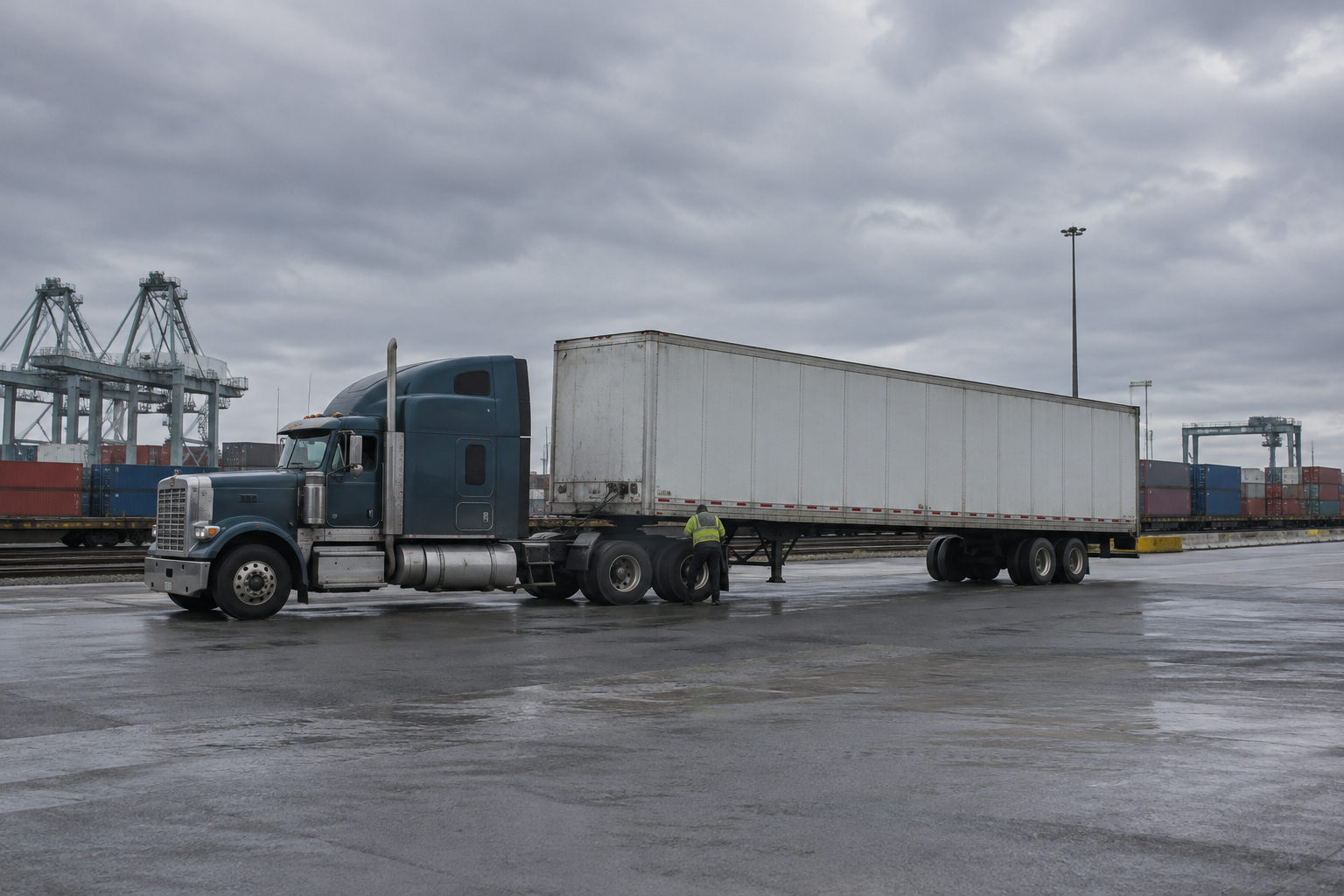
Semi Truck Insurance for New Drivers: Where to Start
Get Your Free Insurance Quote
Compare quotes from top carriers in minutes
Yes, you can get semi truck insurance as a new driver, but the process looks different than it does for someone with five years behind the wheel. Insurers price new drivers based on CDL experience, not just the truck, and a handful of carriers will not quote drivers under six months of experience at all. The fix is not finding a secret cheap policy. It is doing the steps in the right order so you are not scrambling or getting quoted a number that does not match what you expected.
This post walks through that order: what to check before you call anyone, what underwriters actually look at, what paperwork to have ready, and where new drivers most often get tripped up.
Can new truck drivers get semi truck insurance?
Most can, but not every carrier will write a policy for someone fresh out of CDL school. Underwriters split drivers into experience tiers, usually under 6 months, 6 to 12 months, 1 to 2 years, and 2-plus years. The fewer months you have, the smaller the pool of carriers willing to quote you, and the more documentation they will want. This is also true whether you are driving as an employee or starting your own authority. If you are setting up a new authority as a brand new driver, that adds a second layer of underwriting on top of your driving experience, which is covered in more detail in our guide to commercial trucking insurance for new authority.
What should you do first, before you request a quote?
Pin down your exact CDL issue date and your actual driving start date, because insurers want both and they are often not the same day. Many new drivers assume their experience clock starts at CDL issuance, but some underwriters count from the first day you actually drove for pay, which might be weeks or months later. Having both dates ready, plus your MVR (motor vehicle record) pulled in advance, saves a round of back and forth once you start getting quotes.
Next, decide whether you are driving under someone else's authority or getting your own. That single decision changes which coverages you need. Company drivers usually only need to worry about non-trucking liability for personal use of the truck. Owner-operators and new authority holders need primary liability, and often motor truck cargo and physical damage on top of it. If you are weighing that decision, our breakdown of owner-operator truck insurance lays out what each coverage actually does.
What will insurers actually check about your experience?
Underwriters look at three things: time licensed, any gaps in your driving record, and whether you have prior commercial driving experience in a related field, like military trucking or heavy equipment. A clean MVR with no at-fault accidents or moving violations matters more at this stage than it will later, because with limited history, your record is most of what the underwriter has to go on.
If you have zero commercial experience, some insurers will still quote you but at a higher rate or with a smaller set of coverage options. Others will want you paired with a mentor or require proof of a structured training program completion. This is one of the few places where being upfront and specific, rather than vague, works in your favor. Vague answers on an application read as risk the underwriter cannot price, so they either decline or price high to compensate.
Here is a quick example of how this plays out in practice. A driver three months past CDL issuance who wants their own authority will likely see only a small number of non-standard carriers willing to quote, usually with a higher premium and conditions like a mentor requirement or a smaller commodity list. A driver at the two-year mark with a clean MVR will see most standard-market carriers open up, often at meaningfully lower rates for the same truck and radius, because the underwriter has more history to price against.
What paperwork should you have ready before you call?
Have your CDL, MVR, Social Security number or EIN, VIN for the truck, and either your MC/DOT number or proof you are applying for one. If you are leasing on to a carrier, get a copy of that lease agreement, since some underwriters want to see it. If you are starting your own authority, you will also need a BMC-91 or BMC-91X filing on file with FMCSA once you have a policy bound. A broker can usually handle that filing for you rather than you dealing with FMCSA's system directly.
New authority volume gives a sense of how many drivers are going through this exact process right now. Trucker Path Insurance tracked 35,019 brand new motor carrier authorities entering the FMCSA register between May 23, 2026 and November 18, 2026, with another 19,397 existing carriers expanding their authority in that same window. If you are a new driver filing for your own authority, you are one of a large and steady stream doing the same thing, which is also why having your paperwork organized before you call matters: brokers and underwriters are working through a lot of these applications.
Where do new drivers get denied or overpay?
The most common mistake is applying before the MVR is clean of a recent violation, which can trigger a decline instead of just a higher rate. Wait a billing cycle if you can, or at minimum know what is on your record before an underwriter finds it. The second mistake is underestimating radius and commodity. If you plan to haul hazmat or run long-haul interstate freight from day one, say so upfront. Underwriters who find out later that your actual operation does not match what was quoted can non-renew or re-rate you.
The third mistake is shopping only one carrier. New drivers are exactly the group where quotes vary the most between insurers, because each one weighs experience differently. A broker who checks multiple carriers at once saves you from accepting the first number you hear, which might be a lot higher than what another carrier would offer for the same risk.
What should new drivers expect by experience tier?
| Experience level | Carrier availability | What underwriters ask for |
|---|---|---|
| Under 6 months CDL | Limited, fewer carriers quote | MVR, training completion, sometimes a mentor or co-signer |
| 6 to 12 months | Moderate, more carriers open up | Clean MVR, employment or lease verification |
| 1 to 2 years | Wide, most standard carriers quote | MVR, prior claims history |
| 2-plus years | Widest, including specialty programs | MVR and claims history only, usually |
Minimum liability limits do not change based on your experience. Federal rules under 49 CFR Part 387 set the floor at $750,000 for general freight interstate carriers, though most shippers and brokers now require $1,000,000 in practice, regardless of how long you have had your CDL. Keep in mind this federal floor applies to interstate operations. If you only plan to run intrastate within your home state, your state may set its own minimum liability requirements that differ from the federal number, so check with your state department of insurance or our state-by-state trucking insurance guide before assuming the federal floor is what applies to you. Confirm current limits with FMCSA or your state department of insurance before you bind anything, since requirements can shift and a broker should walk you through what applies to your specific operation.
On cost, as a rough guide based on publicly available rate filings and broker-reported ranges, new drivers pursuing their own authority can expect semi truck insurance premiums somewhere in the range of $12,000 to $18,000 per year as of November 2026 for a single truck carrying primary liability, cargo, and physical damage, with the low end of that range mostly reserved for drivers at or past the two-year experience mark. Company drivers who only need non-trucking liability for personal use of the truck typically pay a few hundred dollars a year instead. These are general estimates meant to help you plan, not a quote, since your actual number depends on experience tier, radius, commodity, and claims history.
Frequently Asked Questions
Continue reading
- Semi truck insurance
- Compare truck insurance quotes
- Trailer Interchange Insurance Massachusetts: Cost Guide
- 18 Wheeler Insurance Policy Limits: 2026 Guide
- Arkansas Non Trucking Liability Insurance Cost (2026)
- Coverages we offer for owner-operators & fleets
- Common questions about trucking insurance
Ready to compare rates? Get a free trucking insurance quote from carriers built for insurance tips.
Ready to Get Started?
Get personalized insurance quotes tailored to your business