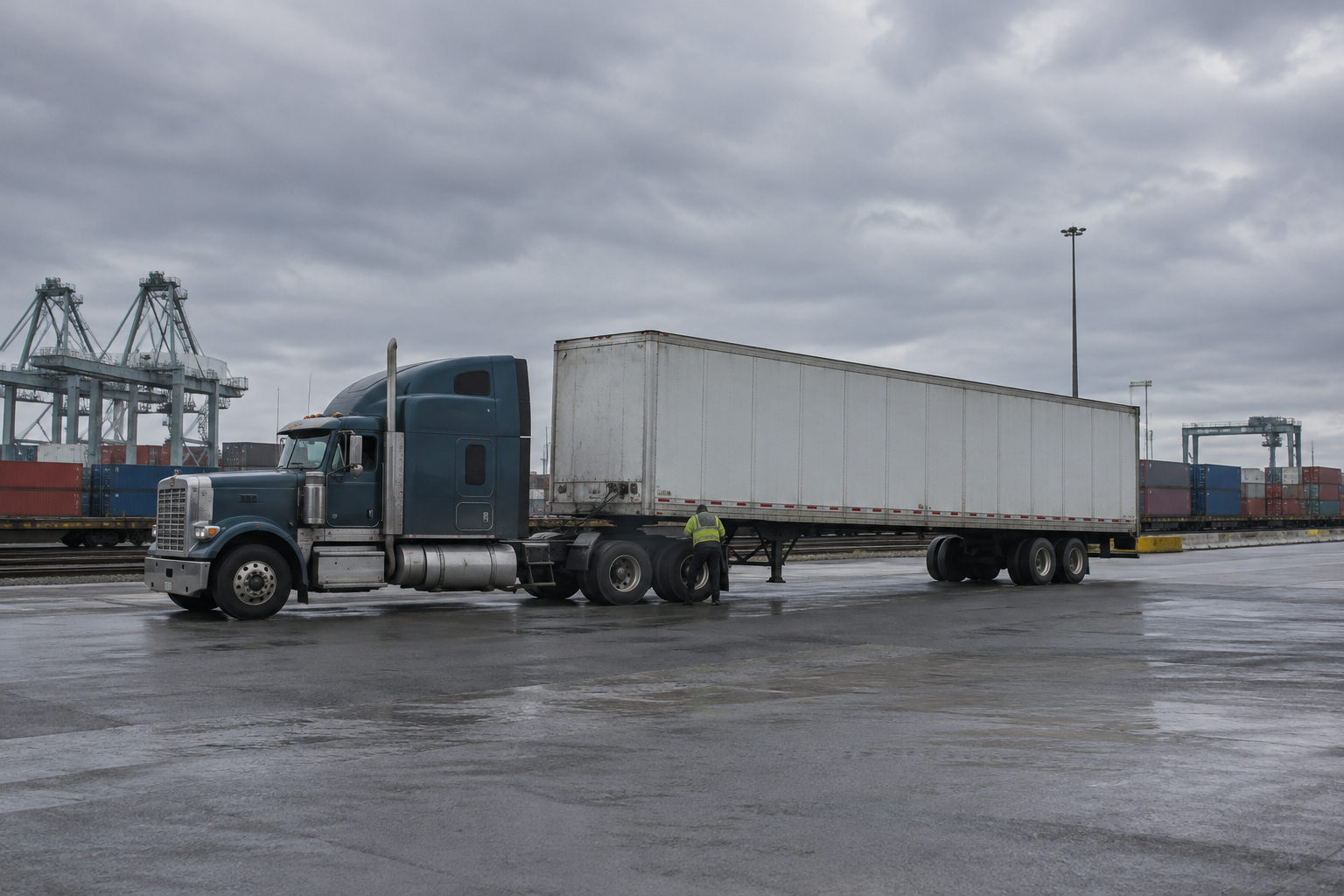
Commercial Trucking Insurance for New Authority
Get Your Free Insurance Quote
Compare quotes from top carriers in minutes
If you just got your MC number, commercial trucking insurance for new authority means proving to FMCSA you have active liability and cargo coverage before you can legally haul a load, and it almost always costs more than what an established carrier pays for the same truck. There is no separate “new authority” policy type. It is the same primary liability, cargo, and physical damage coverage every carrier needs, priced higher because you have no safety rating, no claims history, and no proof yet that you run a tight operation.
Between May 13, 2026 and November 6, 2026, Trucker Path Insurance recorded 31,691 brand new motor carrier authorities entering the FMCSA register, alongside 16,190 existing carriers expanding their authority (Trucker Path Insurance analysis of FMCSA filing data, fmcsa.dot.gov). That is a lot of first time filers competing for the same pool of underwriters who treat new authority as higher risk almost by default. Understanding why, and what you can control, matters more for a new carrier than it does for someone who has been operating for five years.
What makes a carrier “new authority” for insurance purposes?
A carrier is generally treated as new authority for the first 18 to 24 months after FMCSA grants operating authority, sometimes longer depending on the underwriter. During that window you have no DOT safety rating, no loss run history, and no CSA score with enough data to be meaningful. Underwriters cannot predict your risk the normal way, so they price conservatively and often limit which coverage types they will even offer.
This is separate from your actual business experience. A driver with 15 years behind the wheel who just opened their own authority is still “new authority” in the eyes of an insurer, even though they are not new to trucking. Some carriers soften pricing a little for drivers who can show prior experience as a company driver, but it does not erase the new authority label.
How much does commercial trucking insurance for new authority carriers cost?
New authority carriers commonly see higher premiums than established carriers with clean records, though the exact gap varies a lot by equipment type, radius of operation, and state. A new authority owner-operator running dry van or reefer freight might see primary liability quotes meaningfully higher than what a three-year carrier with a clean record pays for the same truck, before cargo and physical damage are added. Carriers that have only recently entered the market typically pay noticeably more for primary liability than carriers with three or more years of clean operating history, since insurers have no loss data to model and default to pricing the entire new-authority segment as higher risk. Specific numbers depend on your equipment, radius, driver record, and which carriers are even willing to quote you, so treat any single figure you hear as a starting point, not a promise.
The best way to get an accurate number is to actually run quotes across multiple carriers rather than guess. You can compare options for your specific equipment and operating radius through truck insurance quotes built for new authority situations, which is faster than calling carriers one by one who may not even write new authority business.
Why do new authority carriers pay more for insurance?
Underwriters price new authority higher mainly because they have no loss history to evaluate, not because new carriers are inherently reckless. Insurance pricing is built on predicting future claims from past data. With zero months of operating history, an underwriter has nothing to model except your equipment, your driver's MVR, your intended lanes, and the industry average for carriers in your situation. That average includes a disproportionate number of new carriers who fail or get cited in year one, so the whole new authority segment gets priced up to cover that risk.
A few specific factors that move your price within that segment:
- Your personal driving record and years of CDL experience, even if your authority is brand new
- The equipment you run (flatbed and tanker generally price higher than dry van)
- Radius of operation, with long haul interstate typically costing more than regional or local work
- Whether you are leased to a carrier or running under your own authority entirely
- Your state of domicile, since some states see more claims activity and litigation than others
What coverage do you actually need to get your authority approved?
FMCSA requires proof of insurance filed electronically before your operating authority becomes active, typically through a BMC-91 or BMC-91X form filed by your insurer, not by you directly. Federal rules under 49 CFR Part 387 set minimum public liability limits: $750,000 for most interstate non-hazardous freight over 10,001 lbs GVWR, $1,000,000 for oil and many hazardous materials, and $5,000,000 for bulk explosives, poison gas, and hazardous substances. See the full rule and current guidance directly from FMCSA. In practice, most brokers and shippers will not tender a load to you without $1,000,000 in liability coverage, regardless of the federal minimum, so treat $1 million as the real working standard rather than $750,000.
It helps to keep BMC-91 and BOC-3 straight, since both commonly come up around the same time when you file for authority. The BMC-91 (or BMC-91X) is your insurer's proof of financial responsibility, the document that actually shows FMCSA you have liability coverage in force. The BOC-3 is a different, unrelated filing that names your process agents in every state where you operate, so legal papers can be served on your behalf. Missing either one will stall your authority, but only the BMC-91 has anything to do with insurance; the BOC-3 is usually handled through a separate process agent service.
Beyond the liability minimum, most new authority carriers also need motor truck cargo coverage to haul freight for brokers (often $100,000 is the floor brokers ask for), and physical damage coverage if the truck is financed, since lenders usually require it. If you lease on to another carrier instead of running fully independent, you will also need non-trucking liability for when you are using the truck off dispatch.
| Coverage type | Federal minimum | Typical real world requirement |
|---|---|---|
| Primary liability, general freight | $750,000 | $1,000,000 (most brokers and shippers) |
| Primary liability, oil and hazmat | $1,000,000 | $1,000,000 or higher |
| Primary liability, bulk explosives/poison gas | $5,000,000 | $5,000,000 |
| Motor truck cargo | No federal minimum | $100,000 (common broker floor) |
| Non-trucking liability | No federal minimum | Required if leased to a carrier |
Note these liability figures are federal minimums under 49 CFR Part 387 and do not change state to state, though your state may layer additional intrastate rules on top. Always verify current numbers with FMCSA or your state department of insurance before you file, since this post is informational and not legal advice.
How long does the new authority pricing period last?
Most underwriters reassess your risk profile after your first full year of operating history, and many treat 18 to 24 months as the point where you stop being priced as a brand new carrier. What changes that timeline fastest is a clean first year: no at fault accidents, no cargo claims, no insurance cancellations, and on time premium payments. A single cancellation filing in your first year can set you back further than the new authority label itself, since underwriters read a cancellation as a red flag regardless of the reason behind it.
Trucker Path Insurance tracked 47,234 FMCSA insurance cancellation filings nationwide between April 6, 2026 and May 25, 2026 (Trucker Path Insurance analysis of FMCSA filing data, fmcsa.dot.gov). A meaningful share of those cancellations likely involve new authority carriers who underpriced their first policy, missed a payment, or switched coverage mid term without realizing the gap would show up as a cancellation rather than a clean replacement. Staying with one carrier through your first renewal, even if it costs slightly more up front, tends to build a better record than hopping policies.
What should you do before you file for authority?
Line up your insurance before you submit for authority, not after, since FMCSA will not activate your MC number without a filed BMC-91 on record. Get quotes from multiple carriers early, because not every insurer writes new authority business, and the ones who do may have different appetites for your equipment type. If you are running flatbed, tanker, or hazmat, expect a shorter list of willing underwriters and plan extra time for the process.
Check what your home state requires beyond the federal filing too. State pages like Georgia trucking insurance and Florida trucking insurance cover state specific filing and rate factors that a federal overview will not catch, and the full list is at trucking insurance by state.
Quick checklist before you file for new authority insurance
- Have your MC number, driver's CDL and MVR, and equipment list (VIN, GVWR, year, make, model) ready before you call for quotes
- Decide your operating radius and primary commodity, since both change which carriers will even quote you
- Get at least two or three quotes rather than binding with the first offer, since appetite and pricing vary widely for new authority
- Confirm your insurer will file the BMC-91 electronically and ask for a timeline, so you know when your authority will actually activate
- Line up a BOC-3 process agent filing separately if you have not already, since it is required alongside the BMC-91 but is not insurance
- Plan to stay with your first carrier through renewal if possible, since a clean first year matters more for future pricing than switching to save a little now
Frequently Asked Questions
Continue reading
- Commercial truck insurance
- Compare truck insurance quotes
- Trailer Interchange Insurance Massachusetts: Cost Guide
- Semi Truck Insurance for New Drivers: Where to Start
- 18 Wheeler Insurance Policy Limits: 2026 Guide
- Coverages we offer for owner-operators & fleets
- Common questions about trucking insurance
Ready to compare rates? Get a free trucking insurance quote from carriers built for insurance tips.
Ready to Get Started?
Get personalized insurance quotes tailored to your business