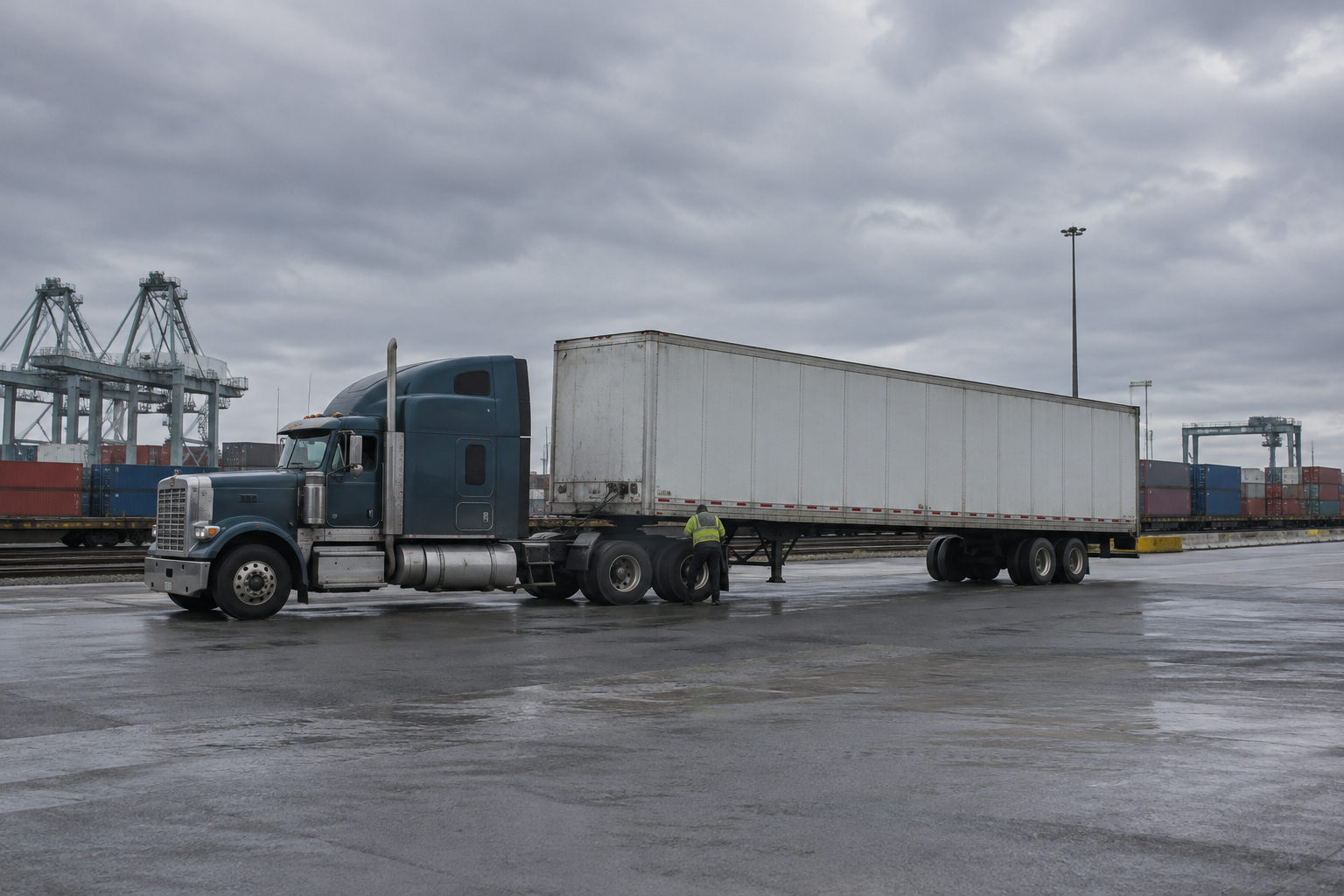
Cargo Insurance Policy South Carolina: What It Costs
Get Your Free Insurance Quote
Compare quotes from top carriers in minutes
A cargo insurance policy in South Carolina pays to replace or repair freight that's damaged, lost, or stolen while it's in your trailer, your responsibility, under a bill of lading. It's not optional in practice: most shippers and brokers won't tender a load to you without proof of it, even though FMCSA's federal cargo requirement only applies to household goods carriers. For everyone else hauling general freight, cargo coverage is a business decision, not a legal mandate, and that's exactly why the price varies so much from one owner-operator to the next.
South Carolina doesn't set its own cargo insurance minimums on top of federal rules. What you pay comes down to your equipment, your freight, your driving record, and how long you've held authority. Let's break down the actual numbers.
How much does a cargo insurance policy cost in South Carolina?
| Setup | Typical cargo limit | Rough monthly estimate |
|---|---|---|
| Dry van, 3+ years authority, clean record | $100,000 | $100 to $175 |
| Reefer, 3+ years authority | $100,000 | $150 to $250 |
| Flatbed, general freight | $100,000 | $175 to $300 |
| New authority, under 2 years, any equipment | $100,000 | $250 to $450 |
| High-value or specialty commodity (electronics, produce) | $100,000 to $250,000 | $300 to $600 |
These numbers are rough, non-binding estimates based on typical market pricing as of November 2026, not quotes, and your actual premium depends on carrier underwriting at the time you apply. General freight cargo coverage for owner-operators tends to run roughly $800 to $2,800 a year, about $67 to $233 a month, and reefer coverage with a breakdown endorsement tends to run $1,400 to $2,400 a year, about $117 to $200 a month, with new-authority and high-value or electronics freight pricing toward the higher end because of new-entrant and commodity-risk surcharges. Treat these as directional ranges rather than a quote, since actual pricing varies by carrier, lane, and loss history.
As a worked example, a reefer owner-operator with three years of clean authority hauling produce between Columbia and Charlotte might land near the middle of that reefer range, call it $180 a month, once the insurer factors in the breakdown endorsement for spoilage. A new-authority flatbed hauler six months into the business, hauling the same lanes with the same equipment, would likely see a quote closer to the top of the new-authority band simply because there's no claims history yet.
That estimate isn't a quote either way. The only way to know your real number is to run your MC number, equipment list, and loss history through an actual quote. For a deeper look at what moves cargo premiums in general, our breakdown of cargo insurance rates covers the national picture, and this piece on $100K cargo coverage specifically walks through that common limit in detail.
What actually moves your cargo insurance price up or down?
Five things decide your rate, and you control more of them than you'd think. Your limit is the obvious one. Going from $50,000 to $100,000 in coverage doesn't double your premium; it's usually a smaller jump than that because the insurer is still pricing the same frequency of claims, just a bigger payout on the rare one that happens.
Your commodity matters more. Electronics, pharmaceuticals, alcohol, and produce all carry theft or spoilage risk that pushes rates up. Building materials, machinery, and general dry freight sit on the cheaper end. As an example, two owner-operators with identical trucks, trailers, and driving records might see a meaningful premium gap just from freight type: one hauling packaged produce on a reefer, the other hauling lumber on a flatbed, with the produce hauler paying noticeably more for the same dollar limit because of spoilage exposure alone.
Your authority age is a bigger factor than most new owner-operators expect. Carriers with under two years of authority get priced as a higher risk category almost across the board, regardless of how clean their actual driving record is, simply because there's no claims history yet to prove otherwise.
Your loss history, if you have any, follows you. One cargo claim in the past three years can raise your renewal even if it was small. And your radius of operation plays in too: long-haul interstate runs carry different risk than regional or local hauls.
Do I legally need a cargo insurance policy to run in South Carolina?
Federal law under 49 CFR Part 387 sets liability minimums for interstate carriers at $750,000 for general freight, though most brokers and shippers now require $1,000,000 as a practical standard, and these are liability figures, not cargo figures. Cargo coverage itself is only federally mandated for household goods carriers. You can confirm current federal requirements directly at fmcsa.dot.gov, and it's worth checking with FMCSA or the South Carolina Department of Insurance before you assume anything about your specific operation.
In practice, though, almost no shipper or freight broker will sign you to a load without proof of cargo coverage, usually $100,000 as a baseline. Picture a broker reviewing your packet for a produce run out of the Port of Charleston: no cargo certificate means no load tendered, full stop, even though nothing in federal statute requires that specific carrier to buy cargo insurance. So even though it's not a statute, it's effectively a requirement if you want to keep your trailer full. If you're running liability-only right now, our liability coverage page explains where that policy stops and cargo coverage has to pick up.
What happens if my cargo coverage lapses without me noticing?
A lapsed cargo policy can shut down your ability to book loads fast, and it happens more often than most owner-operators think. Trucker Path Insurance tracked 47,234 FMCSA insurance cancellation filings nationwide between April 6, 2026 and May 25, 2026. Of those, 93% were primary liability cancellations (BMC-91X), 5.3% were surety bond cancellations (BMC-84), and 0.7% were cargo coverage cancellations (BMC-34). Primary liability lapses are by far the most common way a carrier's authority gets flagged, but cargo cancellations still show up and they're often harder to catch because brokers, not FMCSA, enforce cargo requirements at the load-booking stage rather than at the authority level.
Here's how that plays out in a real scenario: an owner-operator switches cargo carriers mid-year to chase a better rate, the old policy cancels on schedule, and the new policy's effective date is three days later than expected because of a paperwork delay. FMCSA's record of that carrier's primary liability never changes, so nothing looks wrong at the authority level. The first sign of trouble is a broker rejecting a load because the certificate of insurance on file shows a gap. That's the kind of lapse that costs a week of bookings before anyone notices.
The practical lesson: don't assume your cargo policy renewed just because your MC number is still active with FMCSA. Check your renewal date directly with your broker or carrier, especially if you switched insurers or equipment recently.
Should I bundle cargo with my liability policy or buy it separately?
Bundling usually costs less than buying cargo and liability as two separate policies from two different companies, because most insurers give a package discount when they're writing both lines for the same operation. It also simplifies your paperwork, since one broker handles one renewal date instead of two.
As a rough example of the savings, an owner-operator paying separately for liability and a $100,000 cargo limit from two different carriers might see a combined bill that's noticeably higher than the same two coverages bundled under one policy with one insurer, since the bundled discount typically runs in the range of a modest percentage off the cargo side alone. The exact savings depend entirely on your carrier and setup, so treat that as a direction, not a number to bank on.
The tradeoff is flexibility. If you later want to shop your cargo coverage alone because a specialty carrier offers a better rate for your commodity, a bundled policy can be harder to unwind than two standalone ones. For most owner-operators hauling general freight, though, bundling through a single broker who compares multiple carriers tends to land the better overall number. If you're based in South Carolina and want to see what a bundled quote looks like for your specific setup, our South Carolina trucking insurance page is the place to start, and if you're running a box truck specifically, this South Carolina box truck insurance page breaks down that equipment class on its own.
Frequently Asked Questions
Continue reading
- South Carolina trucking insurance requirements
- Compare truck insurance quotes
- Trailer Interchange Insurance Massachusetts: Cost Guide
- Semi Truck Insurance for New Drivers: Where to Start
- 18 Wheeler Insurance Policy Limits: 2026 Guide
- Coverages we offer for owner-operators & fleets
- Common questions about trucking insurance
Ready to compare rates? Get a free trucking insurance quote from carriers built for insurance tips.
Ready to Get Started?
Get personalized insurance quotes tailored to your business