Do You Need a CDL for a Box Truck? GVWR Rules Explained
Get Your Free Insurance Quote
Compare quotes from top carriers in minutes
Whether you need a CDL for a box truck comes down to one number: gross vehicle weight rating, or GVWR. At 26,001 pounds or more, you generally need a CDL. Under that weight, most drivers do not. Either way, the truck still counts as a commercial vehicle for insurance purposes.
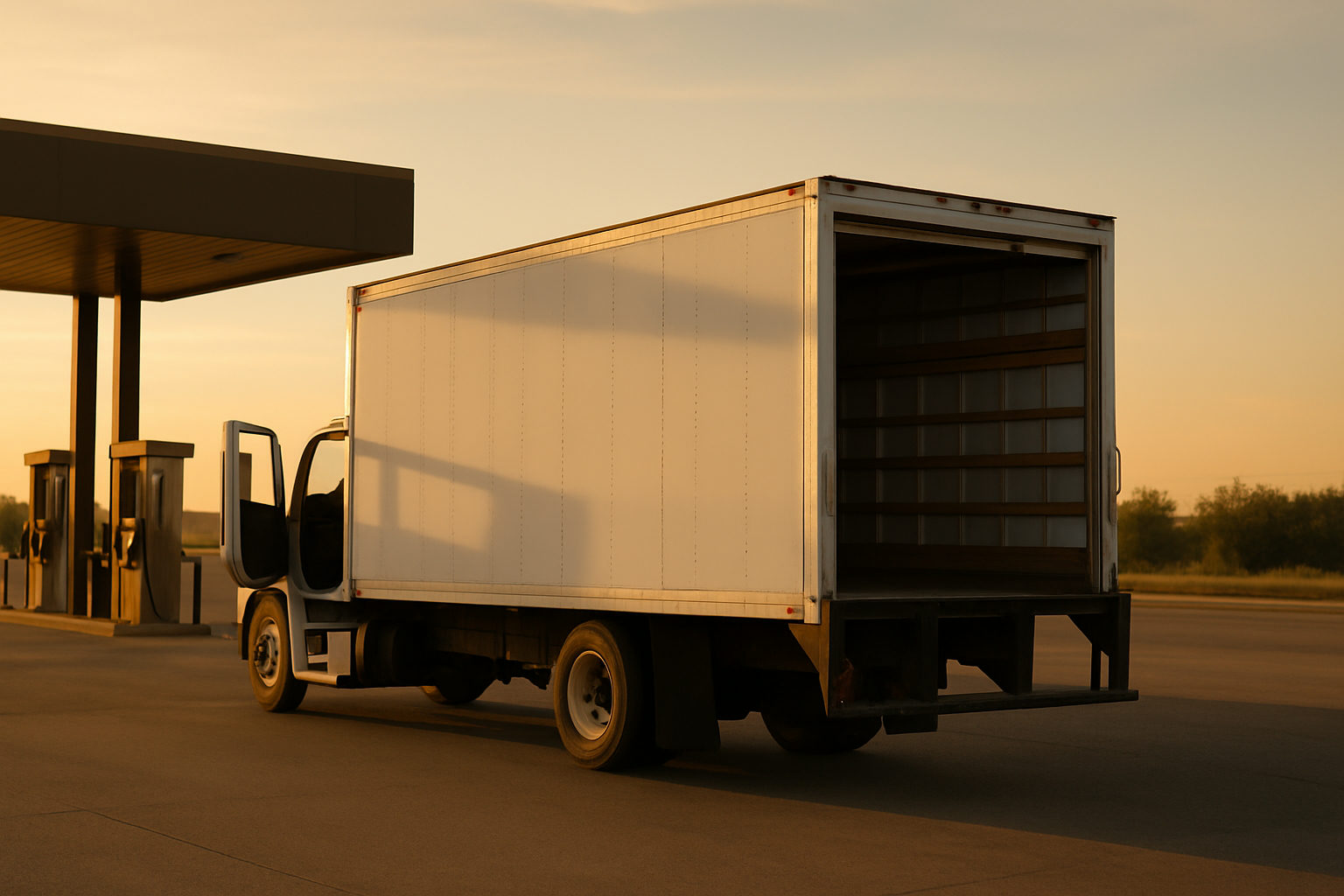
That last part trips people up. A lot of box trucks used for last-mile delivery, moving jobs, or local freight sit right around that 26,000 pound line, and plenty stay under it on purpose. But "no CDL required" does not mean "no commercial insurance required." Those are two completely separate questions, and mixing them up is how owner-operators end up uninsured or underinsured.
What GVWR actually triggers the CDL requirement?
Federal rule sets the line at a GVWR of 26,001 pounds or more for a single vehicle, or a combination where the towed unit is over 10,000 pounds and the combined GVWR hits 26,001 pounds or more. Below that, you're generally in non-CDL territory unless you're hauling hazardous materials that require placarding or transporting 16 or more passengers.
Most box trucks fall into a few common weight classes. Here's how those classes actually break down by GVWR, and whether each one typically requires a CDL:
| Class | GVWR range | CDL typically required? |
|---|---|---|
| Class 3 | 10,001 to 14,000 lbs | No |
| Class 4 | 14,001 to 16,000 lbs | No |
| Class 5 | 16,001 to 19,500 lbs | No |
| Class 6 | 19,501 to 26,000 lbs | No |
| Class 7 and up | 26,001 lbs and above | Yes |
Note that Class 3 through Class 5 spans a wider range than a lot of people assume, roughly 10,001 to 19,500 pounds. It's not just a flat 10,001 to 16,000 pound bracket; that narrower range only covers Class 3 and Class 4. Class 5 trucks push up to 19,500 pounds and still typically don't require a CDL. (Weight class definitions per Arrow Truck Sales' truck classification guide and the U.S. Department of Energy's Alternative Fuels Data Center vehicle weight class breakdown, which mirrors the same federal GVWR bands.)
Note the wording: it's the GVWR rating on the door sticker or manufacturer's plate that matters, not how heavy the truck happens to be loaded on a given day. A truck rated at 25,999 pounds that you load to 24,000 pounds still doesn't require a CDL. A truck rated at 26,001 pounds that you're running empty still does.
This is federal regulation under 49 CFR Part 383, and you can read the actual text at ecfr.gov. You can also review FMCSA's own summary of licensing requirements at fmcsa.dot.gov. States can layer additional intrastate rules on top of the federal floor, so if you're close to the line, it's worth confirming your exact GVWR classification with FMCSA or your state's department of motor vehicles before you assume either way.
To make the different triggers easier to compare at a glance, here's how GVWR, hazmat, and passenger thresholds line up against the CDL requirement:
| Trigger | Threshold | CDL required? |
|---|---|---|
| Single vehicle GVWR | 26,001 lbs or more | Yes |
| Combination vehicle (towed unit over 10,000 lbs) | Combined GVWR of 26,001 lbs or more | Yes |
| Hazardous materials requiring placards | Any GVWR | Yes, with hazmat endorsement |
| Passenger transport | 16 or more passengers | Yes, with passenger endorsement |
| None of the above | Under 26,001 lbs, no placarded hazmat, fewer than 16 passengers | No |
Does hauling hazmat change the CDL rule for box trucks?
Yes. If you're hauling a quantity of hazardous materials that requires placarding, you need a CDL with a hazmat endorsement regardless of the truck's GVWR. This applies even to smaller box trucks that would otherwise fall under the 26,001 pound threshold. The hazmat endorsement itself requires a background check through TSA, plus the standard CDL knowledge and skills tests.
If you're running a box truck that occasionally carries chemicals, batteries, or other regulated materials, don't guess on this one. Check the hazmat table thresholds directly with FMCSA before you take a load, because the penalties for running placarded freight without the right license and endorsement land on the driver and the carrier both.
If I don't need a CDL, do I still need commercial truck insurance?
Yes, almost always. A non-CDL box truck used for business, whether it's a delivery route, a moving company, or hauling goods for hire, still needs commercial auto coverage, not a personal auto policy. Personal policies typically exclude business use entirely, which means a claim after an accident could get denied outright.
What you actually need depends on how the truck is used:
- If you're hauling freight for a fee: primary liability and motor truck cargo coverage
- If you own the truck outright: physical damage coverage to protect the vehicle itself
- If you lease your truck to a motor carrier: non-trucking liability for when you're driving off dispatch
- If you're a small fleet: general liability alongside your auto coverage
Box truck insurance pricing varies a lot by cargo type, radius of operation, and driving history, and it changes often enough that a single number would go stale fast. Rather than quote a figure that may not hold up in your state or for your cargo, it's worth comparing quotes across a few carriers directly so you're looking at pricing that reflects your actual setup rather than a generic estimate. You can see how coverage breaks down specifically for this equipment on our box truck insurance page, or run your own numbers through the instant rate estimator to get a sense of where you might land.
Does needing (or not needing) a CDL affect your insurance rate?
It can, but it's one factor among many. Insurers look at whether the driver holds a CDL as part of the overall risk picture, since CDL holders have gone through more formal testing and, in some cases, more driving experience on larger equipment. A non-CDL driver running a Class 6 box truck isn't automatically a higher risk, but a thin driving history combined with a heavier truck can push rates up.
Other things that move the needle more than CDL status alone:
| Factor | Effect on box truck insurance |
|---|---|
| GVWR class | Heavier trucks generally cost more to insure due to higher liability exposure |
| Cargo hauled | High-value or specialized cargo raises motor truck cargo premiums |
| Radius of operation | Local routes often price differently than long-haul interstate runs |
| Years of experience | New authority or new drivers typically see higher initial rates |
| CDL vs non-CDL driver | Can factor into underwriting, but rarely the single deciding factor |
If you're comparing costs across setups, our guide to lowering commercial truck insurance costs walks through what actually moves your premium, beyond just the CDL question.
A worked example: choosing between a Class 5 and Class 7 truck
Say you're deciding between a Class 5 box truck rated at 18,000 pounds GVWR and a Class 7 truck rated at 28,000 pounds for the same local delivery route. The Class 5 truck keeps you out of CDL territory entirely, which widens your hiring pool since you can bring on drivers with a standard license. The Class 7 truck requires every driver behind the wheel to hold a CDL, which narrows your applicant pool but often comes with drivers who have more formal training and experience on larger equipment.
On the insurance side, the heavier truck usually carries a higher liability exposure simply because of its size and stopping distance, so expect the physical damage and liability portions of the policy to run higher on the Class 7 unit, independent of who's driving it. If your freight and route don't actually require the extra capacity, staying in the Class 5 or Class 6 range can keep both your hiring options and your insurance costs more manageable.
What if I'm buying a box truck and want to avoid needing a CDL?
Choosing a truck rated under 26,001 pounds GVWR is the straightforward way to stay out of CDL territory, assuming you're not hauling placarded hazmat or passengers. A lot of owner-operators getting into local delivery or moving work deliberately shop for Class 5 or Class 6 trucks for exactly this reason: it opens up a bigger pool of potential drivers since you're not limited to CDL holders.
Just keep in mind that GVWR is set by the manufacturer and generally can't be modified after the fact just to dodge the requirement. If you're not sure what class truck fits your business plan, our page covering insurance by vehicle type breaks down coverage considerations across box trucks, dry vans, flatbeds, and other equipment, which can help you think through the full picture before you buy. And since intrastate rules can differ from the federal floor, it's worth checking our state-by-state trucking insurance guide if you operate close to a state line or run routes across multiple states.
DOT numbers and trailers: two things that catch people off guard
Two situations trip up owner-operators who have already sorted out the CDL question, so it's worth covering them separately.
First, a DOT number. Even without a CDL, your box truck often still needs a USDOT number if it's used in interstate commerce and meets the weight or hazmat thresholds FMCSA sets for registration. This is a completely separate requirement from the CDL question. Confirm your specific obligations with FMCSA before you start hauling, since operating without required registration can lead to fines.
Second, trailers. If you're pulling a trailer over 10,000 pounds and the combined GVWR of the truck and trailer hits 26,001 pounds or more, you need a CDL even if the box truck alone would fall under the threshold on its own. This is the combination vehicle rule, and it catches people off guard when they add a trailer to a truck that was previously non-CDL. Worth double-checking before you hitch up anything heavier than a light utility trailer.
Frequently Asked Questions
Continue reading
- Box truck insurance
- Compare truck insurance quotes
- Commercial Truck Insurance Requirements in Michigan (2026)
- Does Insurance Cover MC Authority Theft? The Real Cost
- Box Truck Insurance Requirements: Minimums and Costs by Scenario
- Coverages we offer for owner-operators & fleets
- Common questions about trucking insurance
Ready to compare rates? Get a free trucking insurance quote from carriers built for trucking regulations.
Ready to Get Started?
Get personalized insurance quotes tailored to your business