Fleet Vehicle Insurance Quotes: How to Get Accurate Pricing
Get Your Free Insurance Quote
Compare quotes from top carriers in minutes
A fleet vehicle insurance quote is only as good as what you hand the underwriter before they build it. Most owners call around asking for quotes before they have pulled their loss runs, confirmed their vehicle list, or decided what limits they actually need, and they end up with numbers that are not comparable to each other. The fix is simple: do the prep work first, then shop. Below is the order that actually gets you an accurate quote instead of a guess.
If you are brand new to fleet insurance and want the basics on what it covers, start with our fleet insurance overview. This post skips that groundwork and focuses on the sequence of decisions you face once you are ready to actually request fleet vehicle insurance quotes.
What counts as a fleet for insurance purposes?
Most carriers consider you a fleet once you run two or more commercial vehicles under one operation, though the exact threshold varies by insurer; some insurers only offer fleet policies starting at three or five vehicles, according to Insureon (current as of October 2026). Some underwriters treat anything under five units almost like a single-truck policy with slightly different pricing, while true fleet programs with dedicated underwriting usually kick in around five to ten units.
This matters more than people think, because it changes who you are even talking to. According to Trucker Path Insurance analysis of FMCSA filing data, across 118,410 carriers in the states we serve, 62% run a single power unit and another 28% run between two and five. So most of the market asking for “fleet” quotes is actually running a small operation, not a 50-truck yard, and the quote process should reflect that: you do not need the same underwriting machinery a 200-unit fleet needs, and asking for it wastes your time.
What should you do before you request any quotes?
Pull your current loss runs and your vehicle list before you contact anyone. Loss runs (your claims history, typically for the past three to five years) are one of the biggest factors underwriters use to set your trucking insurance price, alongside fleet size, cargo type, driving radius, and driver experience, according to The Insurance Store (current as of 2026). If your current carrier is slow to send them, that delay alone can push your renewal timeline.
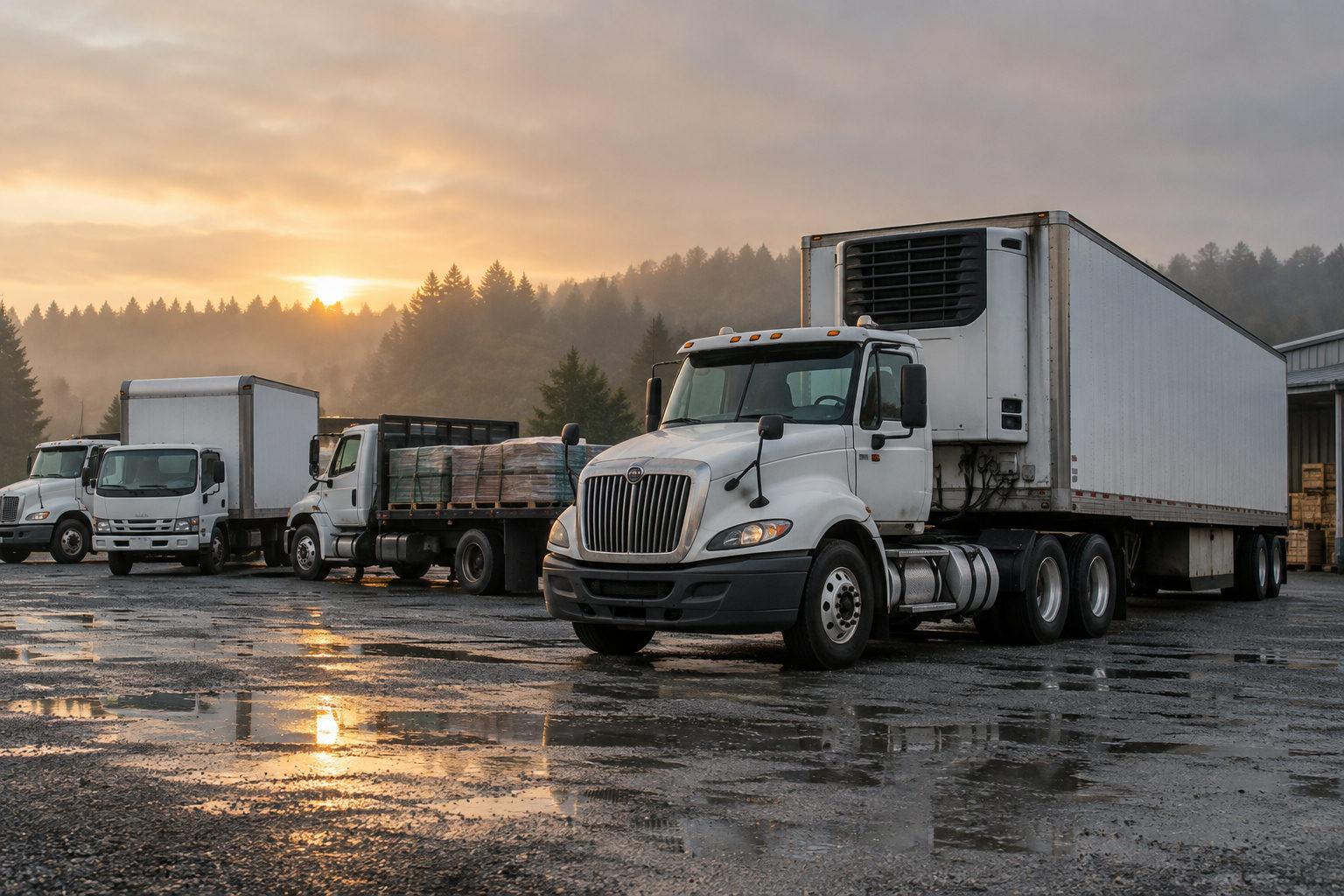
While you wait on loss runs, build a clean vehicle schedule: year, make, model, VIN, GVWR, and radius of operation for every unit. If your fleet mixes equipment types, flag that clearly. A reefer running refrigerated freight and a flatbed hauling steel are priced differently even under the same umbrella policy, and checking coverage by vehicle type before you call helps you ask for the right thing instead of a generic quote that misses your actual mix.
What paperwork do underwriters actually want to see?
Underwriters want your MC/DOT numbers, three to five years of loss runs, a current vehicle schedule, and your drivers' CDL and MVR information. If you are a new authority, you will not have loss runs yet, and that changes your pricing path entirely since you are quoted on risk profile instead of history.
Here is a quick reference for what to have on hand depending on where you are in the process:
| Situation | What you need ready | What changes your quote most |
|---|---|---|
| Established fleet, renewing | 3 to 5 years loss runs, current vehicle schedule, driver MVRs | Claims frequency and severity over the loss run period |
| New authority, no history | MC/DOT number, vehicle schedule, planned commodity and radius | Equipment type, radius of operation, and owner driving record |
| Adding units to an existing fleet | VINs and GVWR for new units, confirmation of radius and commodity | Whether new units match your existing equipment mix or add new risk |
| Switching carriers mid-term | Current declarations page, cancellation date, loss runs | Timing, since a gap in coverage or a forced cancellation raises your rate |
How many quotes should you actually get, and from whom?
Three to five quotes from carriers or a broker who shops multiple carriers at once is enough. Going past that mostly adds time, not better pricing, because most carriers writing your equipment type and radius will land in a similar range once your loss history is factored in.
A broker's job is to shop that range for you instead of you calling five companies separately and filling out the same application five times. As a broker, Trucker Path Insurance compares quotes across multiple carriers and handles the FMCSA filings, like BMC-91, that come with binding a new policy, so you are not stuck figuring out which form goes where after you pick a carrier.
Where do fleet owners get this wrong?
The most common mistake is requesting quotes before confirming required liability limits, which leads to comparing policies that are not actually equivalent. Federal rules under 49 CFR Part 387 set a $750,000 minimum public liability limit for general freight interstate carriers at 10,001 lbs GVWR or more, but in practice most brokers and shippers require $1,000,000, so that is the working standard you should quote to. Hazmat and oil hauling push the federal minimum to $1,000,000, and bulk explosives, poison gas, and hazardous substances require $5,000,000. These are federal minimums and do not change state to state, though your state may layer its own intrastate rules on top, so confirm specifics with FMCSA or your state department of insurance before you finalize anything. Confirm final limits with FMCSA or your state insurance department before binding.
The second mistake is timing. Trucker Path Insurance tracked 47,234 FMCSA insurance cancellation filings nationwide between April 6, 2026 and May 25, 2026, and a cancellation filing is exactly the kind of event that forces a rushed, worse-priced quote. If you know your renewal is coming, start the process 30 to 45 days out instead of waiting for a cancellation notice to force your hand.
The third mistake is ignoring what your state requires on top of federal minimums. Requirements and even filing processes differ enough that it is worth checking your state's trucking insurance requirements before you lock in limits, especially if you run intrastate miles in addition to interstate.
How Claims Frequency and Severity Shape Fleet Vehicle Insurance Quotes
Underwriters do not look at your loss runs as a single number; they split claims into frequency (how often something happens) and severity (how expensive each event is), and the two push your fleet vehicle insurance quotes in different directions. A fleet with several small claims, like minor backing incidents or cracked glass, reads as a frequency problem and often gets priced with a higher base rate across every unit, because it signals a pattern in how the equipment is operated. A fleet with one severe claim, like a rollover with a large bodily injury payout, reads as a severity problem and can spike your premium sharply even if every other year was clean, since a single large loss changes how an underwriter models your worst-case exposure. Knowing which pattern applies to your fleet helps you explain context to an underwriter instead of just handing over raw numbers.
It also helps to know what your policy will not cover before you compare quotes. Common exclusions on fleet policies include non-trucking use (personal errands in a commercial unit), unlisted or unapproved drivers operating a scheduled vehicle, intentional damage, and hauling commodities outside what was declared on the application. If your operation occasionally does something outside its normal pattern, like a flatbed picking up an odd load or a driver using a unit for a personal trip, ask your broker to confirm whether that falls inside or outside your coverage before it becomes a claim you assumed was covered.
Frequently Asked Questions
Continue reading
- Commercial truck insurance
- Compare truck insurance quotes
- Commercial Truck Insurance Northern Virginia: Real Costs
- DOT Drug Test Requirements and What They Cost
- One Week Truck Insurance: What to Check Before You Buy
- Coverages we offer for owner-operators & fleets
- Common questions about trucking insurance
Ready to compare rates? Get a free trucking insurance quote from carriers built for insurance tips.
Ready to Get Started?
Get personalized insurance quotes tailored to your business