What a $47M Nuclear Verdict Means for Trucking Insurance Excess Liability
Get Your Free Insurance Quote
Compare quotes from top carriers in minutes
A nuclear verdict, a jury award of $10 million or more against a trucking company, means your federal minimum liability limit is not enough protection anymore. The fix is excess or umbrella liability insurance stacked on top of your primary policy. For tank truck and hazmat haulers, that extra layer is a real line-item cost, and we break down what it typically runs further down this page. Here is the money breakdown, and why one recent verdict in New Mexico just made this math a lot more real for carriers hauling fuel, chemicals, or anything else that can turn a crash catastrophic.
What happened in the New Mexico tanker truck verdict
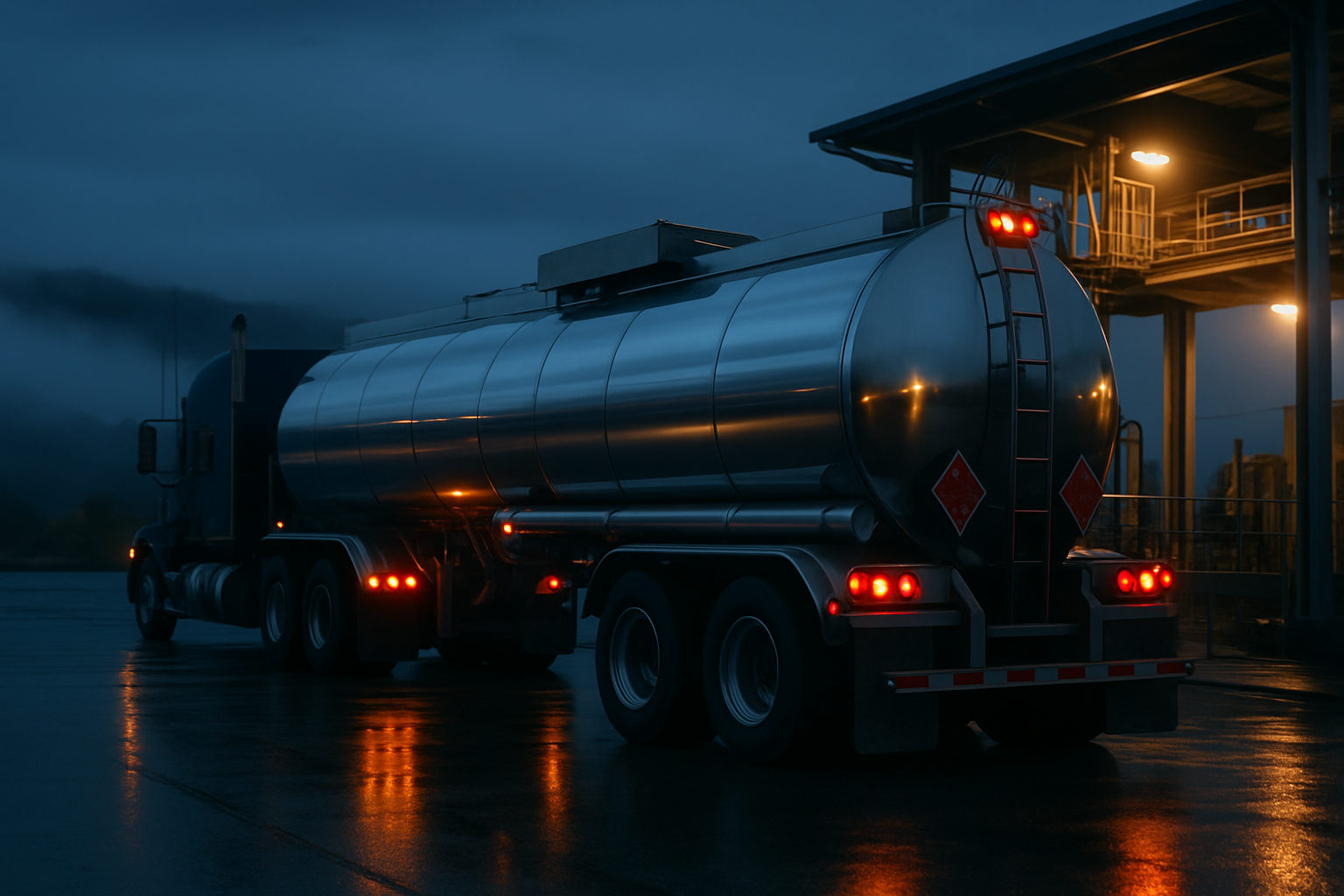
On October 13, 2026, a jury in New Mexico's First Judicial District Court in Tierra Amarilla awarded $47 million to Austin Drewry Jackson, a 21-year-old military veteran, and his mother and full-time caregiver Crystal Gayle Drewry. The case stemmed from a November 2022 head-on collision between their pickup and a commercial tanker truck on NM Highway 128 near Carlsbad, according to FreightWaves. The crash left Jackson with traumatic brain injuries along with spinal, bone, and internal organ damage requiring round-the-clock care, as reported by CDLLife.
The defendants were Pilot Thomas Logistics LLC and Maxum Petroleum Operating Company, per FreightWaves. According to the plaintiffs' attorneys at Tawney, Acosta & Chaparro P.C., the defense's first pretrial settlement offer was just $100,000, a fraction of what the jury ultimately awarded (Tawney, Acosta & Chaparro P.C.). It is being called one of the largest non-fatal trucking verdicts in state history, and it fits a pattern the American Transportation Research Institute has documented for years: jury awards of $10 million or more in trucking cases have climbed sharply over the past decade, with some individual verdicts reaching nine figures, according to FreightWaves.
What this means for your excess liability coverage
It means your primary policy limit is probably a fraction of what a bad verdict could cost you, and excess liability is how you close that gap. Federal law requires $1,000,000 in public liability coverage for oil and most hazardous materials carriers, with a $750,000 federal minimum for general freight haulers at GVWR over 10,001 lbs under 49 CFR Part 387, viewable at ecfr.gov. You can also review the underlying rule directly on FMCSA's site. A $47 million award is more than 46 times the federal minimum for a petroleum hauler. If a carrier in that situation only carried the federal minimum plus a modest excess tower, the policy limits run out long before the judgment does, and the company's assets, and sometimes the owner-operator's personal assets if the entity is thinly capitalized, are exposed to the rest.
This is exactly why umbrella and excess liability purchasing has become less optional for tank truck, hazmat, and other high-severity hauling over the last several years. As FleetOwner put it, because a single catastrophic verdict can far exceed a carrier's minimum coverage, carriers are increasingly incentivized to buy higher levels of liability insurance (FleetOwner).
How much does excess liability insurance actually cost?
Pricing varies a lot by equipment, radius, loss history, and limit purchased, so treat the numbers below as a dated estimate rather than a quote for your specific account. Your actual premium depends on your MC history, CSA scores, and carrier appetite.
| Coverage layer | Typical limit | Rough annual cost estimate (per unit) |
|---|---|---|
| Primary liability, general freight | $1,000,000 | $5,000 to $20,000 per year |
| Primary liability, tank/hazmat | $1,000,000 | $12,200 to $28,000 per year (average around $19,189) |
| Excess liability tower, moderate-risk industries | $25,000,000 | $20,000 to $45,000 per year |
| Excess liability tower, trucking (high-risk) | $25,000,000 | $35,000 to $75,000 or more per year |
The general freight range comes from Trucking Insurance Services, current as of 2026. The hazmat range comes from Renegade Insurance, current as of February 2026. The excess tower figures come from Hotaling Insurance Services, current as of 2026, which specifically notes that trucking is classified as a high-risk industry for excess liability pricing, so a $25 million tower typically costs noticeably more for a trucking operation than it would for a moderate-risk business buying the same limit.
Here is what that looks like in practice. A regional hazmat tanker fleet running five trucks might carry $1,000,000 primary liability at roughly $19,000 per unit per year using the hazmat midpoint above, then layer a $4,000,000 excess tower on top. Scaled off the ranges in the table, that fleet's total liability spend before fuel, cargo, or physical damage coverage could reasonably land somewhere in the low hundreds of thousands of dollars a year across the whole fleet, before any credit for a clean safety record or multi-unit discounting. These numbers move with the broader liability market, and nuclear verdicts like the New Mexico case are part of why excess carriers price off severity trends across the whole industry, not just your individual file.
What actually moves your premium up or down
Your loss history and safety scores move the needle the most, followed by the limits you choose and how your excess tower is structured. A clean CSA/SMS record, dash cam and telematics data, and a driver discipline program all give underwriters a reason to quote you tighter than a carrier with the same equipment and no documentation. Radius of operation matters too; tank trucks running fixed local routes often price differently than long-haul hazmat lanes that cross more jurisdictions.
Structure matters as well. A single $2 million primary policy is usually more expensive per dollar of coverage than a $1 million primary with a $1 million excess layer on top, because excess carriers are pricing the statistical chance they ever have to pay, which is low on the first layer and lower still on each layer above it. That is also why a thin excess tower on a hazmat unit is a false economy: the cost difference between $2 million and $5 million total coverage is often smaller than carriers expect, while the exposure gap it closes is enormous in a case like the one in New Mexico.
There is also a quieter risk that drives up your effective cost of risk even when your premium looks fine on paper: losing your primary filing altogether. Trucker Path Insurance tracked 47,234 FMCSA insurance cancellation filings nationwide between April 6, 2026 and May 25, 2026, and of those, 93% were primary liability (Form BMC-91X), 5.3% were surety bonds (Form BMC-84), and 0.7% were cargo coverage (Form BMC-34), based on filings available through FMCSA. Losing primary liability is by far the most common way a carrier's filing lapses, and if your primary cancels, any excess or umbrella layer sitting on top of it typically becomes void too, since excess coverage attaches to an active underlying policy. A lapse does not just cost you authority, it can collapse the whole tower you paid to build.
What should hazmat carriers do about excess liability now?
Start by reviewing your current liability tower against your actual exposure, not just the federal minimum. If you are running petroleum, chemicals, or anything with a wide blast radius if something goes wrong, $1 million in primary coverage alone is not a realistic cushion against a verdict the size of the one in New Mexico. Shop your excess layer every renewal rather than auto-renewing, since excess markets reprice fast when severity trends like this one make headlines.
It also pays to document everything that makes you a better risk: telematics, driver training records, maintenance logs, and any technology you run for warning and collision avoidance. A practical checklist before your next renewal looks like this: pull your CSA/SMS scores and fix anything flagged, confirm your primary liability filing is current and will not lapse mid-term, get a written quote for at least one excess layer above your current tower, and ask your agent how a $47 million-scale verdict in your lane would actually play out against your current limits. If you want a sense of how newer safety tech factors into underwriting, our piece on autonomous truck warning beacon insurance liability covers how insurers are starting to weigh that equipment. And if you are trying to get a handle on where your overall premium stands before you add excess layers, our guide to trucking insurance tips walks through the levers most owner-operators overlook.
Frequently Asked Questions
Continue reading
- Commercial truck insurance
- Compare truck insurance quotes
- Nuclear Verdicts and Trucking Insurance Premiums in 2026
- Phoenixville Commercial Truck Insurance Cost: What to Expect
- Truck Insurance Quote in Savannah GA: Cost & Coverage
- Coverages we offer for owner-operators & fleets
- Common questions about trucking insurance
Ready to compare rates? Get a free trucking insurance quote from carriers built for industry news.
Ready to Get Started?
Get personalized insurance quotes tailored to your business