Straight Truck Insurance Cost: What You'll Pay in 2026
Get Your Free Insurance Quote
Compare quotes from top carriers in minutes
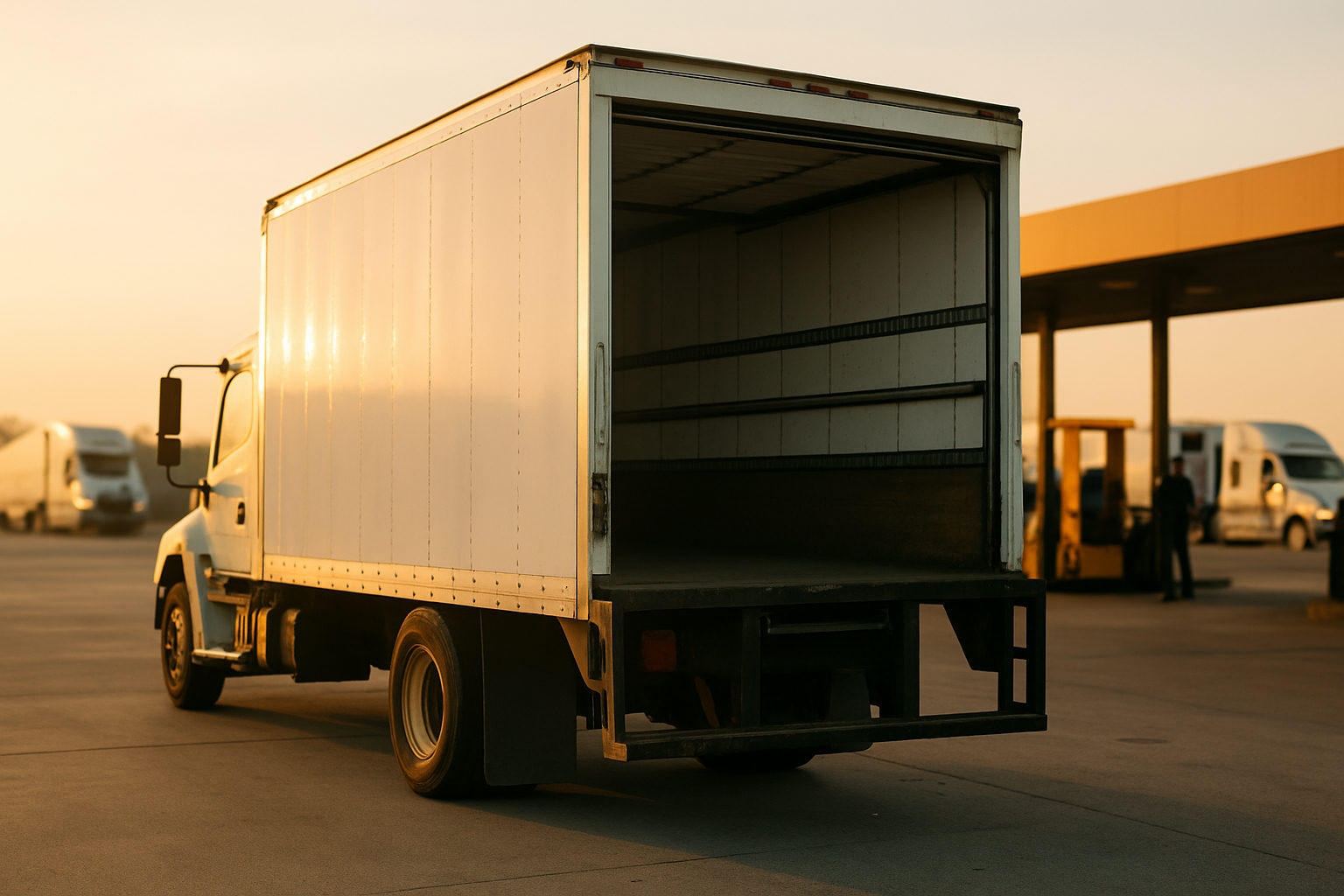
Straight truck insurance for a single owner-operator typically runs somewhere between $700 and $1,800 a month as of late 2026, depending on what you haul, how far you drive, and your driving record. A straight truck (one chassis, cargo box, no separate trailer, think box trucks, dump trucks, car haulers, and tow trucks) usually costs less to insure than a semi pulling a trailer, mainly because there is no trailer interchange exposure and physical damage limits are often lower.
But that range is wide for a reason. Two operators running the same size truck can pay very different premiums based on five or six factors that actually move the number. Let's break down where your money goes and what you can change before you lock in a policy.
What does straight truck insurance actually cost per month?
Most straight truck policies land in the $700 to $1,800 monthly range as a dated estimate (October 2026), with new authority, hazmat-adjacent freight, and poor driving records pushing costs toward the high end or above it. A clean-record owner-operator hauling general freight on a local or regional radius tends to land closer to the lower end.
That total is made up of a handful of coverage pieces working together: primary liability, motor truck cargo, physical damage, non-trucking liability, and often a small general liability policy layered on top. Across most straight truck policies, primary liability and physical damage tend to make up the bulk of the monthly premium, with cargo and non-trucking liability adding smaller amounts on top, though the exact split shifts with cargo type and equipment value. We're not publishing a per-coverage price breakdown here because premiums for each piece swing too widely by state, cargo type, and carrier appetite to quote responsibly without a real application in front of an underwriter. The honest way to see where you land is to run your numbers through a quote request that compares multiple carriers at once instead of guessing from averages.
To make the range easier to use at a glance, here is a rough directional breakdown by use case, based on dated estimates as of October 2026, not a quote:
| Use case | Typical monthly range | Why |
|---|---|---|
| Local dry freight, under 300 miles | $700 to $1,000 | Short radius, lower exposure, usually established authority |
| Long-haul, multi-state lanes | $1,100 to $1,500 | More miles and time on the road increases exposure |
| High-value or high-theft cargo (electronics, appliances, vehicles) | $1,400 to $1,800+ | Higher cargo limits and claim severity push premiums toward the top of the range |
What makes straight truck insurance go up or down?
The single biggest swing factor is new authority versus established operating history. Carriers price new MC numbers higher because they have no claims history to work from, and that premium often does not ease up until you have got two to three years on the books. Trucker Path Insurance's analysis of its own FMCSA filing pipeline found 47,234 FMCSA insurance cancellation filings nationwide between April 6, 2026 and May 25, 2026. That number spans all commercial trucking segments we track, not straight trucks specifically, but within that filing data, cancellations clustered around newer or higher-risk operators far more than established ones. Lenders and brokers watch filing activity like this because it shows how unstable coverage can be for operators who have not built a track record yet. You can review raw filing data yourself at fmcsa.dot.gov.
Beyond authority age, these factors matter most:
- Cargo type. General dry freight costs less to cover than appliances, electronics, or anything with a high theft or damage rate.
- Radius of operation. Local and regional routes (under 500 miles) usually price lower than long-haul because less time on the road means less exposure.
- Truck age and value. Physical damage premiums track the truck's actual cash value, so an older, paid-off truck with no comp/collision coverage can shave a real chunk off the bill, though it leaves you exposed if it is totaled.
- Driving record and CSA score. Moving violations, especially in the last three years, and a rough CSA score both push rates up.
- Deductible choice. Raising a physical damage deductible from $1,000 to $2,500 lowers the monthly premium but means more out of pocket if you have a claim.
A quick worked example
Say you are running a 26-foot box truck, hauling general dry freight within a 300-mile regional radius, with three years of clean authority and no moving violations. That profile sits toward the lower end of the $700 to $1,800 range because every factor that pushes a premium up, new authority, long-haul exposure, high-value cargo, a rough driving record, is absent. Now swap in a brand-new MC number, a long-haul multi-state lane, and appliance freight with a higher theft rate, and that same truck can land near the top of the range or above it, even with a spotless driving record, simply because the carrier has no history to price against and more miles mean more exposure. The lesson is that no single factor decides your price. It is the combination.
How does a straight truck compare to a semi on cost drivers?
| Factor | Straight truck | Semi with trailer |
|---|---|---|
| Trailer interchange exposure | None, chassis and box are one unit | Yes, if pulling a leased or borrowed trailer |
| Typical physical damage base | Lower, smaller actual cash value | Higher, separate truck and trailer values |
| Common use case | Local delivery, dump, tow, car hauling | Long-haul line haul, dry van, reefer |
| Cargo value sensitivity | Varies widely by equipment type | Often higher due to full trailer loads |
This is a structural comparison, not a price quote. The actual dollar gap between a straight truck and a semi still comes down to the same five or six factors above, cargo, radius, record, and deductible.
How much liability coverage do I actually need?
Federal rules set the floor, not the ceiling, and most shippers expect more than the legal minimum. Under 49 CFR Part 387, interstate carriers hauling general non-hazardous freight at a gross vehicle weight rating of 10,001 pounds or more need at least $750,000 in public liability coverage. In practice, most brokers and shippers will not load you without $1,000,000, so treat that as the real working number, not the federal floor. Hazmat and oil haulers face a $1,000,000 minimum, and bulk explosives, poison gas, or hazardous substances require $5,000,000. These figures come straight from FMCSA, you can confirm them at fmcsa.dot.gov or ecfr.gov, and it is worth double-checking with FMCSA or your state department of insurance before you bind a policy, since requirements can shift and states layer their own intrastate rules on top.
If you are running a box truck specifically, the coverage mix and typical limits are laid out in more detail on our box truck insurance requirements and cost guide, which covers the state-level filing requirements that apply on top of the federal floor.
How can I actually lower my straight truck insurance bill?
The moves that work are the ones you control directly: clean driving record, matched cargo and radius on the application, and a deductible you can actually afford if something happens. Bundling general liability with your primary liability under one carrier often beats buying them separately, since insurers price a package lower than two standalone policies. Paying annually instead of monthly can also avoid installment fees that add up over a year, though not every carrier offers that option for new authorities.
If you are new to the industry, building six to twelve months of clean operating history before your first renewal is the single biggest lever you have. New-authority pricing is temporary, not permanent, and most operators see meaningful relief at their first renewal if the record is clean. Running different cargo or equipment also changes the math significantly, so if you are weighing a straight truck against a different setup, it is worth comparing options across our truck insurance by vehicle type page before you commit to one configuration.
Does the type of straight truck change the price?
Yes. A dry box truck hauling general freight prices differently than a dump truck, tow truck, or car hauler built on the same straight chassis, mainly because of cargo value and claim frequency by equipment type. Dump trucks carry more physical damage risk from off-road and job site work, tow trucks carry liability exposure tied to the vehicles they are hauling, and car haulers carry higher cargo values per load. This pattern shows up consistently in construction-heavy states like Texas, where dump truck and straight truck volume tends to be higher than average. If you are specifically running a dump truck, our dump truck insurance cost and coverage guide breaks down how that equipment type prices differently from a standard box truck. And if you are in North Carolina running a box truck, we have already covered the state-specific cost drivers in our box truck insurance cost breakdown for North Carolina.
Frequently Asked Questions
Continue reading
- Box truck insurance
- Compare truck insurance quotes
- How Much Does Bucket Truck Insurance Cost in 2026
- DOT Pre Trip Inspection Checklist: What to Check Each Day
- California Commercial Truck Insurance Requirements
- Coverages we offer for owner-operators & fleets
- Common questions about trucking insurance
Ready to compare rates? Get a free trucking insurance quote from carriers built for insurance tips.
Ready to Get Started?
Get personalized insurance quotes tailored to your business