Dump Truck Insurance: What It Actually Costs and Covers
Get Your Free Insurance Quote
Compare quotes from top carriers in minutes
Dump truck insurance comes down to three questions: what the policy actually covers, what it should cost, and how to tell whether the carrier behind it is solid. This guide walks through all three, so you can size up any quote you are handed, from a national name or from a regional carrier you have never dealt with before.
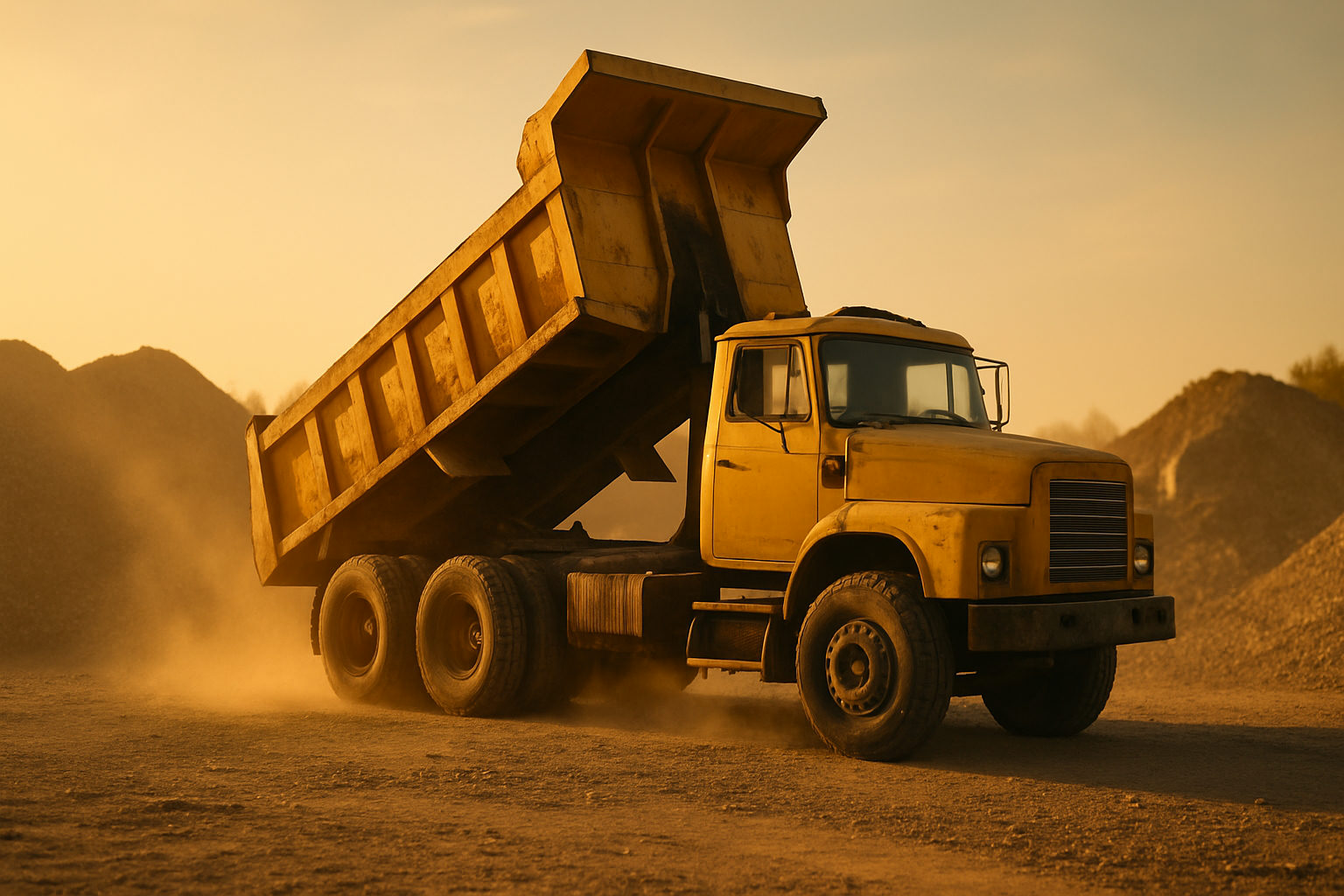
As a broker, Trucker Path Insurance compares quotes across multiple carriers rather than writing policies ourselves, so we're not trying to sell you on one company's name. We're trying to help you understand the coverage well enough that you can pick the right policy for your rig, whether that's a tandem-axle dump truck hauling aggregate or a triaxle running demo debris.
What coverage does a dump truck actually need?
At minimum, a dump truck operating in interstate commerce with a GVWR over 10,001 lbs needs primary liability insurance, and most shippers and brokers will require motor truck cargo and physical damage on top of that. The federal floor for general freight is $750,000 in public liability under 49 CFR 387.9, but in practice almost every broker or DOT-regulated contract you sign will require $1,000,000, so treat that as your real working number, not the legal floor. You can review the full financial responsibility rule directly on the eCFR page for 49 CFR Part 387 if you want to see the source language yourself.
Beyond liability, here's what actually matters for dump truck work specifically:
- Physical damage coverage protects the truck and the dump body itself, which is expensive to replace if you flip a load or clip a guardrail backing up on a job site.
- Motor truck cargo covers the material you're hauling, though many dump truck haulers skip this if they're moving dirt, gravel, or debris with low resale value, since cargo coverage is priced around the value of what's inside the trailer or bed.
- General liability matters more for dump trucks than for a lot of other equipment types because of job site exposure. If your truck damages a driveway, curb, or underground utility while dumping or maneuvering, GL is what responds, not your auto liability.
- Non-trucking liability covers you when the truck is off dispatch, like driving to get fuel or heading home after a job.
You can see how these all stack for dump trucks specifically on our dump truck insurance page, which breaks down coverage by use case, and if you run mixed farm and commercial hauling, our farm dump truck insurance guide covers the overlap between ag exemptions and commercial requirements.
What does dump truck insurance cost in 2026?
Dump truck insurance premiums vary widely based on radius of operation, driving record, years of authority, and what you're hauling, so any single number you see online is a rough estimate, not a quote. Owner-operators running local or regional dump truck work often see primary liability quotes in the roughly $2,500 to $7,300 per year range per truck, with full packages that add cargo and physical damage coverage commonly running $8,000 to $15,000 or more per year, according to G&G Insurance. New authority, at-fault accidents in the last three years, or hauling hazardous debris will all push that number toward the higher end of the range. These figures reflect a typical market range as of early 2026, and it's worth cross-checking them against your own state department of insurance's rate filing database, which lists the commercial auto rates carriers have actually filed and been approved to charge in your area.
To put that in a concrete scenario, a triaxle dump truck running within a 100 mile radius and hauling aggregate might land closer to a $4,500 per year primary liability quote, while the same truck with a full package covering cargo and physical damage on a financed rig could run closer to $10,000 to $12,000 per year depending on the age of the truck and the driver's record. These figures are illustrative estimates meant to show how the pieces stack, not a quote, since your actual premium depends on your specific carrier, state, and loss history.
| Coverage type | What it protects | Typical requirement |
|---|---|---|
| Primary liability | Bodily injury and property damage to others | $750,000 federal minimum, $1,000,000 common in practice |
| Motor truck cargo | The load you're hauling | Often optional for low-value fill dirt or debris, required for higher-value material |
| Physical damage | Your truck and dump body | Required if the equipment is financed |
| General liability | Job site and third-party property damage | Frequently required by contractors and municipalities |
| Non-trucking liability | Off-dispatch driving | Common add-on for owner-operators under lease |
Because dump trucks often work under short-term or municipal contracts, it's worth asking your insurance broker whether your policy structure lets you add or drop cargo coverage seasonally, since that can be a real cost lever for operators who only haul higher-value loads part of the year.
How do you vet an unfamiliar dump truck insurance carrier?
Underwriting appetite and pricing at smaller regional and mutual carriers change often, so treat any carrier you have not dealt with before the same way: ask for their AM Best financial strength rating, ask how claims are handled and who you actually call, and get a sample policy in writing before you sign anything. Ask which states they are admitted in and whether they will make your FMCSA filings. A carrier worth buying from will have no problem providing all of it.
How do I compare dump truck insurance carriers?
The name on the policy matters less than the paper behind it, meaning the actual insurance carrier underwriting the risk, its financial rating, and how it handles claims. Before you commit to any carrier, whether it's a large national name or a smaller mutual you found through a local agent, check three things: the carrier's AM Best financial strength rating, whether they have experience underwriting your specific equipment type, and how claims are actually handled, meaning whether you're dealing with an adjuster who understands trucking or a generalist.
If you can't independently verify a carrier's rating or find reviews from other truckers who've filed claims with them, that's a reason to slow down, not speed up. A cheap quote from an unrated or thinly capitalized mutual can leave you exposed if they can't pay out on a large claim. This is one of the reasons working with a broker helps: we compare multiple carriers side by side so you're not relying on a single company's name recognition to make the call. You can read more about how quote shopping actually works, and where the process tends to go wrong, on our page about why truck insurance shopping is broken for a lot of owner-operators.
Do owner-operators and small fleets need different dump truck coverage?
Yes, the coverage structure differs mainly in how liability and cargo limits scale, not in what types of coverage you need. A single owner-operator usually buys one policy covering one or two trucks, while a small fleet needs a policy that can handle multiple drivers, multiple trucks, and often a mix of equipment types like dump trucks alongside flatbeds or dry vans. Fleet policies also tend to get more favorable per-unit pricing once you're running four or more trucks, though that threshold varies by carrier.
If you're running a mixed fleet, it's worth comparing your options across our fleet insurance page rather than trying to piece together separate single-truck policies, since a combined policy is usually easier to manage and can simplify your DOT filings if you're also handling BMC-91 or similar proof-of-insurance filings. If your fleet mixes equipment types, our truck insurance by vehicle type page breaks out how coverage differs between dump trucks, flatbeds, box trucks, and reefers.
Does dump truck insurance requirements vary by state?
Federal liability minimums are the same nationwide under 49 CFR 387.9, but plenty of states layer additional intrastate requirements on top, and permitting, weight limits, and job site liability norms can differ quite a bit depending on where you run. If you're hauling aggregate or demo debris in a state with heavy construction activity, it's worth checking the specific requirements where you operate. We cover state-level detail for a number of states we serve, including Georgia, Texas, Florida, Ohio, and Pennsylvania, and you can see the full list of states we serve on our trucking insurance by state page.
Frequently Asked Questions
Continue reading
- Dump truck insurance
- Compare truck insurance quotes
- Specialty Trucking Coverage: What to Check Before You Buy
- Autonomous Truck Warning Beacon Insurance Liability
- Rider Policy for Truck Drivers: What It Costs in 2026
- Coverages we offer for owner-operators & fleets
- Common questions about trucking insurance
Ready to compare rates? Get a free trucking insurance quote from carriers built for insurance tips.
Ready to Get Started?
Get personalized insurance quotes tailored to your business