Farm Dump Truck Insurance: What Coverage Do You Need
Get Your Free Insurance Quote
Compare quotes from top carriers in minutes
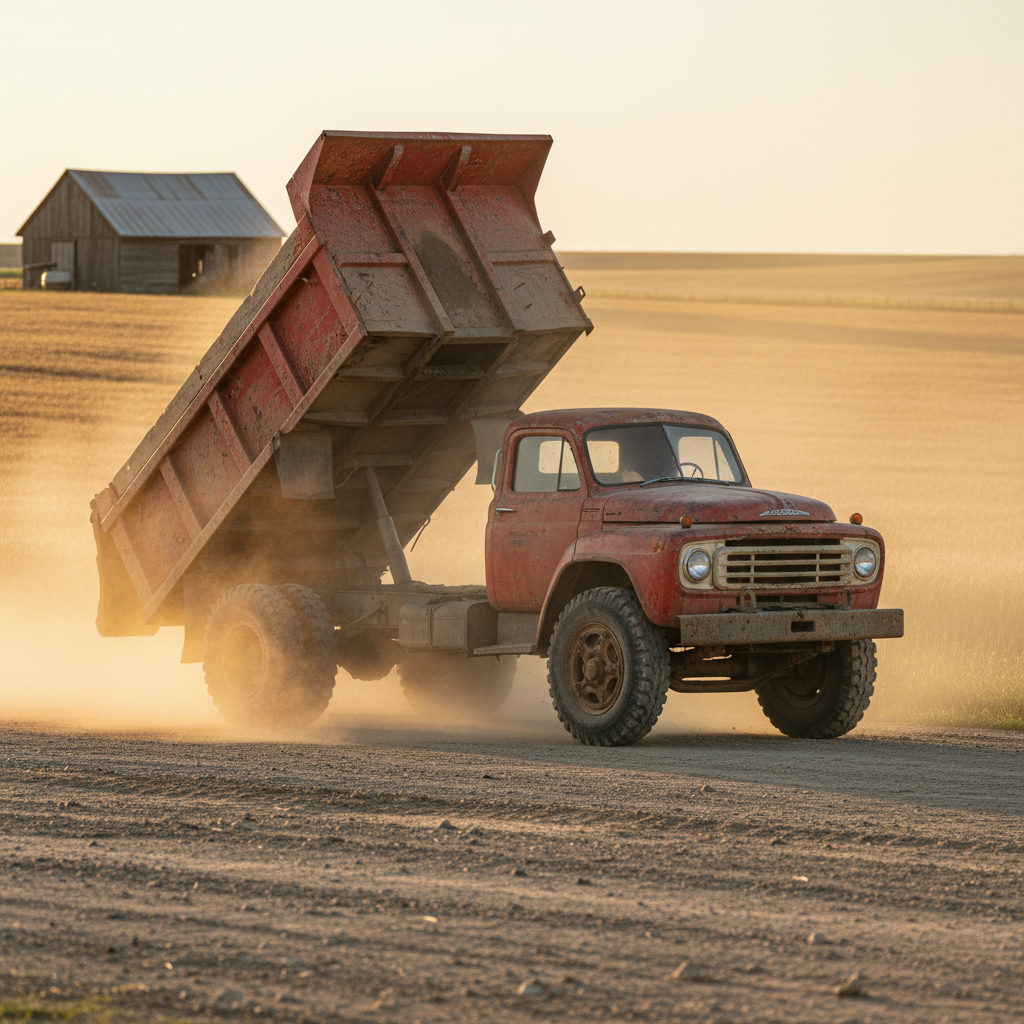
Farm dump truck insurance combines agricultural liability with commercial-grade limits once your truck exceeds 10,001 lbs GVWR or hauls for others. If you run a dump truck for hauling grain, gravel, feed, or manure between your own farm operations, you may not need full commercial trucking insurance the way a for-hire hauler does. But the moment that truck crosses state lines, hauls for someone outside your operation, or exceeds certain weight thresholds, the rules change fast. Farm dump truck insurance usually means a hybrid policy: liability and physical damage built around agricultural use, with commercial-grade limits because dump trucks are heavy, expensive to repair, and involved in serious accidents when things go wrong.
The short answer: federal public liability insurance minimums under 49 CFR Part 387 apply to interstate general freight vehicles with a GVWR of 10,001 lbs or more, not 26,001 lbs. That heavier 26,001 lbs figure is a different threshold entirely. It is the weight used for the "covered farm vehicle" CDL and hours-of-service exemption, not for insurance requirements. So a farm dump truck well under 26,001 lbs can still trigger commercial-level liability minimums once it is over 10,001 lbs and used outside strictly private farm hauling. See FMCSA's explanation of covered farm vehicles for how that distinction works. The exemption affects licensing and hours of service more than it affects how much insurance you should actually carry. Keep in mind that some states layer on their own radius or weight caps for the covered farm vehicle exemption, so a truck that qualifies federally may still need to meet a tighter state-level limit before the exemption applies.
Does a farm dump truck need commercial insurance?
Yes, in most cases, once the truck is used for anything beyond strictly intrastate farm-to-farm hauling on your own operation. The term "covered farm vehicle" is defined in 49 CFR 390.5, but the actual exemption from CDL and hours-of-service requirements comes from 49 CFR 390.39. That federal exemption itself is applied consistently nationwide, though states can adopt additional or modified rules, including their own radius or weight caps, for vehicles used only within their own borders. None of this changes what a personal auto policy will or will not cover.
A standard farm auto or homeowner's umbrella policy typically excludes vehicles over a certain weight or excludes hauling for hire entirely. If your dump truck ever moves someone else's gravel, hauls custom work for a neighbor for pay, or crosses a state line, you are almost certainly outside farm-use exclusions and into commercial exposure. Confirm your specific situation with your state department of insurance or an agent, since farm vehicle definitions and intrastate exemption rules differ by state.
What coverage does a farm dump truck actually need?
At minimum, most owners need primary liability, physical damage, and often motor truck cargo if you are hauling for someone else. Here is how that breaks down:
- Primary liability: Covers injury or property damage you cause to others. Federal minimums for interstate general freight over 10,001 lbs GVWR sit at $750,000, but most shippers and brokers require $1,000,000 as the practical standard. Verify current federal minimums directly with FMCSA or the eCFR text of 49 CFR Part 387 before assuming a number for your operation.
- Physical damage: Covers the truck itself against collision, rollover, fire, or theft. Dump trucks tip more than most commercial vehicles because of raised beds and uneven job sites, so this coverage matters more than owners expect.
- Motor truck cargo: Needed if you are hauling material that belongs to someone else, like a landscaping company's fill dirt or a co-op's grain.
- General liability: Useful if you also do site work, spreading, or grading as part of the job, not just transport.
- Non-trucking liability: Relevant if the truck is under a lease-on to a motor carrier but used off-dispatch for farm errands.
How much does farm dump truck insurance cost?
Pricing depends heavily on your driving record, the truck's age and value, radius of operation, and whether you haul for hire or strictly for your own farm. There is no single honest number to quote here because those variables move the premium so much from one operation to the next. A farm-use truck with a clean driving record, a tight radius, and no for-hire hauling will typically price well below a full-time commercial hauler running the same truck across state lines every week. The only reliable way to know what your specific setup will cost is to get an actual quote rather than relying on a general figure pulled from an unrelated operation. A broker like Trucker Path Insurance can pull quotes across multiple carriers so you can compare farm-use and commercial pricing side by side instead of guessing which category your truck falls into.
To keep the numbers below straightforward, note that the dollar figures in the table are federal minimums or common industry practice for commercial and for-hire use. The first row, strictly farm-to-farm hauling with no pay, is governed by your individual state's rules rather than a federal minimum, so confirm that figure with your state department of insurance.
| Use case | Typical coverage need | Liability level to consider |
|---|---|---|
| Strictly farm-to-farm, no pay, intrastate only | Farm auto or ag liability, physical damage | State minimum, confirm with your state DOI |
| Occasional paid hauling for neighbors | Commercial liability, cargo, physical damage | $750,000 to $1,000,000 |
| Regular for-hire hauling, interstate | Full commercial package, FMCSA filings | $1,000,000 standard |
| Hazmat or bulk hazardous material | Commercial liability, cargo, hazmat endorsement | $1,000,000 to $5,000,000 depending on material |
What is the difference between farm plates and commercial insurance requirements?
A farm plate affects registration and, in some states, licensing and hours of service, but it does not set your insurance liability limits. States issue farm plates to reduce registration costs and paperwork for vehicles used mainly in agricultural production. Insurance requirements are a separate question governed by how the truck is actually used, not just how it is plated.
This distinction trips up a lot of owner-operators who assume a farm plate means they are covered under lighter insurance rules across the board. If you are hauling under a farm plate but also picking up occasional for-hire loads, you likely need a commercial policy layered on top, and you may need proper operating authority and FMCSA filings like a BMC-91 if you are dispatched as a motor carrier. Our full breakdown on farm truck insurance and when it crosses into commercial coverage goes deeper into that line.
How is farm dump truck insurance different from other farm equipment coverage?
Dump trucks carry more liability risk than most farm equipment because they operate on public roads at highway speed with a loaded, raised bed. A tractor or combine mostly stays on private land or short public road crossings. A dump truck hauling gravel, fertilizer, or grain travels farther, faster, and around more traffic, which is exactly why insurers price it closer to a commercial vehicle even when the underlying use is agricultural.
If you run other truck types alongside your dump truck, like a flatbed for equipment moves or a reefer for produce, it is worth reviewing coverage for your whole operation together rather than piecing together separate policies. See our page on dump truck insurance coverage options for a rundown of what a dedicated policy typically includes.
Frequently Asked Questions
Continue reading
- Dump truck insurance
- Compare truck insurance quotes
- New Kensington PA Commercial Truck Insurance Coverage
- DOT Blitz Week 2026: Dates and What It Costs
- Autonomous Truck Insurance: Roadside Inspection Requirements 2026
- Coverages we offer for owner-operators & fleets
- Common questions about trucking insurance
Ready to compare rates? Get a free trucking insurance quote from carriers built for insurance tips.
About the author
Reyna Ortiz
Operations Editor
Reyna writes about safety scores, claims and the day-to-day operating decisions that show up on a renewal quote.
More articles by Reyna →Ready to Get Started?
Get personalized insurance quotes tailored to your business