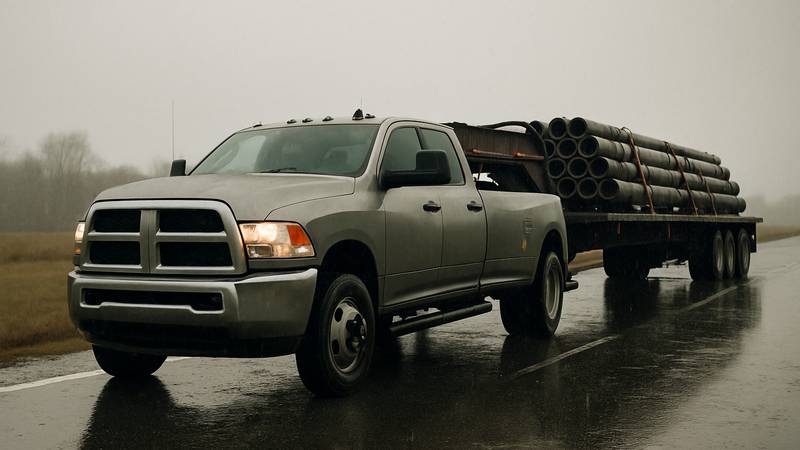
Pickup truck with gooseneck trailer at a truck stop during golden hour
    Insurance Tips

    Hotshot Truckers Insurance: What Coverage You Actually Need

    TruckerPath Team

    Get Your Free Insurance Quote

    Compare quotes from top carriers in minutes

    Hotshot truckers insurance is commercial coverage built for pickup trucks pulling gooseneck or bumper pull trailers to haul time sensitive freight, usually under a load board or broker relationship. At a minimum you need primary liability insurance that meets federal requirements, plus motor truck cargo coverage to protect the freight you're pulling. Most hotshot operators also carry physical damage coverage on the truck and trailer, since a bank loan or lease almost always requires it.

    If you're searching for this term, you're probably one of three people: a new hotshot operator trying to get authority and insurance lined up before your first load, someone switching from a captive carrier to running under your own MC number, or someone shopping because a renewal quote just jumped. This post covers what coverage you actually need, typical cost ranges as of 2026, and the mistakes that get hotshot policies cancelled or claims denied.

    What does hotshot truckers insurance actually cover?

    A standard hotshot policy is really a bundle of several coverages, not one product. The core pieces are primary auto liability, motor truck cargo, and physical damage, with non-trucking liability added if you also drive the truck for personal use.

    • Primary liability: pays for injuries or property damage you cause to other people while under dispatch. This is the coverage FMCSA requires you to carry and file proof of.
    • Motor truck cargo: covers the freight on your trailer if it's damaged, lost, or stolen while in your care. Brokers almost always require a certificate showing this before they'll tender a load.
    • Physical damage: covers your own truck and trailer for collision and comprehensive losses. Lenders require this if the equipment is financed.
    • Non-trucking liability (NTL): covers you when you're driving the truck for personal use, off dispatch, like running to the store. It generally excludes any use in furtherance of the motor carrier's business, which includes bobtailing to pick up a dispatched load, running to drop off after delivering, or any other trip tied to your operating authority rather than personal errands. If you're not sure whether a specific trip would count as business use, ask your agent before you assume NTL applies.
    • General liability and occupational accident: optional add-ons some hotshot operators carry, especially if they load and unload freight themselves or don't qualify for workers' comp as an owner-operator.

    You can compare how these coverages apply specifically to hotshot rigs on our hotshot truck insurance page, which breaks down what a policy usually includes for pickup and gooseneck combinations.

    How much does hotshot truckers insurance cost?

    There's no single number, because cost depends on your driving record, years of experience, radius of operation, and what you're hauling. As a rough guide, based on aggregated quote data from multiple carriers we work with as of 2026, monthly premiums for a single hotshot truck tend to fall somewhere in the ranges below. Treat this as a starting point for budgeting, not a quote, since actual pricing depends on your specific risk profile and can shift as carrier appetite changes.

    CoverageTypical monthly range (2026 estimate)Notes
    Primary liability ($1M CSL)$450 to $1,200Varies heavily by state and driving record
    Motor truck cargo ($100k limit)$60 to $150Higher for high value or hazmat freight
    Physical damage$100 to $300Depends on truck and trailer value, deductible chosen
    Non-trucking liability$25 to $60Only needed if you drive off dispatch
    All-in estimate$635 to $1,710 per monthRough total across all four coverages for a single hotshot truck, before any bundling discount

    Adding those ranges together gives most single truck hotshot operators a rough all-in monthly total somewhere between $635 and $1,710, though where you land depends heavily on your state, driving record, and what you haul. Carriers running clean records with a few years of experience tend to land toward the lower end, while newer authority or higher risk freight pushes toward the top.

    New authority carriers, meaning businesses that got their MC number in the last 12 to 18 months, usually pay more across the board because underwriters treat new authority as higher risk regardless of the driver's actual experience. If that's you, our post on hotshot trucking insurance cost goes deeper into how new authority pricing works and when it typically comes down.

    What liability limits do hotshot truckers need?

    Under federal rules, interstate carriers hauling general non-hazardous freight in a vehicle with a GVWR of 10,001 pounds or more need at least $750,000 in public liability coverage, per 49 CFR Part 387. In practice, most brokers and shippers won't tender a load unless you're carrying $1,000,000, so treat that as the real working minimum if you want consistent freight. If you're hauling hazardous materials, the federal floor jumps to $1,000,000, and it goes up to $5,000,000 for bulk explosives, poison gas, and certain hazardous substances.

    Some brokers and shippers ask for even more than the federal minimum, depending on the freight class or the value of what you're hauling. It's not unusual to see $2,000,000 required for higher value loads or certain specialized freight, even when the federal floor would technically allow less. Read your broker or shipper contract carefully before you assume $1,000,000 is enough for every load you'll be offered.

    These figures are federal and don't change state by state, though some states layer their own intrastate rules on top if you're only running loads inside one state. You can review the exact regulation text at the eCFR page for 49 CFR Part 387 or at fmcsa.dot.gov, and it's worth confirming your specific limit requirement with FMCSA or your state's department of insurance before you bind a policy, since broker and shipper contracts sometimes ask for more than the federal minimum.

    Do hotshot truckers need a BMC-91 filing?

    If you're operating under your own interstate motor carrier authority, yes, you generally need proof of insurance filed with FMCSA, commonly done through a BMC-91 or BMC-91X form submitted by your insurance carrier. This filing tells FMCSA that your liability coverage meets the required limit, and your authority can be suspended if it lapses. As a broker, we handle this filing paperwork for our customers when we place a policy, so you're not stuck faxing forms to FMCSA yourself. If you're not sure whether your current filing is active, that's a quick call to FMCSA or a question for whoever holds your policy now, since letting it lapse even for a few days can shut down your authority.

    What mistakes get hotshot policies cancelled or claims denied?

    The most common issue is misrepresenting radius of operation or cargo type on the application, then having a claim happen outside those declared parameters. If you told your insurer you run a 500 mile radius hauling machinery and you actually cross the country hauling livestock trailers, a claim adjuster can find that gap and deny the claim. Other frequent problems include letting your MC authority lapse while the policy stays active (which creates a mismatch insurers don't like), skipping annual DOT inspections on the truck or trailer, and not updating your policy when you add a second truck or a different trailer type.

    Another common mistake is assuming non-trucking liability covers a trip that's actually tied to dispatch. Bobtailing to pick up a load, or driving back after dropping one off, is generally considered business use of the truck, not personal use, so an NTL only policy is unlikely to respond to a claim from that kind of trip.

    If you're comparing quotes across states, note that requirements and typical pricing can shift depending on where your business is based and where you primarily run. Our trucking insurance by state page lets you check state specific pages for markets like Texas, Georgia, and Ohio if you want to see how local factors affect what you'll pay.

    How do I get hotshot insurance without overpaying?

    The most reliable way is to compare quotes across multiple carriers instead of taking the first number from one company, since hotshot risk appetite varies a lot between insurers. A broker who works across several carriers can usually find a better fit for your specific equipment and experience level than a single captive agent can. It also helps to keep a clean MVR, bundle your liability and cargo coverage with the same carrier when possible, and avoid gaps in coverage between policies, since a lapse often triggers a rate increase even if you weren't at fault for anything. For general guidance, our trucking insurance tips page covers practical steps you can apply regardless of equipment type.

    Frequently Asked Questions

    Ready to Get Started?

    Get personalized insurance quotes tailored to your business

    Ask me anything!