Florida Minimum Insurance for Hotshot Trucking: What Applies to You
Get Your Free Insurance Quote
Compare quotes from top carriers in minutes
The minimum liability insurance for a hotshot operator in Florida depends on two things: your truck and trailer's combined GVWR, and whether you're hauling interstate or staying inside Florida. If you're interstate and your combined GVWR is 10,001 lbs or more, federal rules under 49 CFR Part 387 set a $750,000 public liability floor for general freight, though most brokers and shippers won't dispatch you without $1,000,000. If you're strictly intrastate, Florida's own financial responsibility rules apply on top of or instead of the federal number, depending on your setup. There's no single flat answer, which is exactly why so many hotshot operators get this wrong.
This post walks through the decision tree so you know which number actually applies to your truck, not just the general rule everyone quotes.
Does Florida require different minimums than federal law for hotshot trucks?
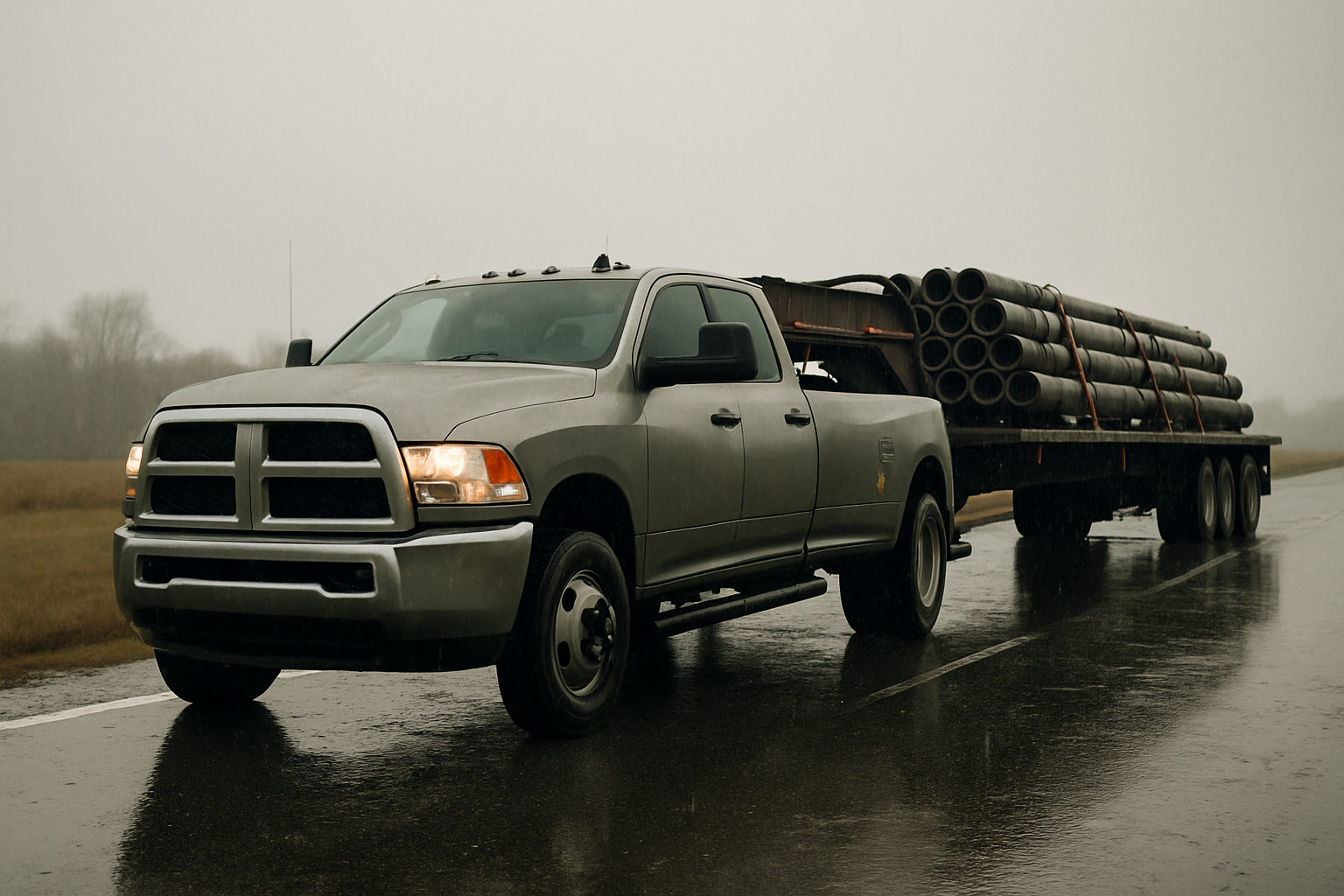
Yes, in some cases. Federal minimums under 49 CFR Part 387 apply to interstate carriers with a combined GVWR of 10,001 lbs or more hauling for hire. But Florida also regulates intrastate motor carriers separately through the state's own financial responsibility statutes, and those numbers can differ from the federal figures depending on the type of vehicle and cargo involved, not just the state you're registered in. A hotshot rig running a one-ton dually with a gooseneck, often right at or just above that 10,001 lb threshold, needs to know exactly which bucket it falls into before assuming a policy limit is enough. If you're unsure whether your lane counts as intrastate or interstate, that's a question for FMCSA or the Florida Department of Highway Safety and Motor Vehicles, not a guess.
We've covered the broader Florida commercial truck insurance rules already, including registration and filing basics, in our Florida commercial truck insurance requirements guide. This post focuses specifically on the hotshot decision points that guide leaves open.
What GVWR actually triggers the $750,000 or $1,000,000 requirement?
The trigger is a combined GVWR of 10,001 lbs or more for interstate general freight, per federal rule, not your empty truck weight and not your payload alone. Combined GVWR means truck plus trailer rating added together. Here's a quick worked example: a one-ton dually rated at 14,000 lbs GVWR pulling a 24-foot gooseneck rated at 14,000 lbs GVWR has a combined rating of 28,000 lbs, well past the 10,001 lb threshold even before you load a single pallet. That's typical for hotshot setups, which is why most of them fall under the federal $750,000 minimum for interstate general freight, with $1,000,000 as the practical number shippers and brokers expect to see on your certificate.
Hauling oil or many hazmat classifications pushes that floor to $1,000,000 by federal rule regardless of GVWR nuance, and bulk explosives, poison gas, or hazardous substances carry a $5,000,000 requirement under the same federal framework, detailed in 49 CFR Part 387. None of that changes based on which state you're registered in, though your state may layer intrastate requirements on top for loads that never cross a state line. Confirm your specific classification with FMCSA or your state's Department of Insurance before you bind a policy.
Quick reference: GVWR triggers at a glance
| Combined GVWR | Hauling for hire? | Regulatory result |
|---|---|---|
| Under 10,001 lbs | Yes | Generally exempt from the federal interstate liability minimums, but check Florida intrastate rules |
| 10,001 lbs or more | Yes, interstate | Federal $750,000 floor applies, $1,000,000 practical standard |
| 10,001 lbs or more | Yes, intrastate only | Florida financial responsibility statute applies instead of the federal interstate trigger |
| Any weight | Hauling oil, hazmat, or explosives classes | $1,000,000 or $5,000,000 federal minimum depending on hazard class |
How much does cancellation risk actually cost hotshot operators in Florida?
It costs you your authority, and it happens more often than most new operators expect. Trucker Path Insurance tracked 47,234 FMCSA insurance cancellation filings nationwide between April 6, 2026 and May 25, 2026, a seven week window. California accounted for the largest share of those filings at 22%, followed by Illinois, Texas, and Florida. That places Florida among the top four states by volume of cancellation filings in that window, though the underlying data is aggregated at the state and all-carrier level, so it doesn't break out hotshot operators specifically or point to a single cause. What it does tell you is that Florida carriers, hotshot or otherwise, show up often enough in cancellation filings that keeping your coverage current deserves real attention rather than an afterthought.
Any lapse in coverage, regardless of the reason, triggers an automatic cancellation filing with FMCSA that can freeze your authority within days. If you want the underlying filing data yourself, it's public through FMCSA.
The fix isn't complicated: know your renewal date, keep a broker who tracks your filings, and don't let a carrier switch create a coverage gap even for a day.
Do you need motor truck cargo or non-trucking liability on top of the minimum?
Liability minimums cover damage to other people and property, not your freight or your truck when you're not under dispatch, so most hotshot operators need at least one more policy layered on. Motor truck cargo insurance protects the load you're hauling under contract, and most shippers and brokers won't tender freight to you without proof of it. As a rough estimate for planning purposes as of late 2026, cargo limits in the $100,000 range are a common starting point for general hotshot freight, though actual limits vary by cargo type and shipper contract, so confirm the number your specific freight requires with your broker before you bid. Non-trucking liability covers your truck when you're driving it off dispatch, say, to the fuel island or home, and it's often required separately from your primary liability policy if you lease to a carrier. Neither of these is optional in practice even though neither is a strict federal minimum in every scenario.
Florida hotshot insurance minimums at a glance
| Operation type | Liability minimum | Who sets it |
|---|---|---|
| Interstate, general freight, GVWR 10,001+ lbs | $750,000 federal floor, $1,000,000 practical standard | FMCSA, 49 CFR 387 |
| Interstate, oil and many hazmat classes | $1,000,000 | FMCSA, 49 CFR 387 |
| Interstate, bulk explosives, poison gas, hazardous substances | $5,000,000 | FMCSA, 49 CFR 387 |
| Intrastate Florida only | Varies by vehicle class and cargo type under state financial responsibility statute, confirm current figure with the state | Florida DHSMV |
The intrastate row varies on purpose. Florida sets different financial responsibility figures depending on vehicle class, passenger capacity, and cargo type, so a one-ton hotshot rig staying entirely inside Florida may face a different number than a straight truck or a for-hire passenger vehicle. Rather than publish a figure here that could be wrong for your exact operation, confirm the current intrastate number with the Florida Department of Highway Safety and Motor Vehicles or your broker before you bid strictly intrastate freight.
What does this look like in practice for a typical hotshot rig?
Say you're running a one-ton dually and a 30-foot gooseneck out of Jacksonville, hauling construction equipment on lanes that cross into Georgia and back. Your combined GVWR clears 10,001 lbs easily, and because you cross state lines, you're interstate, so the federal $750,000 floor applies at minimum, with most of your shippers asking for $1,000,000 on your certificate before they'll tender a load. You'd also want motor truck cargo coverage sized to the equipment you're hauling, since a piece of machinery worth more than your cargo limit leaves you exposed on the difference. If instead you never leave Florida, running local dirt and gravel jobs, you'd be intrastate, and Florida's own financial responsibility rules, not the federal 10,001 lb interstate trigger, would set your floor. Same truck, same trailer, different rulebook, depending entirely on where your freight goes.
Frequently Asked Questions
Continue reading
- Hotshot truck insurance
- Florida trucking insurance requirements
- Compare truck insurance quotes
- Commercial Truck Insurance Requirements in Michigan (2026)
- Does Insurance Cover MC Authority Theft? The Real Cost
- Box Truck Insurance Requirements: Minimums and Costs by Scenario
- Coverages we offer for owner-operators & fleets
- Common questions about trucking insurance
Ready to compare rates? Get a free trucking insurance quote from carriers built for trucking regulations.
Ready to Get Started?
Get personalized insurance quotes tailored to your business