Semi Truck Insurance in Texas: What You Actually Need
Get Your Free Insurance Quote
Compare quotes from top carriers in minutes
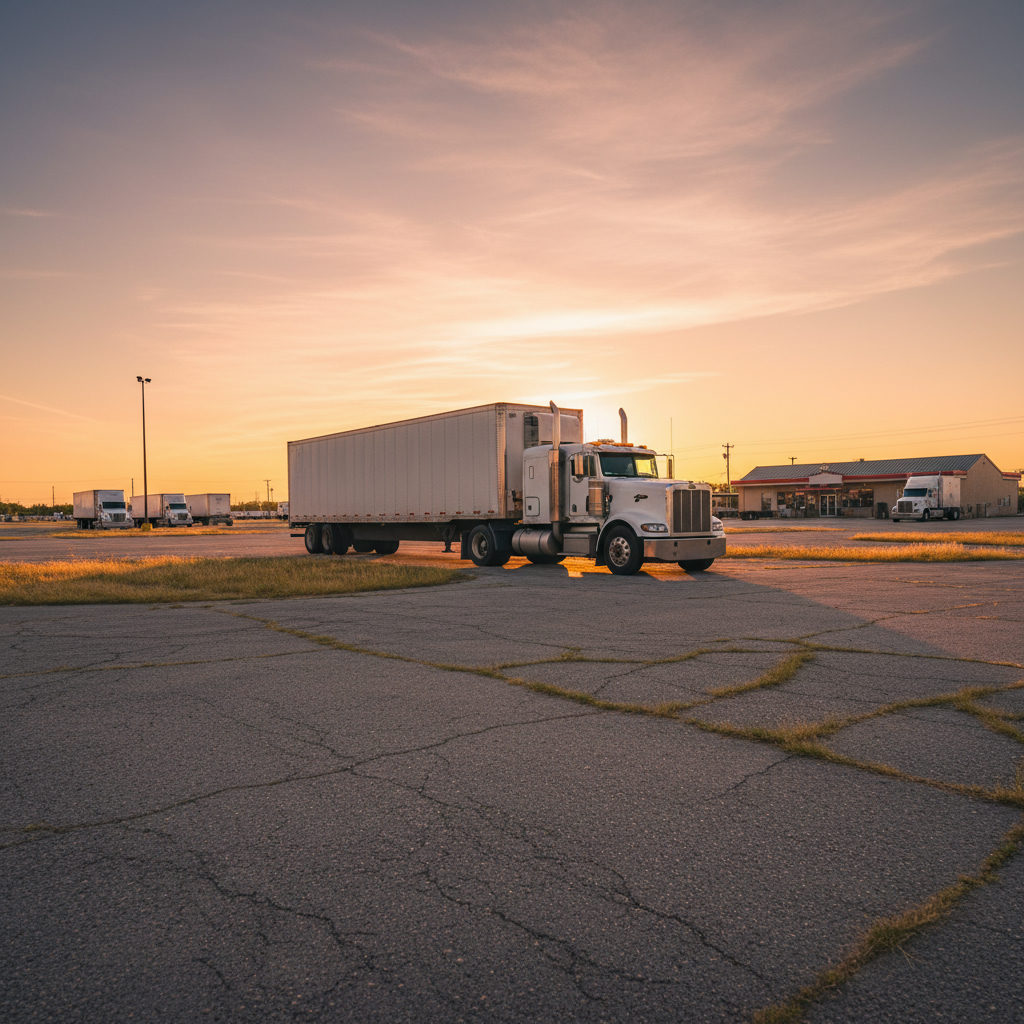
If you drive a semi truck in Texas, insurance for your rig starts with a federal floor, but almost nobody hauls at that floor in the real world. For general freight, the FMCSA minimum is $750,000 in public liability. In practice, most owner-operators running under their own authority carry at least $1,000,000, since most shippers, brokers, and factoring companies will not sign a contract without it. So when people look into semi truck insurance in Texas, what they usually need to know is what coverage is legally required, what is actually expected by the people who give you freight, and what factors move the price up or down.
This post walks through the legal minimums, the practical numbers, and the paperwork that comes with them, so you can shop smart instead of guessing.
What insurance is legally required for a semi truck in Texas?
At minimum, interstate semi trucks hauling general freight need $750,000 in primary liability coverage under 49 CFR Part 387. If you haul oil or many other hazardous materials, that jumps to $1,000,000, and bulk shipments of explosives, poison gas, or hazardous substances require $5,000,000. These are federal numbers and they do not change state by state, though Texas can add its own rules for trucks that only operate within the state (intrastate). You can confirm the current federal figures directly on fmcsa.dot.gov or in the official text at ecfr.gov, and it is worth a quick check with FMCSA or your state's motor carrier authority before you finalize a policy, since intrastate rules can differ from interstate ones.
Texas also requires proof of financial responsibility filed with FMCSA. The form that does this is the BMC-91 (Motor Carrier Bodily Injury and Property Damage Liability), and it is filed electronically with FMCSA by the insurance company that issues your policy, not by your broker. A broker can coordinate the process, gather your paperwork, and make sure nothing falls through the cracks, but the insurer is the party of record on file with FMCSA. It is worth confirming with your broker or directly with FMCSA which specific forms and cargo limits apply to your operation, since hazmat and specialty endorsements sometimes carry separate filing requirements beyond the standard BMC-91. FMCSA's insurance filing requirements are laid out under 49 CFR 387.7 through 387.15.
How much liability coverage does coverage for semi trucks in Texas actually need?
In practice, $1,000,000 in combined single limit liability is the working standard almost every shipper and broker will ask for, even though the federal floor is lower for non-hazardous freight. If you plan to pull loads for major freight brokers or work under someone else's authority, $750,000 will get rejected more often than not. Carriers hauling hazmat or bulk chemicals need to go higher, matching the $1,000,000 or $5,000,000 federal thresholds depending on what they haul.
New authority carriers in Texas sometimes get quoted higher premiums for the first year or two simply because they have no operating history. That is common and not a sign something is wrong with your application.
What does trucking insurance for Texas owner-operators cost?
Pricing varies a lot depending on driving record, years of experience, freight type, and radius of operation, so there is no single honest number to give without seeing your actual profile. Rather than quote a specific range that can go stale quickly, it helps to know which factors push a premium up or down:
- Fewer years of commercial driving experience generally means a higher premium, especially in the first year or two.
- A mixed or unpredictable radius of operation, where you sometimes run local and sometimes run long-haul, tends to price higher than a consistent, defined radius.
- Recent moving violations, at-fault accidents, or poor CSA scores raise cost significantly.
- New operating authority with no claims history is treated as higher risk until you build a track record, even with a clean personal driving record.
- Older or higher-value equipment can raise the physical damage portion of your premium, independent of your liability rate.
Add motor truck cargo and physical damage on top of primary liability, and total premium for a single truck climbs from there. Your actual number depends heavily on your MVR, CSA scores, and equipment value, and the only reliable way to know your real cost is to get an actual quote.
New authority carriers and drivers with recent violations should expect to sit toward the higher end of whatever range a broker quotes them until they build a clean record. Bundling coverages with one broker, rather than buying liability from one company and cargo from another, sometimes helps control administrative costs and claims handling headaches even if it does not guarantee a lower premium.
A worked example
Say a Texas owner-operator with five years of experience, a clean MVR, and no CSA violations is running dry van freight regionally within a roughly 500-mile radius. That kind of profile tends to land toward the lower end of typical pricing. Now compare a first-year authority holder with the same equipment but no operating history and a longer, more variable radius: insurers usually price that as higher risk simply because there is less data to judge, which is why new authority premiums often start high and come down over time as a track record builds.
- Experienced regional driver: five years experience, clean MVR, no CSA violations, roughly 500-mile radius. Tends to land toward the lower end of pricing for a given carrier.
- New authority long-haul driver: first year of operating authority, same equipment, longer and more variable radius, no claims history yet. Typically priced as higher risk until a track record builds.
Neither example is a quote, but it illustrates why two trucks with similar equipment can see very different premiums.
| Coverage type | Typical limit | Who usually needs it |
|---|---|---|
| Primary liability | $750,000 to $1,000,000 | All interstate semi trucks (federal minimum $750k for general freight, $1M for oil/many hazmat loads) |
| Motor truck cargo | $100,000 | Anyone hauling freight for others; often required by brokers |
| Physical damage | Actual cash value of truck/trailer | Owner-operators with a loan or lease on equipment |
| Non-trucking liability | $1,000,000 typical | Owner-operators leased to a carrier, for personal-use miles |
| Trailer interchange | Varies by trailer value | Drivers pulling trailers they do not own |
Confirm current filing forms and typical cargo limits with your broker or directly with FMCSA before you assume any figure above applies to your specific setup, since requirements can shift and every carrier's paperwork is a little different.
What other coverages should owner-operators running in Texas consider?
Beyond liability, cargo and physical damage coverage protect the two things most likely to sink a small operation: a damaged load and a wrecked truck. If you lease on to a carrier and also drive the truck off-duty or between loads, non-trucking liability fills the gap that your carrier's policy does not cover. If you swap trailers with other companies, trailer interchange coverage protects you when you are hauling equipment you do not own.
General liability is separate from truck liability and covers things like a customer slipping at your yard or property damage unrelated to a moving vehicle. Occupational accident coverage is worth a look if you do not carry workers' compensation, since it can help with medical costs and lost income after an on-the-job injury.
How does radius of operation affect pricing for semi trucks running in Texas?
Radius matters more than a lot of new owner-operators expect. A truck running mostly local or regional routes within a few hundred miles of home base tends to be seen as lower risk than one running long-haul coast to coast, simply because more time on the road generally means more exposure to claims. If your Texas operation splits time between regional runs and occasional long hauls, be upfront about that with your broker, since underpricing your actual radius can create problems if you ever need to file a claim.
How do I get semi truck insurance in Texas?
You have two paths: buy directly from one insurance carrier, or work with a broker who compares quotes across multiple carriers for you. A broker route generally means less time on the phone repeating the same information to five different companies, and it can surface options you would not find searching alone, since not every carrier writes trucking policies through public quote tools.
Whichever route you choose, have your MVR, CSA scores, years of experience, equipment list, and average radius of operation ready. Those five things drive most of the pricing conversation.
Frequently Asked Questions
Continue reading
- Semi truck insurance
- Texas trucking insurance requirements
- Compare truck insurance quotes
- Box Truck Insurance Requirements: Minimums and Costs by Scenario
- Florida Minimum Insurance for Hotshot Trucking: What Applies to You
- Does Insurance Cover MC Authority Theft? The Real Cost
- Coverages we offer for owner-operators & fleets
- Common questions about trucking insurance
Ready to compare rates? Get a free trucking insurance quote from carriers built for insurance tips.
About the author
Grant Holloway
Market Editor
Grant tracks what rates are doing, why, and what it means for the next renewal cycle.
More articles by Grant →Ready to Get Started?
Get personalized insurance quotes tailored to your business