Affordable Flatbed Insurance: What Actually Lowers Cost
Get Your Free Insurance Quote
Compare quotes from top carriers in minutes
Affordable flatbed insurance is possible, but it starts with understanding why flatbed coverage almost always costs more than a dry van policy in the first place. As a general illustrative range, and not a market survey, single truck flatbed policies with a clean record often land somewhere between roughly 900 and 2,200 dollars a month, layered on top of federal liability minimums that run 750,000 to 1,000,000 dollars depending on freight type. Flatbed freight rides exposed, cargo shifts and falls are more common, and tie-down claims are one of the top reasons flatbed motor truck cargo policies get flagged. If you want a lower premium, you need the right coverage limits, a clean safety record, and a broker who is actually shopping multiple carriers instead of quoting you one option.
This post breaks down what flatbed insurance typically costs as of this year, what drives the price up or down, and what you can control before your next renewal.
What does affordable flatbed insurance actually cost?
There is no single number, because flatbed rates depend on your radius, cargo type, driving record, and years of authority. To give you a sense of scale, here is an illustrative range we put together based on patterns we typically see across quotes, not a formal market survey: single truck flatbed policies with a clean record often fall somewhere between 900 and 2,200 dollars a month, with new authority or specialized loads like steel or oversized freight pushing toward the higher end or beyond it. Treat this as a starting point for comparison, not a quote for your specific operation.
| Coverage type | Typical minimum limit | Who usually needs it |
|---|---|---|
| Primary liability | 750,000 to 1,000,000 (federal minimum for most freight is 750,000, but 1,000,000 is the practical market standard most shippers ask for) | All interstate flatbed carriers |
| Motor truck cargo | 100,000 as a common floor for general flatbed freight, higher for steel, machinery, or building materials (these limits are set by brokers and shippers, not federal regulation) | Anyone hauling freight they do not own |
| Physical damage | Actual cash value of the truck and trailer | Financed or leased equipment |
| Non-trucking liability | Set by carrier or lease agreement | Owner operators leased to a carrier |
Unlike liability limits, motor truck cargo limits are not mandated by federal law. They are driven by what brokers and shippers require in their contracts, so the 100,000 dollar floor mentioned above is a common practice, not a rule you can look up in the federal code.
To show how cargo type alone can move the number, here is a rough illustrative comparison of monthly premium ranges for a single flatbed truck with a clean record, again based on typical patterns rather than a formal survey:
| Cargo type | Illustrative monthly premium range | Why |
|---|---|---|
| General freight (lumber, building materials) | 900 to 1,400 dollars | Lower claim severity, easier securement |
| Steel coils, pipe, machinery | 1,300 to 1,900 dollars | Higher claim severity if a load shifts or falls |
| Oversized or permitted loads | 1,700 to 2,200+ dollars | Added liability exposure and often a separate cargo endorsement |
The federal liability minimums come from 49 CFR Part 387, which you can review directly on fmcsa.dot.gov or ecfr.gov. Always confirm current figures with FMCSA or your state department of insurance before you assume a number is still accurate.
What factors make flatbed insurance more expensive than dry van?
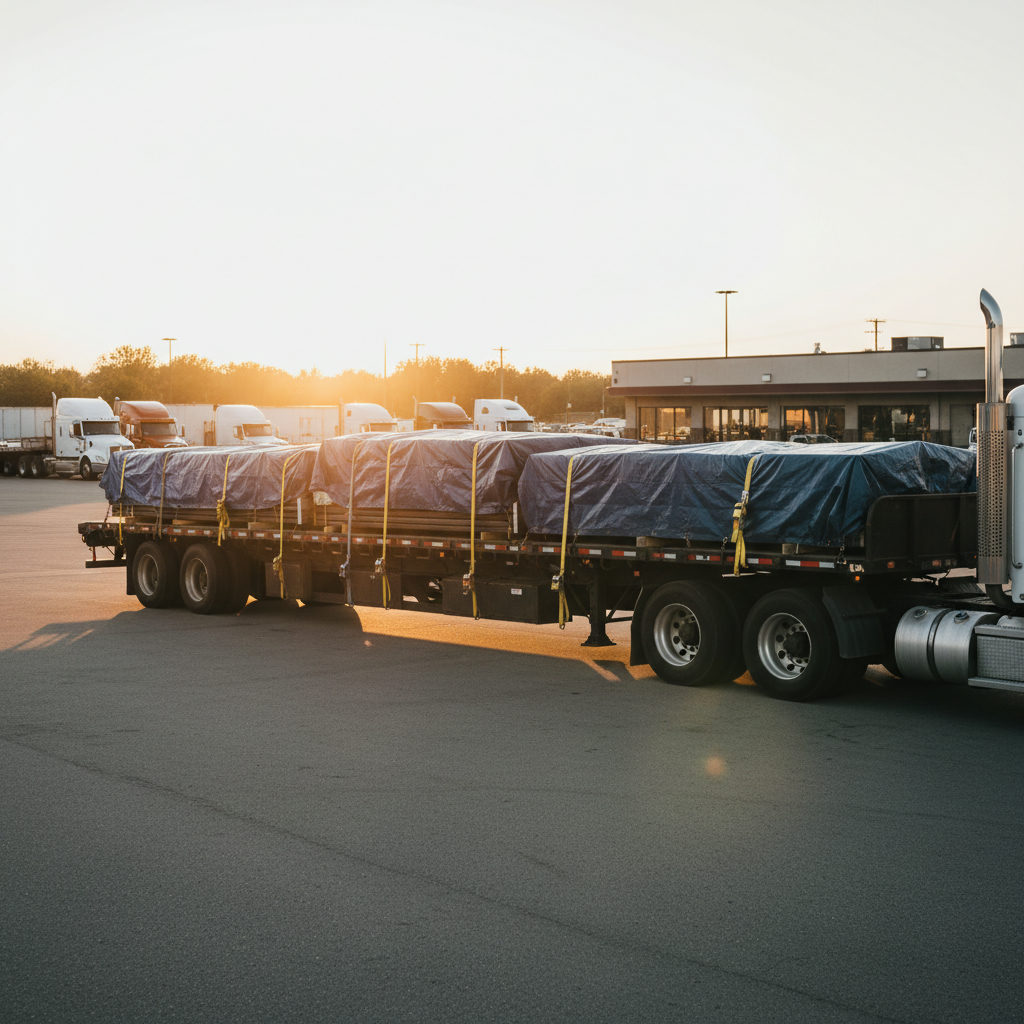
Flatbed insurance costs more mainly because the cargo is exposed and the securement process introduces more claim opportunities. A tarp that comes loose, a strap that fails, or a load that was not blocked correctly can all trigger a cargo claim that a boxed dry van shipment would never face.
Other cost drivers specific to flatbed work include:
- Cargo type. Steel coils, pipe, and machinery carry higher claim severity than lumber or building materials.
- Load height and width. Oversized or permitted loads often need higher cargo limits and sometimes a separate rider.
- Radius of operation. Long haul flatbed work with more highway exposure typically prices differently than regional or local hauls.
- Years of experience and authority age. New authority carriers almost always pay more until they build a claims history.
- Equipment age and value. Older flatbed trailers may cost less to insure for physical damage but can raise liability concerns if maintenance records are thin.
If you want a deeper look at how flatbed coverage differs from other trailer types, the flatbed trucks insurance page breaks down the coverage options specific to that equipment.
What coverages do flatbed operators actually need?
At minimum, a flatbed operator needs primary liability, motor truck cargo, and physical damage if the equipment is financed, but most owner operators also want non-trucking liability and sometimes trailer interchange if they pull trailers they do not own. Skipping cargo coverage to save money is one of the most common mistakes new flatbed operators make, because a single load claim, especially on high value freight like coils or machinery, can exceed what a bare bones policy pays out.
General liability is worth adding if you load or unload at customer sites, since it covers third party injury or property damage that is not related to the truck itself. If you run more than one truck, bundling these coverages under a single fleet policy can also simplify renewals and sometimes improve pricing, which is worth discussing through a fleet insurance quote if you are adding trucks.
How can you lower your flatbed insurance premium and keep it affordable?
The fastest way to lower a flatbed premium is to shop multiple carriers instead of renewing with the same one automatically, since flatbed appetite and pricing vary a lot carrier to carrier. Beyond that, a few things actually move the number:
- Keep your CSA scores clean across the board, since underwriters generally weigh safety scores when pricing flatbed risk.
- Install and use a dash cam. Many carriers will price flatbed policies slightly better when there is video evidence available for disputed cargo or liability claims.
- Match your cargo limit to what you actually haul instead of buying a blanket high limit you do not need for every load.
- Bundle non-trucking liability and physical damage with the same carrier as your primary liability when possible, since split policies sometimes cost more in total.
- Ask about deductible options on physical damage. A higher deductible lowers the monthly premium but means more out of pocket if you have a claim, so weigh that against your cash reserves.
For more general strategies on trimming your insurance bill without cutting coverage you need, see our trucking insurance tips page, and if budget is the main concern right now, the cheap truck insurance guide walks through where cost cutting makes sense and where it does not.
Does the state you operate in change your flatbed insurance cost?
Yes, state matters because insurers price risk differently based on traffic density, weather, litigation trends, and state specific intrastate rules layered on top of the federal minimums. A flatbed operator running mostly in Texas or Florida will often see different pricing than one running mostly in Michigan or Maine, even with identical driving records. If you want to see what is relevant where you actually run, our state pages, like Texas trucking insurance or Georgia trucking insurance, cover state specific notes. You can also browse the full list on the trucking insurance by state page to find your state.
Frequently Asked Questions
Continue reading
- Flatbed truck insurance
- Compare truck insurance quotes
- New Kensington PA Commercial Truck Insurance Coverage
- DOT Blitz Week 2026: Dates and What It Costs
- Autonomous Truck Insurance: Roadside Inspection Requirements 2026
- Coverages we offer for owner-operators & fleets
- Common questions about trucking insurance
Ready to compare rates? Get a free trucking insurance quote from carriers built for insurance tips.
About the author
Marcus Ellery
Regulatory Editor
Marcus covers FMCSA filings, operating authority and the compliance deadlines that quietly shut carriers down.
More articles by Marcus →Ready to Get Started?
Get personalized insurance quotes tailored to your business