Not For Hire Truck Insurance Cost: What You'll Pay
Get Your Free Insurance Quote
Compare quotes from top carriers in minutes
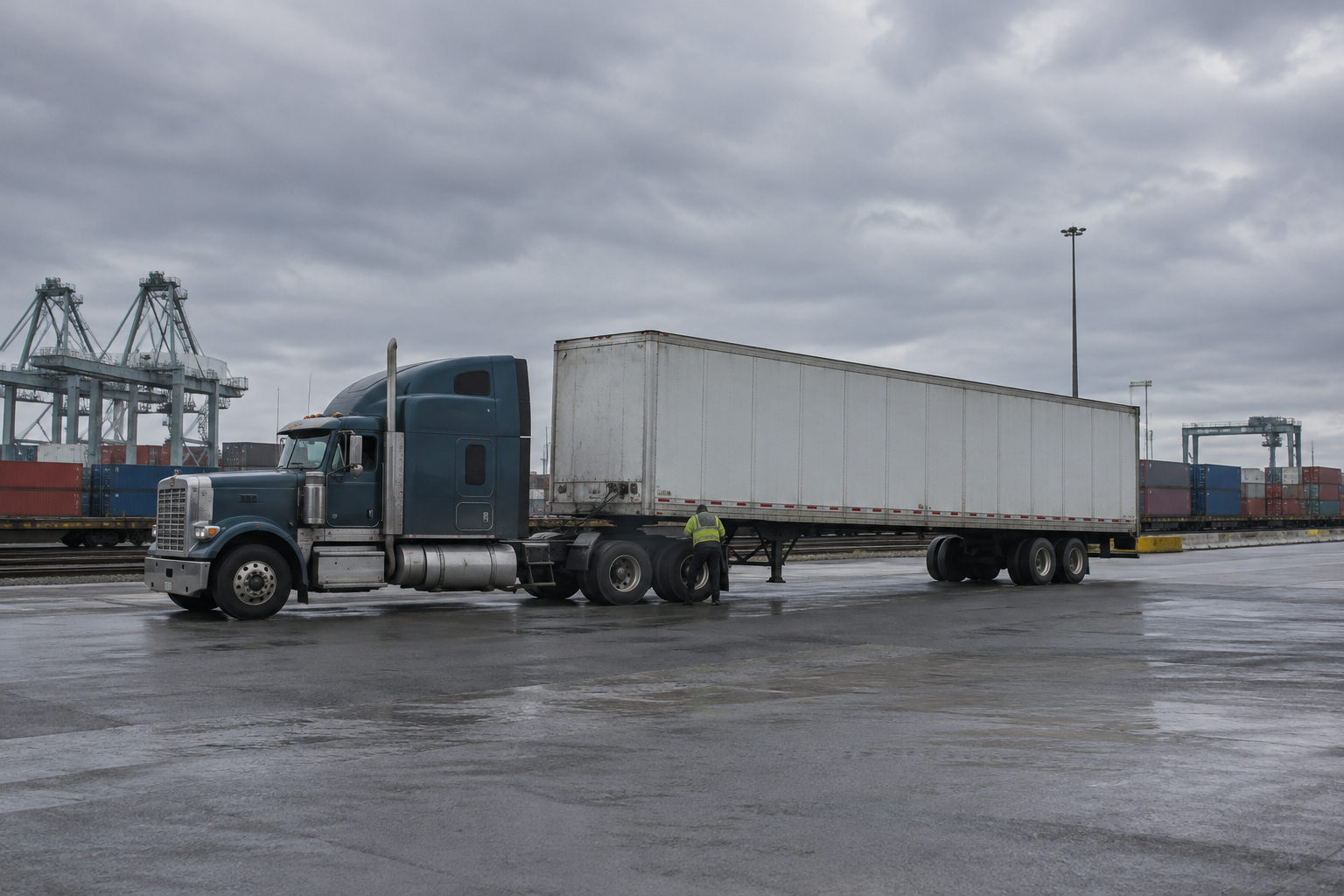
Not for hire truck insurance covers a truck that hauls the owner's own goods, equipment, or materials, not freight belonging to someone else for payment. Think of a construction company moving its own gravel, a landscaper hauling its own mowers, or a grocery chain running its own delivery trucks. Because you're not transporting paid freight for the public, you typically don't need the federal for-hire motor carrier authority (MC number) or the public liability filing that goes with it, and that difference usually shows up as a lower premium than a for-hire policy on the same truck.
That said, “usually cheaper” doesn't mean cheap, and the gap between not-for-hire and for-hire coverage isn't as big as some owners expect once you add physical damage, cargo for your own goods, and a reasonable liability limit. Let's go through what you'll actually pay, what you can control, and how the two filing statuses really compare.
How much does not for hire truck insurance cost?
A single not-for-hire box truck or dump truck running local to regional routes with a clean driving record tends to land somewhere between $250 and $600 a month. That figure covers primary liability and basic physical damage, and it moves with the truck's value, the state, and the liability limit you choose, according to GG Insurance's commercial dump truck insurance cost guide (current as of 2026).
A heavier not-for-hire flatbed or dump truck hauling your own construction materials does typically cost more to insure than a light pickup-based operation, but the same guide puts the realistic range lower than many owners assume. Average commercial dump truck insurance runs about $2,500 to $7,300 a year, or roughly $200 to $600 a month, for a single owner-operated unit, with heavier, higher-value rigs or those with weaker driving records landing at the top of that range, per the GG Insurance guide (current as of November 2026).
Those numbers move a lot based on your specific risk profile, so treat them as a starting point for budgeting, not a quote. The fastest way to get an actual number for your truck is to compare quotes across carriers rather than guess from averages, since two trucks with nearly identical specs can price hundreds of dollars apart depending on the carrier's appetite for your equipment type and state.
A worked example: how limit and deductible choices change the bill
Numbers are easier to reason about with a concrete example, so picture a single not-for-hire dump truck worth about $90,000, operated locally by an owner with a clean record. Here's roughly how the choices you make can shift the monthly premium within the $250 to $600 range described above. The dollar figures below are hypothetical illustrations, not quotes, meant to show the direction and rough size of the swing rather than an exact price for your truck:
- State minimum liability, $1,000 deductible: This sits near the lower end of the range, around a hypothetical $270 a month, since you're carrying less liability protection and absorbing more of any physical damage loss yourself before coverage kicks in.
- $1,000,000 liability, $1,000 deductible: Moving up to the voluntary $1,000,000 limit that most lenders and larger contracts expect pushes the premium toward the middle of the range, around a hypothetical $420 a month, since the carrier is now backing a bigger liability exposure.
- $1,000,000 liability, $2,500 deductible: Raising the physical damage deductible from $1,000 to $2,500 typically pulls some of that cost back down, to around a hypothetical $370 a month, because you're agreeing to cover more of a repair bill out of pocket in exchange for a lower monthly rate.
The exact dollar swing between these choices depends on your carrier and state, but the pattern holds across most not-for-hire policies: liability limit pushes the price up, deductible choice pulls it back down, and the two together usually explain most of the spread you'll see between quotes on the same truck.
What makes not for hire insurance go up or down?
The price moves mainly with your liability limit, your equipment's value, your radius of operation, and your driving record. A few specifics worth knowing:
- Liability limit: Not-for-hire operations aren't bound by the federal $750,000 or $1,000,000 public liability minimums that apply to for-hire interstate carriers of property under 49 CFR Part 387, so you may be able to carry a lower limit legally. But most lenders, landlords, and larger contracts still want at least $1,000,000, and carrying less to save money can leave you exposed if a claim exceeds your limit.
- Equipment type and value: A $150,000 dump truck costs more to insure for physical damage than an older box truck worth $30,000, independent of liability.
- Radius of operation: Local, intrastate hauling generally prices lower than regional or long-haul routes because of less road exposure.
- Driving record and experience: Moving violations, at-fault accidents, and years of CDL experience all factor into the rate a carrier offers.
- State: Rates differ by state due to accident frequency, litigation environment, and state-specific minimum financial responsibility rules. Your state's department of motor vehicles or department of insurance can confirm the exact minimums that apply to your registration.
If your fleet mixes vehicle types, like a box truck for deliveries and a dump truck for material hauling, check the specifics for each on pages like box truck insurance and dump truck insurance rather than assuming one quote covers both the same way.
Do you need FMCSA filings for not for hire trucking?
In most cases, no, because the federal BMC-91 public liability filing and the $750,000 to $1,000,000 minimums apply to for-hire carriers transporting property for compensation in interstate commerce, as laid out in 49 CFR Part 387. If your truck only moves your own company's goods and never freight belonging to a customer, you generally fall outside that for-hire filing requirement. You'll want to confirm your specific setup with FMCSA or your state department of insurance, since the line between “for hire” and “not for hire” can get blurry if you occasionally haul for a client, lease your truck out, or move goods for an affiliated but separate company.
Here's a number worth knowing if you're deciding whether to let a policy lapse or switch carriers while you sort out your operating status: Trucker Path Insurance tracked 47,234 FMCSA insurance cancellation filings nationwide between April 6, 2026 and May 25, 2026, based on our own analysis of FMCSA filing data. A cancellation filing often means a truck sat uninsured, sometimes because an owner assumed they didn't need coverage during a gap between for-hire and not-for-hire status, or missed a renewal while switching carriers. That's a real compliance risk even for a private fleet, since most states still require some form of commercial auto liability on a registered truck regardless of for-hire status.
What's the difference between not for hire and for hire truck insurance?
The core difference is who the freight belongs to and whether you're paid to haul it. That single distinction changes your filing requirements, your typical liability limit, and often your cargo coverage needs.
| Factor | Not for Hire | For Hire |
|---|---|---|
| Who owns the freight | You or your company | A customer paying you to haul it |
| Federal public liability filing (BMC-91) | Usually not required | Required for interstate for-hire carriers |
| Typical liability minimum | State minimum, often $1M chosen voluntarily | $750,000 to $1,000,000 federal minimum, more for hazmat |
| Motor truck cargo insurance | Optional, covers your own goods if you want it | Often required by shippers and brokers |
| Typical monthly cost (single truck, as of Nov 2026 estimate) | $250 to $600 | Roughly $1,000 to $2,000 or more, varying with authority status, cargo, and driving history |
The for-hire range above comes from FreightWaves Checkpoint (current as of November 2026). Those cost ranges are estimates for budgeting purposes only, not quotes, since actual pricing depends on your truck, driver, and state. If you're unsure which category your operation falls into, read through how commercial truck insurance works before you commit to a filing status that changes your coverage requirements.
How do you lower the cost of not for hire coverage?
The biggest lever is usually your liability limit and your physical damage deductible, not shopping around endlessly for a lower quote. Raising your deductible from $1,000 to $2,500 on an older truck, choosing a liability limit that matches your real exposure instead of padding it, and keeping a clean driving record for a year or two before your next renewal all tend to move the number more than switching carriers every six months. It also helps to confirm you're not paying for for-hire style coverage (like cargo liability for third-party freight) if you genuinely never haul for others, since that's coverage you don't need. Comparing a few quotes side by side, rather than renewing on autopilot, is still worth doing once a year even if you're happy with your current carrier.
Frequently Asked Questions
Continue reading
- Commercial truck insurance
- Compare truck insurance quotes
- Trailer Interchange Insurance Massachusetts: Cost Guide
- Semi Truck Insurance for New Drivers: Where to Start
- 18 Wheeler Insurance Policy Limits: 2026 Guide
- Coverages we offer for owner-operators & fleets
- Common questions about trucking insurance
Ready to compare rates? Get a free trucking insurance quote from carriers built for insurance tips.
Ready to Get Started?
Get personalized insurance quotes tailored to your business