Texas Oversize Permits: TxDMV Number or Surety Bond?
Get Your Free Insurance Quote
Compare quotes from top carriers in minutes
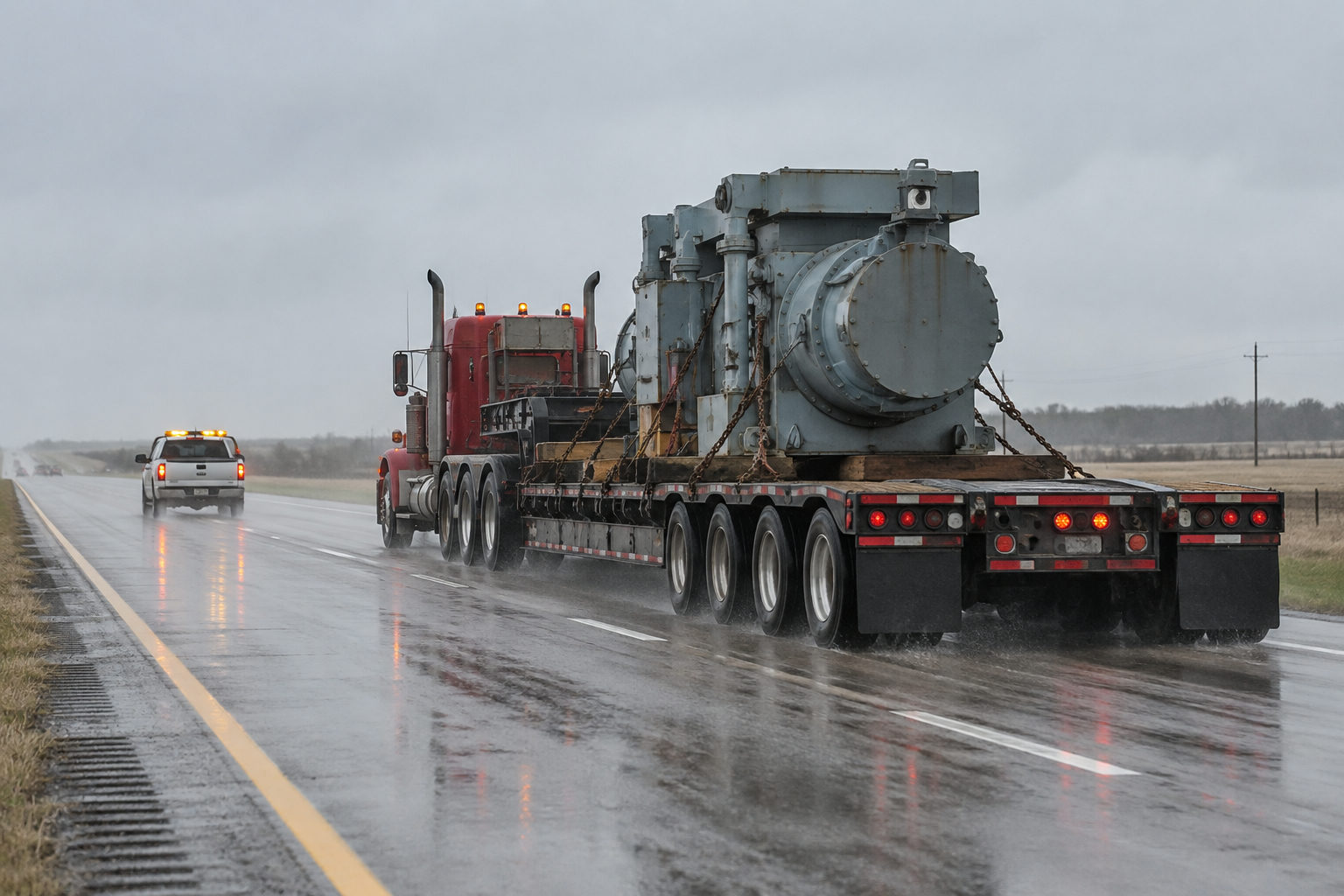
To get a Texas oversize permit for superheavy or oversize equipment, you generally need a TxDMV number first. Texas law lets TxDMV issue those permits only to applicants registered as motor carriers, unless the vehicle or equipment isn't subject to Texas motor carrier registration. In that case, you file a $10,000 Superheavy or Oversize Permit Bond instead.
That bond pays the Texas Department of Transportation (TxDOT) for highway damage. It isn't insurance, and it isn't the same as the $15,000 bond tied to the annual over axle and over gross weight tolerance permit. Below, we cover which one applies to you, where UCR fits, and where your insurance requirement actually comes from.
Do you need a TxDMV number to get a Texas oversize permit?
Usually, yes. Under Texas Transportation Code Section 623.075, TxDMV may issue a permit to move superheavy or oversize equipment only to an applicant registered under Chapter 643, the state's motor carrier registration law. TxDMV's rule says the same thing: unless exempted by law, an applicant must be registered as a motor carrier before obtaining one of these permits or, if not required to register, file a surety bond.
A TxDMV number is Texas motor carrier registration. According to TxDMV's registration requirements, you must register when you operate intrastate and, among other triggers, you:
- run a commercial motor vehicle or combination with a gross weight, registered weight or gross weight rating over 26,000 pounds
- haul hazardous materials in a quantity that requires placards
- haul household goods for pay, at any weight
- run a farm vehicle with a gross weight, registered weight or gross weight rating of 48,000 pounds or more
If you hold a TxDMV number, you meet the registration condition for these permits. Your USDOT number still matters at the application stage. On its single-trip permit page, TxDMV says you must give your USDOT number, that it checks the number for out-of-service orders before issuing the permit, and that the permit is issued to the company name listed for that USDOT number. For USDOT number questions, see FMCSA's registration pages and confirm your registration with FMCSA.
When does the $10,000 surety bond apply instead?
The $10,000 bond applies when your vehicle or equipment isn't subject to Chapter 643, so you don't hold a TxDMV number. The statute carves out two groups from the registration requirement:
- farm equipment used for an agricultural purpose and driven or transported by, or under the authority of, its owner
- a vehicle or equipment that isn't subject to Chapter 643
For the first group, the statute removes the registration requirement without putting a bond in its place, because its bond requirement applies only to the second group. Both conditions must be met: the farm equipment must be in use for an agricultural purpose, and it must be driven or transported by, or under the authority of, its owner.
For the second group, the statute requires a bond before TxDMV issues the permit. The bond is payable to TxDOT and conditioned on paying for any damage to the highway caused by operating the permitted vehicle or equipment.
TxDMV uses Form MCD-439, the Superheavy or Oversize Permit Bond, for this. The form sets the amount at $10,000, names TxDOT as the party it pays, and covers damage to any highway under the jurisdiction of the Texas Transportation Commission caused by equipment operating under a Chapter 623 permit. The bond must name a single company as principal, and it must be on file with TxDMV before a permit is issued.
Carriers that can land on the bond side include those whose trucks don't trigger TxDMV registration, such as a private carrier with no placarded hazmat hauling its own equipment in a vehicle or combination whose gross weight, registered weight and gross weight rating are all 26,000 pounds or less. Interstate-only carriers are covered in the next section. Confirm your status with TxDMV's permits office before you apply.
Does UCR registration replace a TxDMV number for oversize permits?
In practice, TxDMV treats it that way. Its permit surety bond page frames the bond as applying if you are not required to obtain either TxDMV Motor Carrier Registration (MCR) or Unified Carrier Registration (UCR), and its route inspection page tells applicants to comply with MCR or UCR. So an interstate-only carrier that is current on UCR generally meets the registration condition without the bond. Texas motor carrier registration law itself doesn't apply to carrier operations exempt from registration under the federal Unified Carrier Registration Act when they run exclusively in interstate or international commerce.
The statute's wording is narrower than TxDMV's guidance. Before 2021, the permit statute's exception covered vehicles operated by carriers registered under Chapter 643 or Chapter 645, the UCR chapter. The 2021 amendment replaced that with vehicles or equipment not subject to Chapter 643, and the Senate Research Center's bill analysis says permit bonds continue for operators not required to register as a motor carrier.
Because TxDMV's published guidance and the statute's wording don't line up on this point, ask TxDMV's permits office to confirm what it needs from you before you apply. If you also run intrastate loads in Texas and hold a TxDMV number, the registration condition is met either way.
What is the $15,000 over axle and over gross weight bond?
It's a separate security for a separate permit: the annual over axle and over gross weight tolerance permit under Transportation Code Section 623.011. The same security also applies to applicants for a permit under Section 623.321, which the statute describes as an alternative to the Section 623.011 permit. To get either permit, the applicant files either a blanket bond or an irrevocable letter of credit from an FDIC-insured financial institution. Either one must be for $15,000, payable to the counties of Texas. It must be conditioned on the applicant paying a county for damage to the county's roads or bridges caused by operating the vehicle in either of two ways:
- at the heavier weight the permit is issued for, above the maximum weights authorized by Transportation Code Chapter 621, Subchapter B, or Section 621.301 or 623.321
- in violation of Transportation Code Section 623.323
TxDMV calls the bond the Over Axle/Over Gross Weight Tolerance Permit Bond, Form 1753, and requires it or the letter of credit before it issues the permit. We found no registration exception for this security in the statute or on TxDMV's permit page. For the Section 623.011 permit, the statute excepts permits for a vehicle loaded with timber or pulp wood, wood chips, cotton, or agricultural products in their natural state, so check with TxDMV if you haul those.
Because the two bonds attach to different permits, an operator without a TxDMV number that needs both kinds of permit would need both securities.
| TxDMV number | $10,000 Superheavy or Oversize Permit Bond | $15,000 tolerance permit security | |
|---|---|---|---|
| What it is | Texas motor carrier registration | Surety bond on Form MCD-439 | Bond on Form 1753, or an irrevocable letter of credit |
| Who needs it | Carriers that meet a TxDMV registration trigger | Permit applicants not subject to Texas motor carrier registration (owner-moved farm equipment in agricultural use is excepted) | Applicants for the annual tolerance permit under Section 623.011 (except loads of timber, pulp wood, wood chips, cotton or agricultural products in their natural state) or for a permit under Section 623.321 |
| Amount | Not a bond. The related liability minimum is $500,000 for most carriers over 26,000 lbs | $10,000 | $15,000 |
| Paid to | Not a bond; your insurer files Form E | TxDOT | Texas counties |
| What it covers | Liability, through your insurer's filing | Highway damage from permitted equipment | County road and bridge damage from operating at the permitted heavier weight, or in violation of Section 623.323 |
| Does a TxDMV number replace it? | Not applicable | Yes | No exception found |
Is a permit bond the same as truck insurance?
No. A permit bond pays a government for road damage. Form MCD-439 runs to TxDOT, and the tolerance permit security runs to Texas counties. Neither bond names the other drivers or property owners who might bring a claim after a crash, which is what primary liability insurance is for.
Your insurance requirement comes from your registration, not from the permit. For TxDMV-registered carriers, the minimum for most private or for-hire carriers over 26,000 pounds is $500,000, and only your insurance company can file proof of that coverage with TxDMV, on Form E. If you run interstate for hire, FMCSA's insurance filing requirements list a $750,000 minimum for general freight in vehicles with a GVWR of 10,001 pounds or more. Confirm your limits with FMCSA or the Texas Department of Insurance.
If you're comparing what else your operation carries, such as physical damage or motor truck cargo, our list of coverages offered sets out the options. If you haul on flatbeds, our page on flatbed truck insurance covers that equipment.
What should you have in place before you apply?
Have your registration or bond settled before you start an application in TxPROS, TxDMV's permitting system. Run through this list first:
- Your USDOT number, if you're required to have one, with no out-of-service order against it.
- An active TxDMV number, UCR compliance if you run only in interstate commerce, or the $10,000 Superheavy or Oversize Permit Bond on file with TxDMV.
- An active insurance filing with TxDMV, if you hold a TxDMV number.
- The $15,000 bond or letter of credit, if you're applying for the annual tolerance permit or a Section 623.321 permit.
- The exact dimensions and weight of the vehicle and load.
- A Shipper's Certificate of Weight (Form 2280), if the combined gross weight is over 200,000 pounds.
Confirm the requirements for your permit type with TxDMV's permits office before you apply.
Get the order right
Permit eligibility in Texas runs through registration or a bond, and neither bond replaces liability insurance. Settle which side you're on first: a TxDMV number if you meet a registration trigger, or the $10,000 bond if you don't. Add the $15,000 security only if you need the tolerance permit. Then make sure the insurance behind your registration is in place before your first permitted load.
If you're an owner-operator setting up your insurance, a brokerage such as Trucker Path Insurance compares quotes from multiple carriers. Compare commercial truck insurance quotes for primary liability, physical damage and motor truck cargo before you register or renew with TxDMV.
Frequently Asked Questions
Continue reading
- Texas trucking insurance requirements
- Compare truck insurance quotes
- Colorado Towing Permit: PUC Insurance Filings You Need
- Florida Tow Truck Insurance Requirements for FHP Rotation
- Hail Damage to Trucks in Colorado: What Your Policy Covers
- Coverages we offer for owner-operators & fleets
- Common questions about trucking insurance
Ready to compare rates? Get a free trucking insurance quote from carriers built for trucking regulations.
Ready to Get Started?
Get personalized insurance quotes tailored to your business