Oilfield Trucking Insurance in Texas: Policy vs MSA
Get Your Free Insurance Quote
Compare quotes from top carriers in minutes
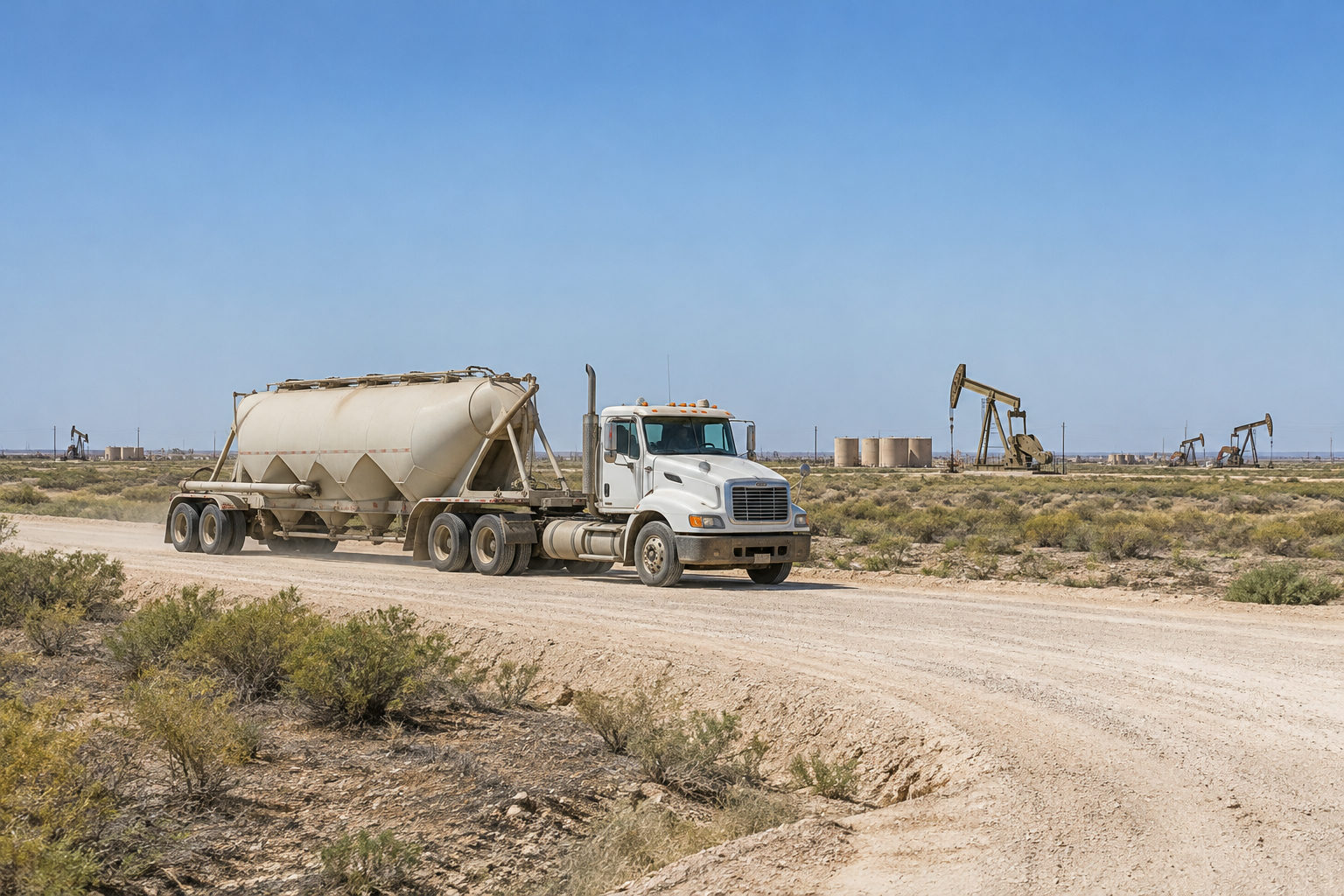
A standard trucking policy can make you legal to haul frac sand and oilfield freight in Texas. Whether it's enough for oilfield work depends on two things: the insurance terms in the operator's master service agreement (MSA), and how your own policy is written. The legal floor comes from your load and your route. Trucks over 26,000 lbs (by gross weight, registered weight or weight rating) running only inside Texas need at least $500,000 in liability. For-hire trucks with a GVWR of 10,001 lbs or more that cross state lines with non-hazardous loads need at least $750,000. Oil loads need at least $1,000,000.
An MSA can ask for a lot more than that. Texas law also limits clauses in well-related agreements that make you cover the operator's own negligence, unless insurance backs them. Here is how oilfield trucking insurance in Texas fits together, and what to check before you sign.
Key Takeaways
- Inside Texas, trucks over 26,000 lbs (gross, registered or rated weight) need at least $500,000 in liability, for private and for-hire carriers alike.
- For-hire trucks with a GVWR of 10,001 lbs or more crossing state lines with non-hazardous loads need at least $750,000. Oil loads need at least $1,000,000.
- In a letter about frac sand containers, PHMSA agreed the vehicles involved were not subject to federal hazmat rules, but the shipper classifies each load.
- An MSA can require coverages, limits and endorsements well beyond the legal minimum.
- The Texas Oilfield Anti-Indemnity Act voids some indemnity clauses unless insurance backs them, so read the MSA's indemnity and insurance sections together.
What Insurance Does Texas Require for Oilfield and Frac Sand Hauling?
Commercial auto liability, at a limit set by what you haul and whether you cross state lines. The Texas Department of Motor Vehicles (TxDMV) sets the limits for trucks running only inside Texas, and federal rules in 49 CFR Part 387 cover interstate work:
| Load | Where you run | Minimum liability |
|---|---|---|
| Frac sand, pipe, equipment or other non-hazardous freight | Inside Texas only, over 26,000 lbs (gross, registered or rated weight), private or for-hire | $500,000 |
| Frac sand, pipe, equipment or other non-hazardous freight | For-hire across state lines, 10,001 lbs GVWR or more | $750,000 |
| Oil, petroleum fuels and lubricants, hazardous waste and listed hazardous materials | Texas or federal rules, depending on route | $1,000,000 |
| Certain hazardous substances in bulk and other high-hazard materials | Texas or federal rules, depending on route | $5,000,000 |
The $750,000 federal limit applies to for-hire carriers. If you haul only your own equipment across state lines, that row doesn't apply to non-hazardous loads, but the federal oil and hazmat limits reach private carriers too. The federal $1,000,000 tier covers oil and listed hazardous materials in any quantity across state lines, and in bulk inside a state.
Hot shot rigs follow the same weight lines. Our hot shot insurance page covers that setup, and hot shot insurance in Abilene looks at West Texas lanes. Filings and the rest of the state rules are in our guide to commercial truck insurance in Texas. These are informational summaries, so confirm your limits with FMCSA or the Texas Department of Insurance.
Is Frac Sand a Hazardous Material?
Not in the cases we found, but the shipper makes the call. In an interpretation letter answering a Midland company's question about frac sand containers, PHMSA, the federal hazmat regulator, agreed with its understanding that the vehicles were not subject to the hazmat rules because they carried no hazardous materials. In an earlier letter about sand haulers, PHMSA described the load as "a nonhazardous material, a type of sand."
Neither letter classifies frac sand for every shipment. A federal hazmat interpretation letter states "it is the shipper's responsibility to properly classify a hazardous material."
For insurance, the classification sets your liability tier. If your shipper classifies the sand as non-hazardous, the first two rows of the table above apply. If you're not sure, ask the shipper for the classification in writing.
Does a Standard Trucking Policy Cover Oilfield Work?
It can cover the driving, but the MSA decides whether it's enough for the job. An operator's MSA sets its own insurance terms, and they can go well past the legal minimum. Depending on the operator, an MSA can ask for:
- higher auto liability limits than the law requires
- general liability for your operations on the lease
- workers' comp with employer's liability for anyone you employ
- an umbrella or excess layer above your primary limits
- pollution coverage for spills and cleanup
- endorsements in the operator's favor: additional insured status, a waiver of subrogation, and primary and non-contributory wording
- advance notice before the policy is canceled
Start with your auto limit. If the MSA asks for more than your current trucking liability insurance limit, that's the first gap to close. Then read your policy's exclusions, especially anything about pollution, because the MSA may make you responsible for spills.
Ask your agent for the actual endorsement wording the MSA calls for, not just a certificate, and match it line by line.
How Does the Texas Oilfield Anti-Indemnity Act Affect Your Insurance?
It voids certain indemnity clauses in well-related agreements, unless the parties back them with insurance. Under Chapter 127 of the Texas Civil Practice and Remedies Code, an indemnity clause in an agreement pertaining to an oil or gas well is void if it covers loss from injury, death or property damage caused by the indemnitee's "sole or concurrent negligence." The chapter's definition of these agreements reaches acts collateral to well services, including "incidental transportation."
There is an exception for insured indemnity. The chapter doesn't apply when the parties agree in writing that the indemnity will be supported by liability insurance, within two limits:
- Mutual indemnity (each side covers the other): limited to the coverage and dollar limits each party agreed to buy for the other.
- One-way (unilateral) indemnity: the amount of insurance required may not exceed $500,000.
Chapter 127 also says it doesn't apply to some losses, including property damage from pollution (cleanup included), reservoir or underground damage, and wild well control. Read the pollution and indemnity sections of an MSA side by side.
Whether the Act reaches a particular hauling contract depends on the agreement, so have an attorney review the indemnity and insurance sections before you sign.
What If You Haul Produced Water or Other Oilfield Fluids?
You may need a Railroad Commission permit on top of the right liability tier. The Railroad Commission of Texas says a person who transports oil and gas waste for hire off a lease, unit or other oil or gas property, by any method other than pipeline, must hold an Oil and Gas Waste Hauler Permit.
Salt water and brine are in the Commission's definition of oil and gas waste. Under the permit rules:
- You need a current P-5 Organization Report on file with the Commission.
- You file Form WH-1 (the application), Form WH-2 (your vehicles) and Form WH-3 (the disposal facilities you will use).
- A permit runs for no more than one year.
- Each vehicle must be marked on both sides and the rear with your name and permit number, and must carry a copy of the permit.
Oil loads fall in the $1,000,000 tier in the table above. Confirm permit details with the Railroad Commission and the current rule before you start hauling.
What Should You Check Before You Sign an MSA?
Line the MSA up against your policy before you sign, not after the first load. Work through these points:
- Your legal tier: what you haul and whether you cross state lines.
- The insurance exhibit: every coverage and limit the MSA lists, against what you carry now.
- Endorsement wording: additional insured, waiver of subrogation, primary and non-contributory, and notice of cancellation, exactly as the MSA words them.
- Pollution terms: who pays for spills and cleanup, and whether your policy responds.
- Indemnity and insurance together: what you agree to cover, and what insurance the MSA says backs it.
- Workers' comp: the Texas Department of Insurance says private employers can choose whether to carry it, but an MSA can require it. Texas Transportation Code section 643.106 also requires for-hire carriers that must register with TxDMV and whose primary business is hauling between two or more municipalities to protect employees with workers' comp or approved accidental insurance.
- Certificate format: the form the operator accepts, and where it should be sent.
Which Coverage Fits Your Oilfield Operation?
Build it in two steps. Meet the legal tier for your load and route first, then build up to the MSA, because the contract, not the statute, decides whether you get the work. Close any gap in your auto limit, add the coverages and endorsements the MSA lists, and have the indemnity and insurance sections read together before you sign. Our overview of coverages for trucking businesses explains what each policy does.
Frequently Asked Questions
Line Up Coverage Before You Sign
Trucker Path Insurance compares quotes from multiple carriers for Texas oilfield and frac sand haulers, so you can match your limits to the MSA before work starts.
Continue reading
- Texas trucking insurance requirements
- Compare truck insurance quotes
- Hail Damage to Trucks in Colorado: What Your Policy Covers
- Colorado Towing Permit: PUC Insurance Filings You Need
- Florida Tow Truck Insurance Requirements for FHP Rotation
- Coverages we offer for owner-operators & fleets
- Common questions about trucking insurance
Ready to compare rates? Get a free trucking insurance quote from carriers built for insurance tips.
Ready to Get Started?
Get personalized insurance quotes tailored to your business