72 Hour DOT Inspection 2026: Dates and What Happened
Get Your Free Insurance Quote
Compare quotes from top carriers in minutes
The "72 hour DOT inspection" you kept hearing about wasn't a new rule from FMCSA. It was the common nickname for the Commercial Vehicle Safety Alliance's (CVSA) International Roadcheck, a three-day, 72-hour stretch each year when inspectors across the country ramped up roadside inspections. CVSA officially announced the 2026 International Roadcheck dates on February 12, 2026, and the event ran May 12 to 14, 2026. The dates have now passed, but the preparation advice and compliance lessons still apply for the next inspection blitz and for everyday enforcement.
Even outside that 72-hour window, roadside inspections happened every day. Roadcheck just meant more trucks got pulled, more scales were staffed, and inspectors had less patience for missing paperwork. If you drive for a living, that pattern is worth planning around every year.
When did the 72 hour DOT inspection happen in 2026?
International Roadcheck was held annually, usually in the second or third week of May, and ran for 72 consecutive hours, Tuesday through Thursday. CVSA announced the 2026 International Roadcheck on February 12, 2026, and it ran May 12 to 14, 2026. Recent years followed a tight pattern: the 2023 International Roadcheck ran May 16 to 18, 2023, according to the Commercial Vehicle Safety Alliance. The 2024 International Roadcheck ran May 14 to 16, 2024, per Rush Truck Centers. CVSA's 2025 International Roadcheck ran May 13 to 15, 2025, according to CVSA.
| Year | Dates | Day-of-week pattern |
|---|---|---|
| 2023 | May 16 to 18, 2023 | Tuesday to Thursday |
| 2024 | May 14 to 16, 2024 | Tuesday to Thursday |
| 2025 | May 13 to 15, 2025 | Tuesday to Thursday |
| 2026 | May 12 to 14, 2026 | Tuesday to Thursday |
What actually happened during the 72 hours?
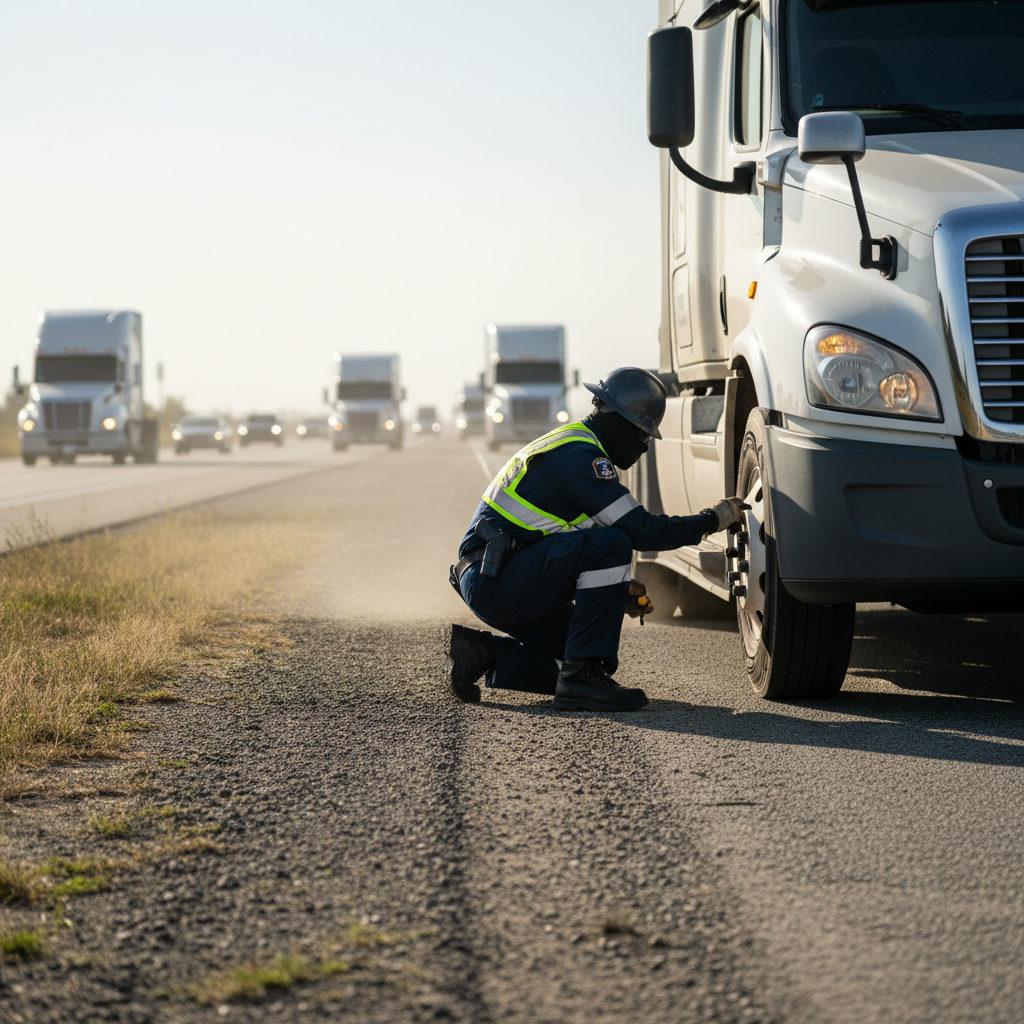
Inspectors focused heavily on Level I and Level V inspections, which covered both the driver and the vehicle, or the vehicle alone. During that window, more roadside checkpoints were staffed, more weigh stations were open longer hours, and inspectors pulled trucks that might otherwise have been waved through on a normal Tuesday. Each year CVSA also picked an emphasis area. Past years spotlighted things like tractor protection systems, alcohol and controlled substance possession, and lighting. For example, CVSA's 2024 International Roadcheck focused on tractor protection systems and alcohol and controlled substance possession, while the 2021 Roadcheck emphasized lighting paired with hours of service, according to CVSA.
The legal backbone behind all of this was 49 CFR Part 396, the federal regulation governing inspection, repair, and maintenance of commercial motor vehicles. Roadcheck didn't create new rules; it just enforced the existing ones with more people on the road for three days straight.
| Inspection level | What gets checked | Typical time |
|---|---|---|
| Level I | Full driver credentials plus a complete vehicle walk-around: brakes, tires, lights, coupling, cargo securement | 45 to 60 minutes |
| Level II | Walk-around inspection without going underneath the vehicle | 20 to 30 minutes |
| Level III | Driver only: license, medical card, hours of service, drug and alcohol records | 15 to 20 minutes |
| Level V | Vehicle only inspection, no driver present required | 30 to 45 minutes |
According to CVSA's own North American Standard Inspection Levels page, a Level I inspection was the most comprehensive of the levels and typically ran 45 to 60 minutes, covering both driver credentials and a full vehicle walk-around. A Level II walk-around inspection generally ran 20 to 30 minutes, since it skipped the under-vehicle check that Level I included. A Level III inspection was the quickest, typically 15 to 20 minutes, because it covered paperwork, license, medical card, and hours of service records rather than a physical vehicle check. A Level V inspection was vehicle-only, no driver required, and typically took 30 to 45 minutes since it covered similar ground to Level I minus the driver interview. Actual duration on any given stop varied with how many violations the inspector found, so these were typical ranges rather than guarantees.
How Roadcheck affected your CSA score and insurance
FMCSA's Compliance, Safety, Accountability program scores every carrier across seven BASICs (Behavior Analysis and Safety Improvement Categories), covering things like unsafe driving, hours of service, vehicle maintenance, and driver fitness. Every violation written during Roadcheck fed directly into these scores the same as any other day of the year, but because far more trucks were inspected during the 72-hour window, a carrier's overall inspection count for the year could jump noticeably, and any weak spot in maintenance or driver files had more chances to surface. A single bad week in May could shift a BASIC percentile that follows your DOT number for the next 24 months.
That mattered for owner-operators and small fleets because underwriters looked at recent inspection history when pricing primary liability and cargo coverage, so a rough week in May could mean a rougher renewal quote later. If your medical certification, driver's license, or logbook records weren't current, that was the week they got caught, and it was worth a quick refresher on what a DOT physical exam actually covers so there were no surprises. Coverage needs also vary by what you're hauling and where you're based, so if you haven't checked your vehicle type's coverage requirements or looked at how rules differ by state, Roadcheck week was a reasonable prompt to do it.
How should you have prepared your truck and paperwork?
You ran your own pre-trip inspection like it was the real thing, because during Roadcheck week it might have been. You checked brakes, tires, lights, and coupling devices before you ever left the yard. You had your medical certificate, license, logbook, and registration within reach, not buried under a seat. If you were running under a relatively new operating authority, you double-checked that your insurance filings, like a BMC-91 or BMC-91X, were actually on file with FMCSA and not just submitted. A lapsed filing during an inspection blitz was an easy way to get parked.
New authority carriers also kept an eye on other 2026 compliance changes. Dalilah's Law, a 2026 measure aimed at tightening verification of carrier identity and cracking down on fraudulent operating authority, overlapped in places with what inspectors were already trained to look for, so it was worth ten minutes to see how it applied to you.
What happened if you were placed out of service?
An out of service order meant the truck, trailer, or driver could not move until the violation was corrected, and it was logged against the carrier's safety record regardless of the calendar date. Common Roadcheck out of service reasons included brake defects, tire issues, and hours of service violations. If you were hauling under someone else's authority as a lease operator, an out of service violation still tied back to that carrier's CSA profile, so it wasn't something you could shrug off as a personal problem. Once the defect was fixed and verified, most states allowed the driver to continue, but the violation stayed on record and could affect both the carrier's safety rating and, down the line, insurance pricing. If you were not sure how a violation on your record might affect your premium at renewal, it was worth confirming specifics with your insurer or your state's Department of Insurance rather than assuming the worst or the best.
Continue reading
- Commercial truck insurance
- Compare truck insurance quotes
- DOT BMI Requirements Explained (And What They Cost)
- Commercial Box Truck Insurance Cost in North Carolina: What to Expect
- Pickup Truck Insurance Online Quote: What You Need First
- Coverages we offer for owner-operators & fleets
- Common questions about trucking insurance
Ready to compare rates? Get a free trucking insurance quote from carriers built for safety.
Ready to Get Started?
Get personalized insurance quotes tailored to your business