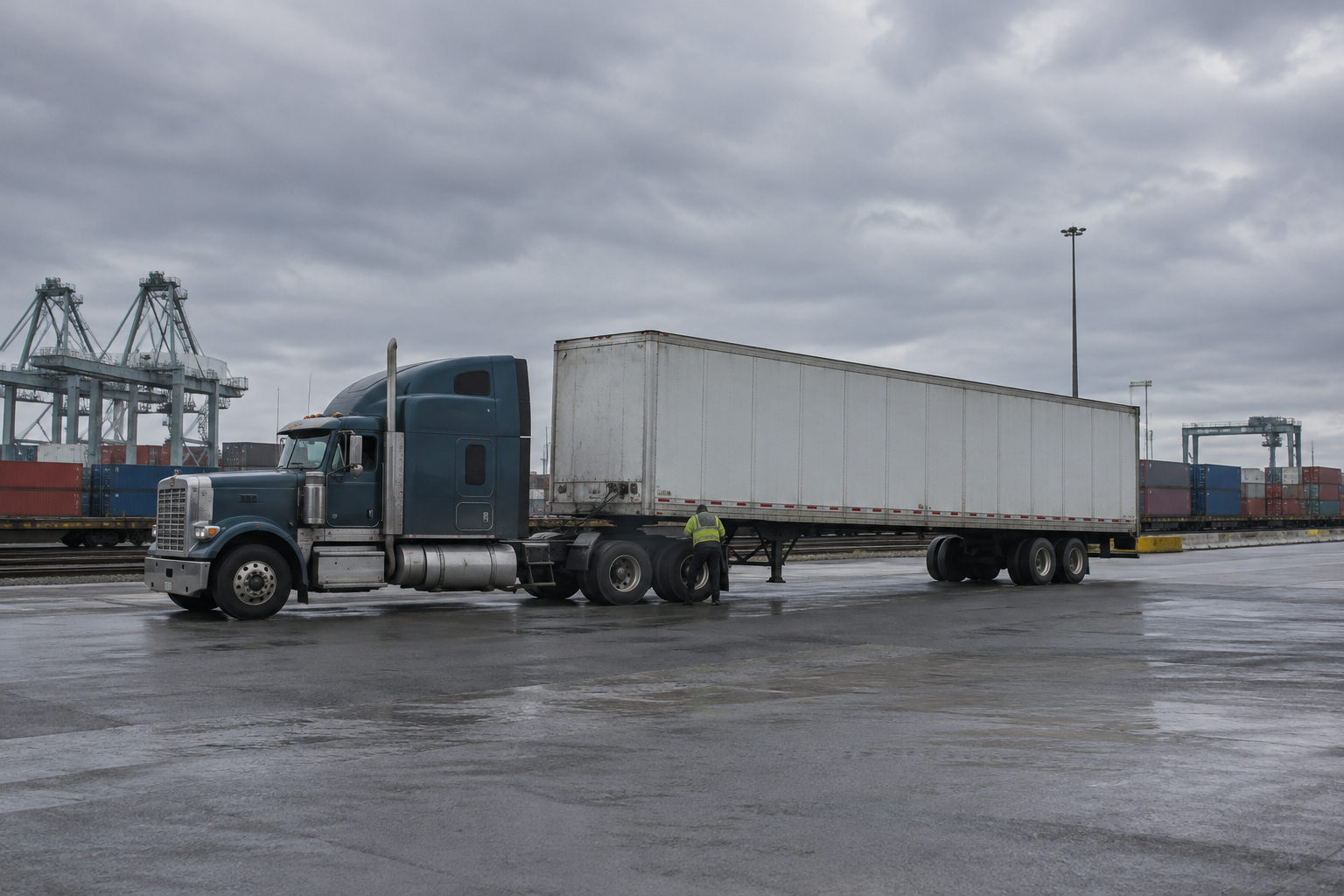
Spartanburg Commercial Truck Insurance: First Steps
Get Your Free Insurance Quote
Compare quotes from top carriers in minutes
If you are putting together a commercial truck insurance policy in Spartanburg, the fastest path is to work the decision in order: confirm your operating authority and radius first, gather your paperwork second, get quotes from more than one carrier third, and read the cancellation terms before you sign anything. Skip the order and you either pay more than you should or end up with a gap in coverage you do not find out about until a claim happens.
South Carolina does not set its own minimum liability limits for interstate for hire carriers beyond what the federal government requires. That federal floor is $750,000 in public liability for general freight over 10,001 lbs GVWR, moving up to $1,000,000 for oil and most hazardous materials, and $5,000,000 for bulk explosives, poison gas, and hazardous substances, per FMCSA rules under 49 CFR Part 387. In practice, most brokers and shippers want to see $1,000,000 even on standard freight, so treat that as the real working number rather than the legal floor. Confirm current limits directly with FMCSA for interstate operating authority, or with the South Carolina Department of Motor Vehicles (SCDMV) Motor Carrier Services for intrastate authority, before you bind anything, since requirements can shift over time.
What do you need before you request a quote?
You need your operating authority number, your equipment list, and your radius of operation before a quote means anything. A quote built on guesses about any of those three things will not hold once the carrier underwrites the actual risk, and you will get a different number at bind time than the one you were shown first.
Pull your MC number and DOT number together, write down the exact year, make, and VIN for every truck and trailer you run, and decide whether you are mostly regional (under 500 miles from Spartanburg) or long haul. Radius changes pricing more than almost anything else in the file, so get this right before you call anyone.
What should you check before you talk to a broker or carrier?
Check your authority status with FMCSA, your current loss history, and whether your existing policy, if you have one, has any lapses. A lapse of even a few days can push you into a higher risk bracket with some carriers, and a new authority with no history behind it gets quoted differently than an established one.
If you are brand new to trucking, look at what a new-authority program actually covers before you assume it is the same product as a standard policy. New authorities often face tighter underwriting and fewer carrier options for the first year, which is worth knowing going in rather than finding out when a quote comes back higher than you expected.
What paperwork should you have ready?
Have your authority letter, a current loss run if you have prior coverage, your equipment list with VINs, and proof of any safety program or ELD compliance ready before you request quotes. Missing paperwork is the single biggest reason quotes take longer than they should, and carriers will not finalize a number without it.
Trucker Path Insurance tracked 47,234 FMCSA insurance cancellation filings nationwide between April 6, 2026 and May 25, 2026. A lapse or cancellation on your record, even from a prior carrier that is no longer relevant to your operation, is the kind of thing that shows up in underwriting and slows down a clean quote. If you have had a cancellation in the past, be ready to explain it rather than let it surface as a surprise mid-process.
Where do Spartanburg operators get this wrong?
The most common mistake is taking the first quote without comparing coverage types side by side, not just the premium number. A policy that looks cheaper on primary liability alone can leave you without motor truck cargo coverage or trailer interchange, both of which matter a lot more once you are actually hauling freight for a shipper who requires them.
The second mistake is underestimating how equipment type changes the policy. A flatbed, a reefer, a tanker, and a dry van are not priced the same way: flatbed, reefer, and tanker premiums commonly run higher than dry van rates because of the added cargo and liability risk those equipment types carry. A generic quote that does not account for your actual equipment is not a real number yet. See how coverage differs by vehicle type on our truck insurance by vehicle page before you compare quotes, so you know what to ask for.
| Coverage type | What it covers | Typical requirement |
|---|---|---|
| Primary liability | Injury or property damage you cause to others | $750,000 federal minimum, $1,000,000 commonly required by shippers |
| Motor truck cargo | Damage to freight you are hauling | Often $100,000 minimum required by brokers and shippers |
| Physical damage | Damage to your own truck and trailer | Required if the equipment is financed |
| Non-trucking liability | Liability when the truck is used off dispatch | Needed if you lease on to a carrier |
| Trailer interchange | Damage to a trailer you do not own but are pulling | Required under most interchange agreements |
These coverage types apply the same federal minimums described above for South Carolina interstate carriers; the state does not add its own liability floor on top of the FMCSA requirement, though intrastate-only operators should check with SCDMV Motor Carrier Services directly.
For a plain breakdown of what primary liability actually pays for and when it applies, see our page on truck insurance liability coverage.
How much does a commercial truck insurance policy cost in Spartanburg?
A commercial truck insurance policy in Spartanburg typically runs several thousand dollars a year, but the exact number depends on your equipment, radius, authority age, and loss history more than your zip code, so no single figure applies to every operator. As of November 2026, many clean-record dry van owner-operators see annual premiums roughly in the $9,000 to $14,000 range, though this varies enough by individual risk profile that it should be treated as a starting point for conversation, not a quote. Get an actual number for your situation through our truck insurance quotes page rather than relying on a general estimate.
If cost is the main driver of your decision right now, it helps to see how rates compare across states generally, since South Carolina sits in a different cost tier than some neighboring states. Our overview of commercial truck insurance rates by state gives useful context for where South Carolina tends to land relative to others.
What happens after you get quotes back?
Once quotes come back, compare apples to apples: same liability limit, same cargo limit, same deductible on physical damage. A lower number on one quote often means a lower limit somewhere else in the policy, and that is the kind of thing that only matters the day you file a claim.
After you pick a policy, confirm your FMCSA filings are handled, specifically the BMC-91 if you are for hire, since this is what actually proves your coverage to FMCSA and keeps your authority active. A broker can file this for you as part of setting up the policy, which is one less thing to track yourself.
Frequently Asked Questions
Continue reading
- Commercial truck insurance
- Compare truck insurance quotes
- Trailer Interchange Insurance Massachusetts: Cost Guide
- Semi Truck Insurance for New Drivers: Where to Start
- 18 Wheeler Insurance Policy Limits: 2026 Guide
- Coverages we offer for owner-operators & fleets
- Common questions about trucking insurance
Ready to compare rates? Get a free trucking insurance quote from carriers built for insurance tips.
Ready to Get Started?
Get personalized insurance quotes tailored to your business